

Introduction
The real estate industry is experiencing a significant shift as artificial intelligence (AI) tools become essential resources for agents aiming to boost their performance. These innovative applications streamline processes such as lead generation and client management, while also offering critical insights that empower agents to make informed, data-driven decisions.
As AI technology increasingly integrates into real estate practices, a pressing question emerges: how can agents effectively harness these tools while preserving the personal touch that clients expect? Exploring the best AI solutions for real estate agents not only uncovers opportunities for enhanced efficiency and success but also highlights the challenges that accompany this technological evolution.
In this rapidly changing landscape, it’s crucial for agents to adapt and leverage AI effectively, ensuring they remain competitive while still delivering the personalized service that clients value.
Defining AI Tools for Real Estate Agents
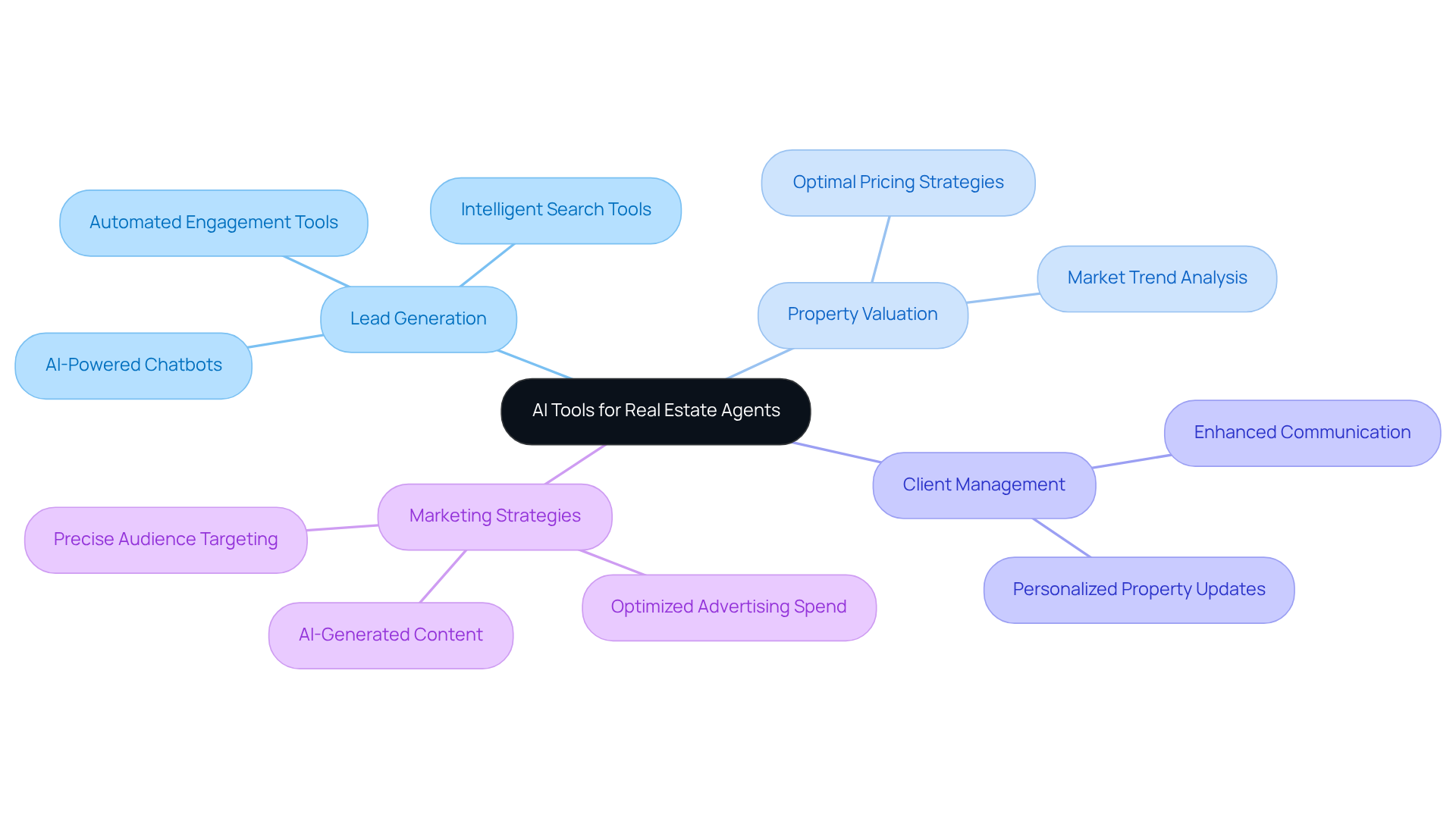
The best AI for real estate agents includes applications that represent cutting-edge software harnessing artificial intelligence to enhance various facets of the real estate process. These tools are pivotal in:
- Lead generation
- Property valuation
- Client management
- Marketing strategies
By leveraging machine learning algorithms and data analytics, AI resources empower agents to make informed decisions, streamline operations, and significantly boost their sales performance. For example, platforms like RealScout demonstrate that agents can close up to 54% more transactions by employing automated engagement tools and personalized property updates.
The integration of AI into real estate practices allows agents to focus on high-value tasks while automating repetitive processes, thereby improving efficiency and productivity in a competitive landscape. A compelling case study reveals that a residential property company reduced its full-time staff by 15% since 2021 through AI integration, resulting in enhanced productivity and increased satisfaction among both clients and employees.
Furthermore, AI-driven marketing tools facilitate precise audience targeting and personalization, optimizing advertising spend and maximizing ROI. As AI technology continues to advance, it is emerging as the best AI for real estate agents, helping them navigate market complexities while maintaining a competitive edge. The insights provided by AI resources not only enhance operational efficiency but also better equip agents for client interactions, ensuring they remain knowledgeable and responsive to client needs. However, it is crucial to recognize that AI serves as a tool, not a replacement for agents, and maintaining human oversight is vital to balance technology with the personal touch that defines the industry.
The Evolution of AI in Real Estate
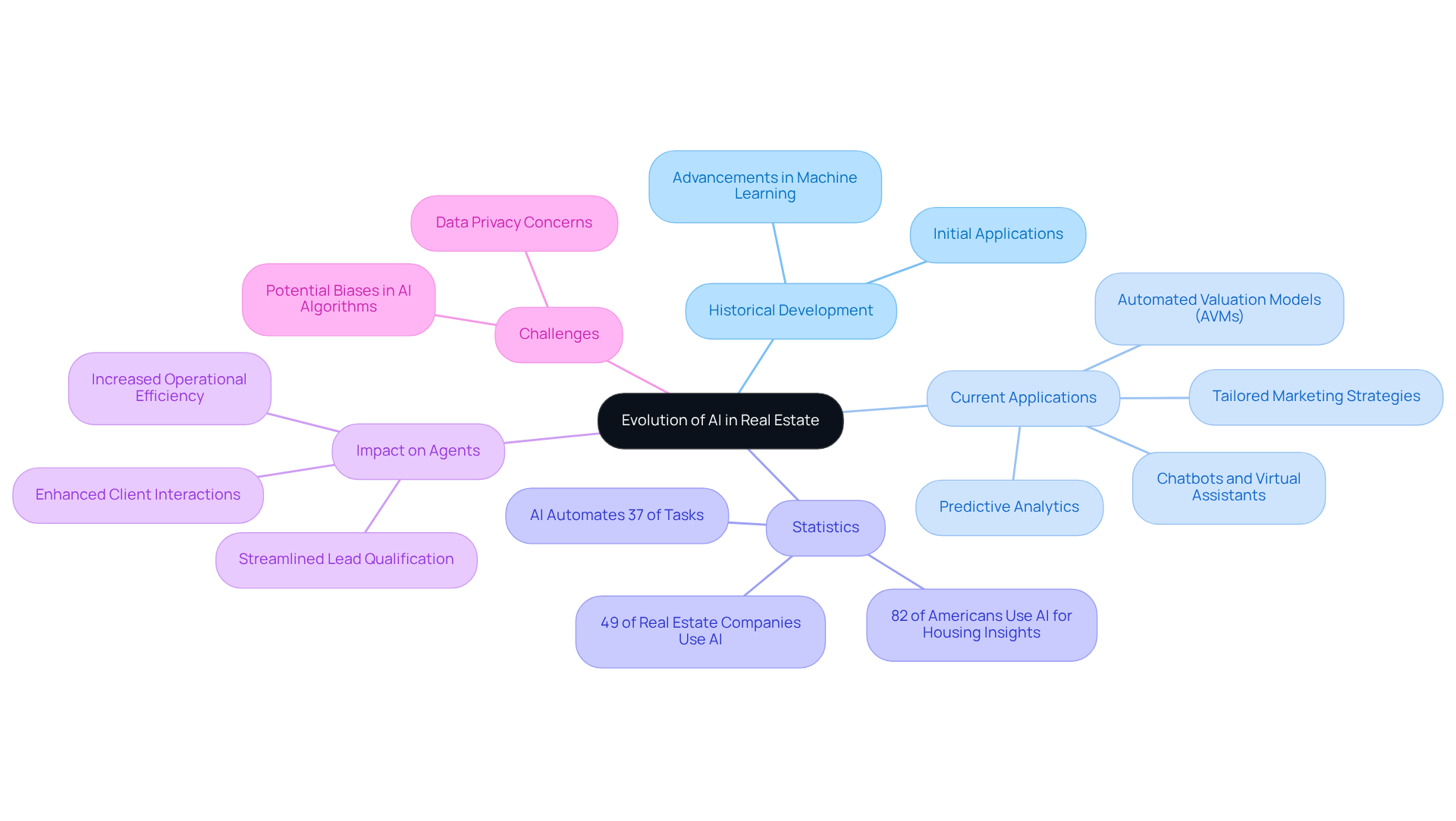
The development of AI in property has undergone remarkable transformations over the past decade. Initially, AI applications were limited to basic data analysis and property listings. However, with advancements in machine learning and big data analytics, we now have sophisticated tools that enable predictive analytics, automated valuation models (AVMs), and tailored marketing strategies.
The emergence of chatbots and virtual assistants has revolutionized client interactions, offering 24/7 engagement and support - essential in today’s fast-paced market. Recent trends reveal that nearly 49% of real estate companies utilize AI for smarter property recommendations, according to a survey from Realtor.com. Furthermore, 82% of Americans leverage AI for insights into the housing market, underscoring its growing significance.
As the sector embraces digital transformation, utilizing the best AI for real estate agents is becoming indispensable for representatives aiming to enhance their competitive edge and boost client satisfaction. Case studies illustrate that AI-driven automation can streamline lead qualification processes, allowing agents to concentrate on high-potential prospects, ultimately improving conversion rates. For instance, AI applications have shown the capability to automate 37% of tasks in the property sector, leading to substantial operational efficiencies.
Incorporating AI not only enhances operational efficiency but also fosters a more personalized experience for clients, making it a vital component of modern property practices. However, it is crucial to address challenges such as data privacy concerns and potential biases in AI algorithms as the technology continues to evolve.
Key Features of AI Tools for Real Estate Agents
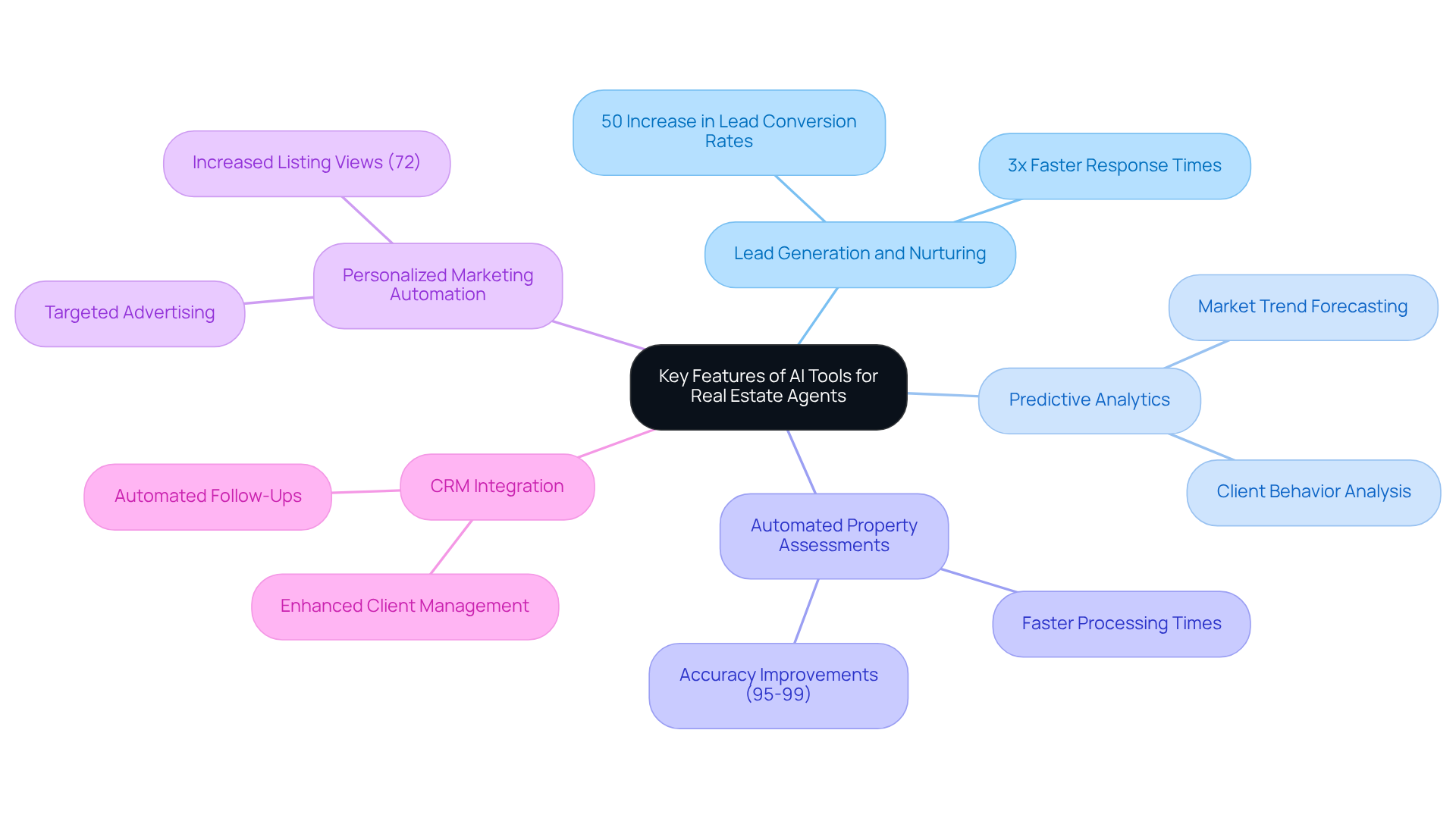
Key aspects of the best AI for real estate agents are transforming the industry. These include:
- Lead generation and nurturing functions
- Predictive analytics for market trends
- Automated property assessments
- Personalized marketing automation
Notably, numerous AI tools offer CRM integration, allowing representatives to manage client relationships with greater efficiency.
For instance, Convin clients have reported a remarkable 50% increase in lead conversion rates and three times faster response times compared to traditional methods. Features like virtual staging are particularly impactful, leading to properties selling 73% faster and achieving offers that are 1-5% higher. Additionally, automated listing descriptions further enhance the user experience.
Chatbots for customer inquiries provide immediate assistance, enabling representatives to focus on high-value tasks while maintaining personalized service. The integration of predictive analytics empowers representatives to anticipate market trends and client needs, ultimately driving higher conversion rates and enhancing client satisfaction.
As Sara Bushra aptly observes, "AI for property professionals is changing the method leads are acquired and developed." This evolution underscores the necessity for real estate professionals to embrace the best AI for real estate agents, ensuring they remain competitive in a rapidly changing market.
Examples of Leading AI Tools for Real Estate Agents
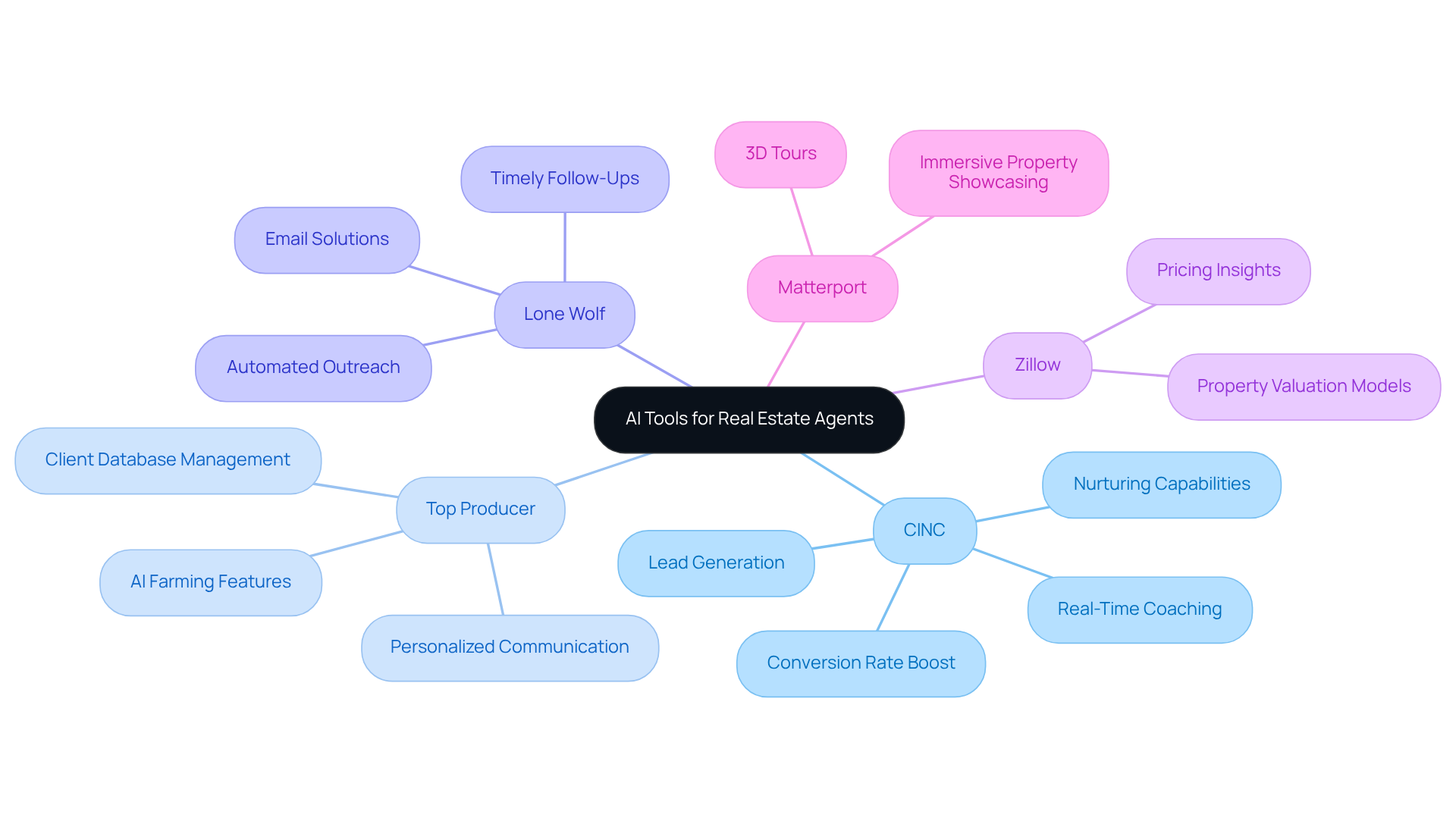
The property sector is witnessing a significant rise in the best AI for real estate agents that dramatically enhances operational efficiency and marketing effectiveness. CINC stands out for its exceptional lead generation and nurturing capabilities, empowering representatives to connect with prospects more effectively. Success stories from users underscore that CINC's innovative approach has resulted in a remarkable increase in qualified leads, with reports indicating a conversion rate boost of up to 27% thanks to its real-time coaching features. Moreover, utilizing the best AI for real estate agents can elevate lead generation in real estate by 33%, showcasing the effectiveness of platforms like CINC.
Top Producer is another noteworthy resource, renowned for its AI farming features that streamline client database management, allowing representatives to maintain personalized communication effortlessly. Lone Wolf amplifies marketing efforts with its AI-powered email solutions, automating outreach to potential buyers and ensuring timely follow-ups.
Zillow's AI-driven property valuation models equip agents with precise pricing insights, while Matterport transforms property showcasing through immersive 3D tours, significantly increasing engagement and interest in listings. These tools illustrate that the best AI for real estate agents is not just a technological advancement but a crucial component in enhancing sales success for property professionals. The AI in real estate market is projected to reach $975.24 billion by 2029, reflecting the growing dependence on AI-powered tools. User satisfaction ratings further demonstrate their effectiveness in transforming traditional practices into streamlined, data-driven processes.
Conclusion
The integration of artificial intelligence into the real estate sector is not just a trend; it’s a game changer. Agents are now equipped with advanced tools that significantly enhance efficiency, client engagement, and overall sales performance. By adopting the best AI solutions tailored for real estate, professionals can streamline their processes, concentrate on high-value tasks, and ultimately achieve superior results in a fiercely competitive marketplace.
Key insights throughout this article have underscored the transformative impact of AI across various facets of real estate, including:
- Lead generation
- Property valuation
- Personalized marketing strategies
The evolution of AI tools has empowered agents to leverage predictive analytics, automate routine tasks, and maintain a competitive edge - all while ensuring enhanced client satisfaction. Notable examples of leading AI platforms, such as CINC and Zillow, vividly illustrate the substantial benefits these technologies bring to real estate practices.
As AI technology continues to advance, embracing these innovations is not merely advantageous; it’s essential for real estate professionals aiming to thrive in an ever-evolving industry. The reliance on AI tools fosters operational efficiency and cultivates a more personalized experience for clients. By leveraging these resources, agents can position themselves for success, ensuring they remain responsive and knowledgeable in a dynamic market.
Now is the time for real estate agents to explore and implement these cutting-edge AI solutions. Doing so will unlock their full potential and drive their business forward, ensuring they stay ahead in a rapidly changing landscape.
Frequently Asked Questions
What are the main functions of AI tools for real estate agents?
AI tools for real estate agents enhance lead generation, property valuation, client management, and marketing strategies.
How do AI tools improve sales performance for real estate agents?
By leveraging machine learning algorithms and data analytics, AI tools empower agents to make informed decisions and streamline operations, which can significantly boost sales performance.
Can you provide an example of how AI tools have impacted real estate transactions?
Platforms like RealScout have shown that agents can close up to 54% more transactions by using automated engagement tools and personalized property updates.
How does AI integration affect staffing in real estate companies?
A case study revealed that a residential property company reduced its full-time staff by 15% since 2021 through AI integration, leading to enhanced productivity and increased satisfaction among clients and employees.
What benefits do AI-driven marketing tools offer to real estate agents?
AI-driven marketing tools enable precise audience targeting and personalization, optimizing advertising spend and maximizing return on investment (ROI).
What role does AI play in the real estate industry according to the article?
AI serves as a tool to help agents navigate market complexities and maintain a competitive edge, while enhancing operational efficiency and client interactions.
Is AI a replacement for real estate agents?
No, AI is not a replacement for agents; it serves as a tool to assist them. Maintaining human oversight is essential to balance technology with the personal touch that defines the industry.