

Introduction
The landscape of sales is evolving at an unprecedented pace, driven by technology that fundamentally reshapes how organizations engage with prospects and close deals. At the forefront of this transformation are AI Sales Development Representatives (SDRs), which present a revolutionary approach to automating lead qualification and outreach processes. By harnessing the power of machine learning and data analytics, businesses can significantly enhance their sales performance and secure a competitive edge in the marketplace.
However, as companies rush to adopt these innovative tools, they encounter critical challenges that could impede their success. How can organizations effectively integrate AI SDRs to maximize their sales potential while navigating these complexities? This question is not just a matter of interest; it’s a call to action for businesses eager to thrive in a rapidly changing environment.
Define AI Sales Development Representatives and Their Role in Sales
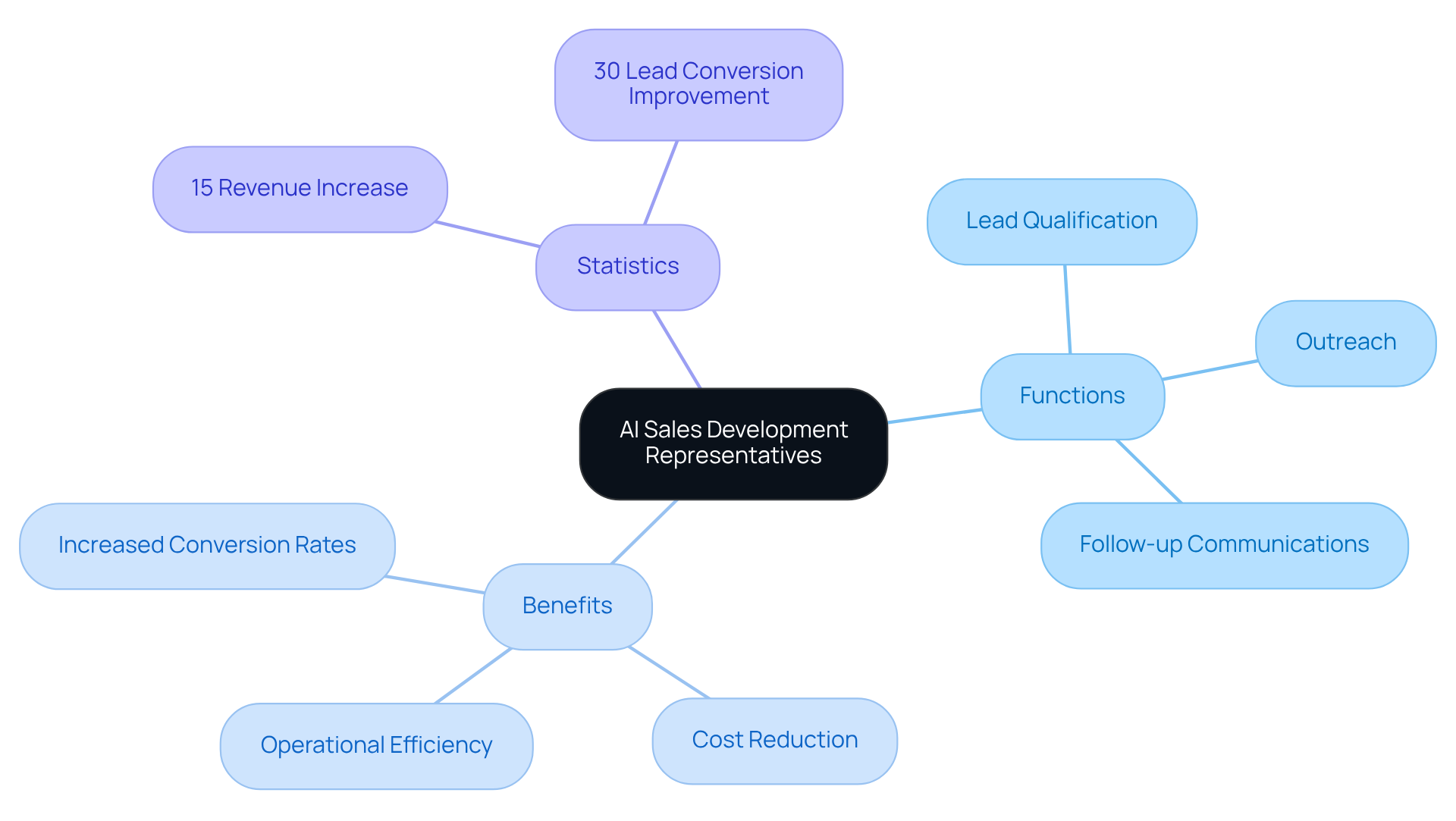
AI SDRs signify a significant leap in sales technology, automating crucial functions at the top of the sales funnel. Unlike traditional SDRs, who engage with prospects manually, AI SDRs harness machine learning and natural language processing to streamline lead qualification, outreach, and follow-up communications. This innovation is exemplified by the AI voice agents from this company, which offer effortless deployment and customization tailored to specific business needs.
By analyzing vast datasets, the AI SDR identifies high-potential prospects with remarkable precision. This allows sales teams to concentrate on closing deals rather than getting bogged down by administrative tasks. The integration of AI SDR not only enhances operational efficiency but also significantly reduces costs and boosts conversion rates. Organizations leveraging AI SDR have reported a 15% increase in revenue conversion rates and a 30% improvement in lead conversion rates, demonstrating the effectiveness of AI SDR in optimizing sales workflows.
Equipped with intelligent analytics and a live dashboard for real-time insights, teams can continuously monitor performance and make data-driven decisions. As AI technology evolves, its role in business development becomes increasingly vital. In fact, 75% of companies are planning to incorporate AI into their operations, recognizing its potential to transform data into actionable insights. Embrace this change and position your organization at the forefront of the sales revolution.
Implement Best Practices for Integrating AI SDRs into Sales Processes
To effectively integrate AI Sales Development Representatives (SDRs) into sales processes, organizations must follow key best practices that drive success:
-
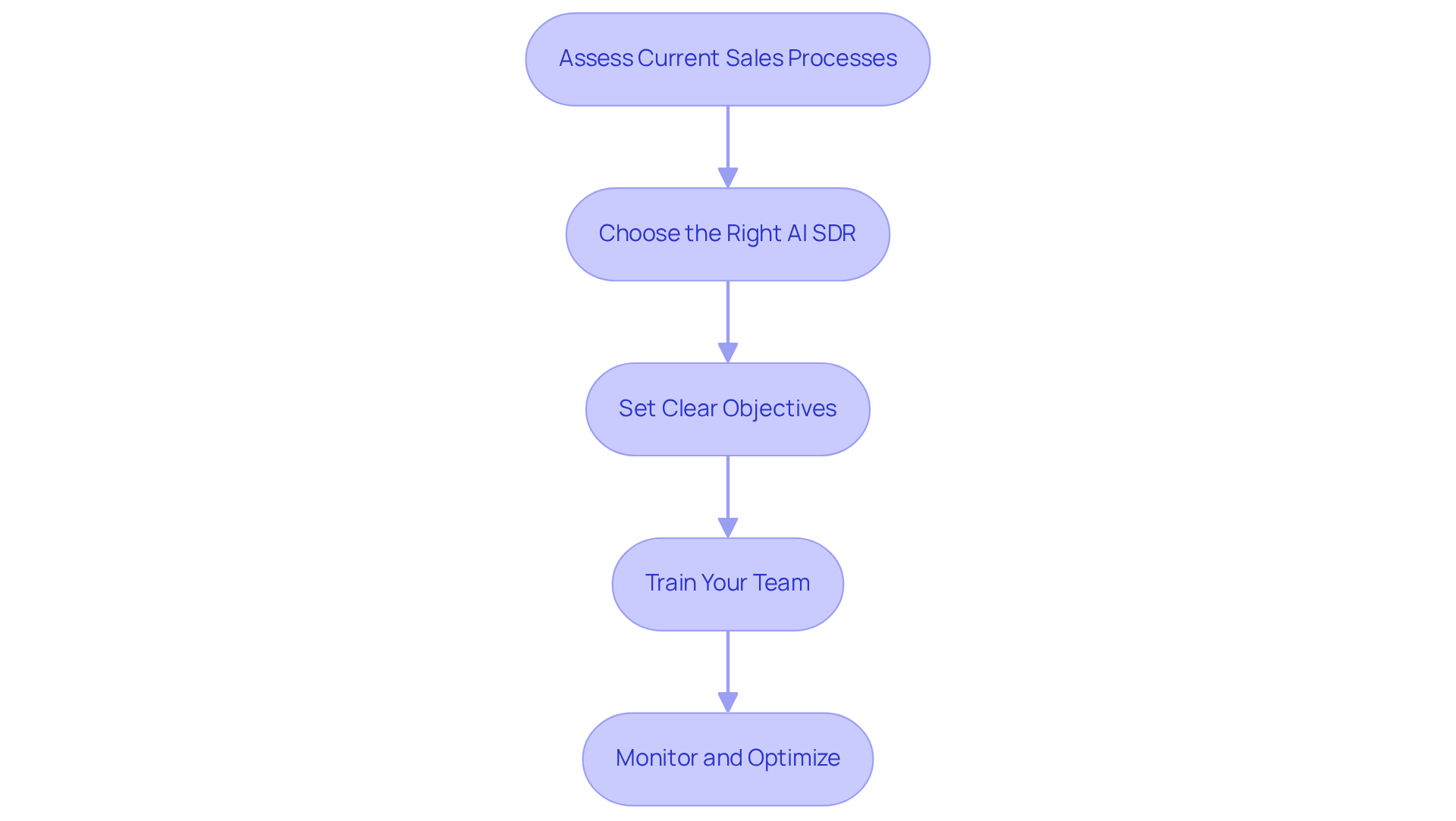
Assess Current Sales Processes: Begin with a thorough evaluation of existing workflows to identify bottlenecks and areas where AI can enhance efficiency. This step is crucial; organizations that monitor pipeline metrics and conversion rates are 10% more likely to achieve year-over-year revenue growth. Notably, AI voice agents have demonstrated a 1.5x increase in conversion rates compared to human representatives, underscoring AI's potential impact on transaction effectiveness.
-
Choosing the right AI SDR is vital for selecting a tool that aligns with your specific revenue goals and integrates seamlessly with existing CRM systems. The right tool can significantly streamline operations, as evidenced by companies reporting a 44% increase in productivity post-AI implementation. With a real-time voice stack, AI voice agents are designed for scalability, capable of managing millions of calls, making them an ideal choice for enhancing sales performance. Furthermore, revenue teams that exceed financial targets automate their processes 61% of the time, highlighting the importance of efficient tool selection.
-
Set clear objectives for your AI SDR by defining what success looks like for its implementation, including key performance indicators (KPIs) to measure effectiveness. Organizations that establish measurable goals for automation are better positioned to track progress and optimize strategies. Companies deriving tangible value from AI experience 1.5x higher revenue growth, emphasizing the financial benefits of a focused approach. Intone's customizable solutions facilitate tailored interactions that can further enhance these outcomes.
-
Train Your Team: Provide comprehensive training for staff on how to collaborate effectively with AI SDR. Fostering a culture of teamwork over replacement encourages innovation and ensures sales personnel can leverage AI capabilities to enhance customer interactions. Intone's dedicated engineers assist in the setup process, ensuring teams are well-equipped to utilize AI voice agents effectively, thereby improving the overall implementation experience.
-
Monitor and Optimize: Continuously track performance metrics and gather feedback from your team to refine AI SDR functionalities. Regular examination of revenue processes can reveal trends and areas for improvement, enabling organizations to adapt swiftly to changing market conditions. Companies utilizing AI-driven insights report a 15% increase in conversion rates, highlighting the importance of ongoing optimization. With Intone's smart analytics, organizations can customize AI agents' interactions with customers, further enhancing engagement and performance.
Evaluate the Benefits of AI SDRs for Enhanced Sales Performance
AI SDRs offer a multitude of advantages that can significantly enhance sales performance, especially in the finance sector:
-
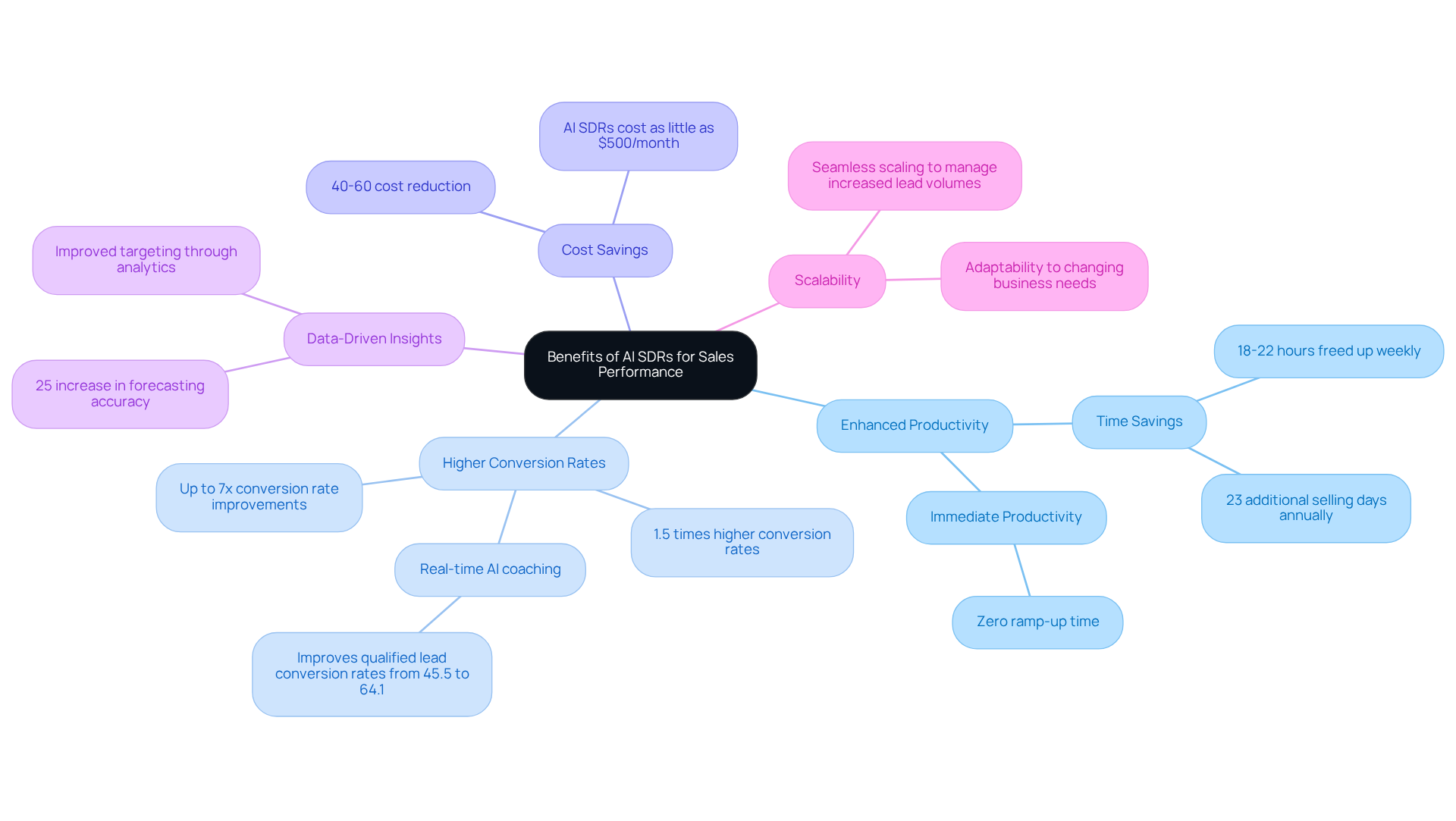
Enhanced Productivity: Automating repetitive tasks allows human representatives to concentrate on high-value activities like relationship building and closing deals. This shift can free up approximately 18-22 hours weekly for sales teams, translating to about 23 additional selling days each year per representative. Intone's customizable AI agents are easy to set up, requiring no extensive tuning, which means teams can focus on what truly matters.
-
Organizations utilizing AI SDR have reported conversion rates that are 1.5 times higher than those achieved by human agents alone. The ability of AI to quickly identify and engage high-intent leads plays a crucial role in this improvement, with some companies experiencing conversion rate boosts of up to 7 times compared to traditional methods.
-
Cost savings can be achieved as AI SDR can drastically lower operational costs by managing a larger volume of leads without requiring proportional increases in headcount. Companies have reported cost reductions of 40-60% after implementing AI-driven marketing strategies, allowing for more efficient resource allocation. Intone's solution enables businesses to deploy AI SDR without any additional burden, further enhancing cost efficiency.
-
AI SDRs analyze customer interactions and behaviors, providing data-driven insights that inform marketing strategies and improve targeting. This data-driven approach has led to a 25% increase in forecasting accuracy, empowering teams to make informed decisions based on real-time analytics. Intone's intelligent analytics capabilities allow sales supervisors to monitor performance, compare representatives, and conduct A/B tests, providing a comprehensive view of sales effectiveness.
-
Scalability: As companies expand, AI SDR can seamlessly scale to manage increased lead volumes without sacrificing quality or performance. This scalability is vital for finance organizations that must respond swiftly to market demands and customer inquiries, ensuring they maintain a competitive edge. The AI agents are designed to adapt effortlessly to changing business needs, offering a robust solution for growing sales teams.
AI sales representatives now engage in human-like conversations through email, LinkedIn, and chat, understanding context, addressing objections, and adjusting tone based on prospect responses. The integration of Intone's AI sales development representatives is revolutionizing revenue processes, with industry leaders like GCS reporting significant efficiency gains and improved conversion rates, solidifying AI's role as a critical component in modern revenue strategies.
Address Challenges and Considerations in AI SDR Adoption
While the adoption of AI SDRs presents significant opportunities, organizations must navigate several challenges to ensure successful implementation:
-
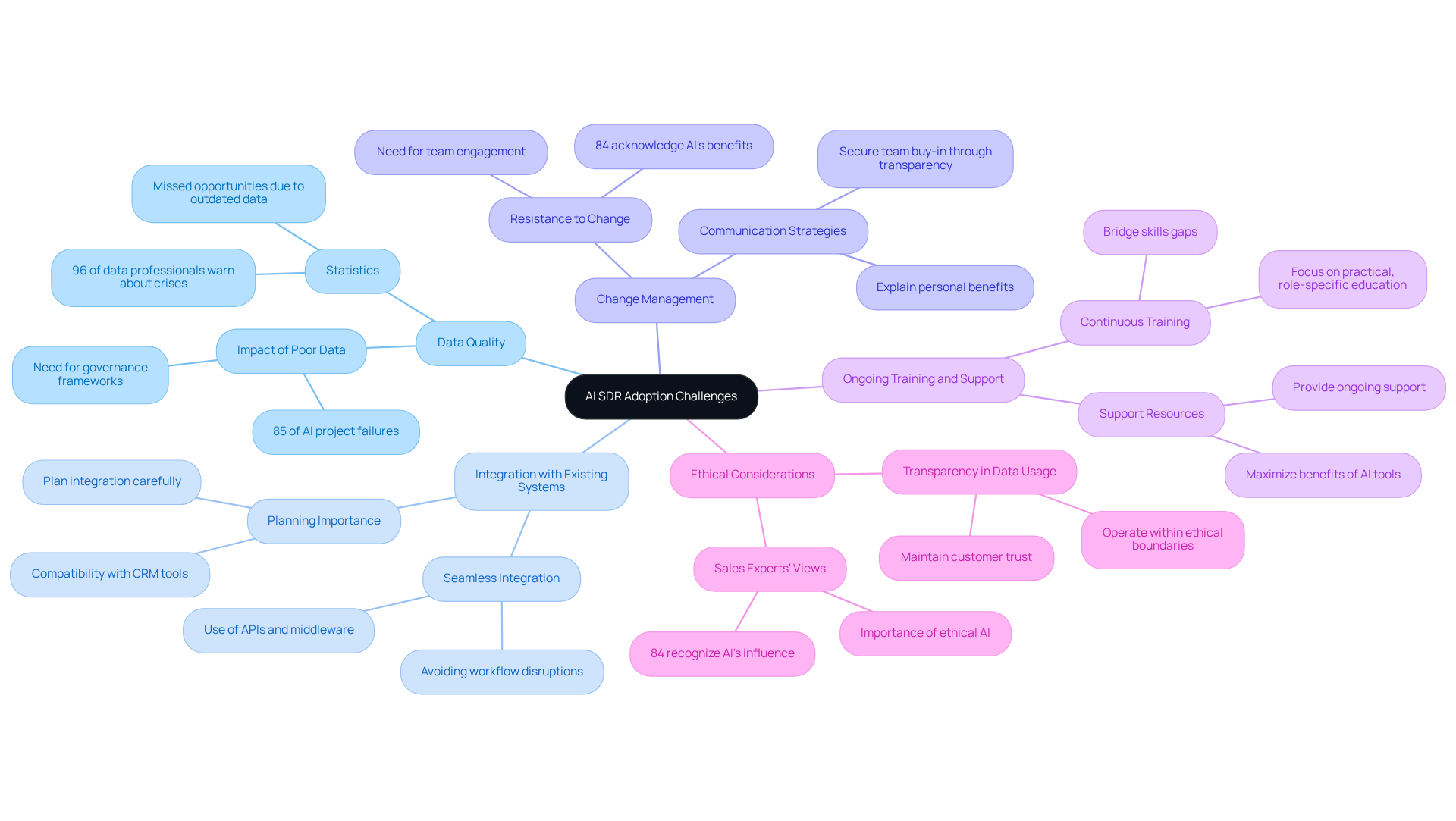
Data Quality: Ensuring that the data fed into AI systems is accurate and relevant is crucial for effective lead qualification and engagement. Poor data quality can lead to ineffective outreach and wasted resources. As emphasized, "Clean your data before implementing AI - Poor data quality causes 85% of AI project failures; establish governance frameworks and regular audits first."
-
Integration with Existing Systems: AI sales development representatives must seamlessly integrate with current CRM and commerce tools. Organizations should prioritize solutions that offer compatibility to avoid disruptions in workflow. Utilizing APIs and middleware can facilitate this process, ensuring that AI tools enhance rather than complicate existing systems.
-
Change Management: Resistance to change can obstruct the acceptance of AI sales development representatives. It is crucial to convey the advantages of AI to the sales team and engage them in the implementation process to promote acceptance. Transparency about how AI tools will enhance their roles can mitigate fears and encourage buy-in.
-
Ongoing Training and Support: Continuous training is essential to ensure that sales personnel can effectively utilize AI SDRs. Providing ongoing support and resources will help maximize the benefits of these tools. As noted, 'Bridge skills gaps with targeted training - Focus on practical, role-specific AI SDR education rather than technical theory to boost adoption rates.'
-
Ethical Considerations: Organizations must consider the ethical implications of using AI in commerce, including transparency in data usage and maintaining customer trust. Ensuring that AI systems operate within ethical boundaries is crucial for long-term success and customer loyalty. Significantly, "Sales experts attribute AI for enhancing outcomes, with 84% recognizing its influence," which underscores the favorable view of AI among sales groups.
By addressing these challenges, organizations can enhance their AI SDR, leading to improved sales performance and customer engagement.
Conclusion
The integration of AI Sales Development Representatives (SDRs) signifies a pivotal shift in sales strategies, empowering organizations to enhance their outreach and engagement efforts. By automating lead qualification and communication processes, AI SDRs allow sales teams to concentrate on closing deals rather than getting bogged down by administrative tasks. This shift not only drives revenue growth but also boosts overall efficiency.
Key insights from this exploration underscore the necessity of implementing effective practices when adopting AI SDRs. Organizations must:
- Evaluate their current workflows
- Choose the right tools that align with their objectives
- Set clear goals
- Train their teams thoroughly
- Continuously monitor performance
The advantages of AI SDRs are substantial, including heightened productivity, improved conversion rates, cost savings, and enhanced data-driven decision-making capabilities.
As businesses confront the challenges of integrating AI SDRs-such as ensuring data quality and securing team buy-in-it is essential to view this technology as a catalyst for elevating sales performance. By proactively addressing these challenges and fostering a collaborative culture between human representatives and AI, organizations can position themselves for success in an increasingly competitive landscape. Embracing AI in sales development not only streamlines operations but also opens the door to innovative strategies for customer engagement and relationship building.
Frequently Asked Questions
What are AI Sales Development Representatives (SDRs)?
AI SDRs are advanced sales technology tools that automate important functions at the top of the sales funnel, utilizing machine learning and natural language processing to enhance lead qualification, outreach, and follow-up communications.
How do AI SDRs differ from traditional SDRs?
Unlike traditional SDRs, who manually engage with prospects, AI SDRs automate these processes, allowing sales teams to focus on closing deals instead of handling administrative tasks.
What benefits do AI SDRs provide to sales teams?
AI SDRs enhance operational efficiency, reduce costs, and significantly boost conversion rates, allowing sales teams to concentrate on high-value activities.
What impact have organizations experienced by using AI SDRs?
Organizations that leverage AI SDRs have reported a 15% increase in revenue conversion rates and a 30% improvement in lead conversion rates.
What tools do AI SDRs provide for sales teams?
AI SDRs come equipped with intelligent analytics and a live dashboard that offers real-time insights for continuous performance monitoring and data-driven decision-making.
How prevalent is the adoption of AI in business operations?
Currently, 75% of companies are planning to incorporate AI into their operations, acknowledging its potential to transform data into actionable insights.
Why is the integration of AI SDRs becoming increasingly important?
As AI technology evolves, its role in business development becomes crucial for optimizing sales workflows and enhancing overall sales performance.