
Introduction
In the competitive landscape of sales, cold calling stands as a pivotal strategy for outreach. The effectiveness of this approach can significantly influence a salesperson's success. However, many struggle to strike the right balance between quantity and quality when determining how many cold calls to make daily. With industry benchmarks and evolving technologies at their disposal, sales teams have a unique opportunity to refine their approaches and enhance their performance.
But how can one optimize their cold calling strategy to not only meet but exceed these benchmarks in a rapidly changing market? This question is crucial for any sales professional aiming to elevate their game and achieve outstanding results.
Analyze Industry Benchmarks for Cold Calls
To enhance your sales strategy effectively, begin by examining industry standards for outreach attempts. Here’s how:
- Research Industry Standards: Recent studies indicate how many cold calls per day are typically made in the finance sector, ranging from 30 to 100. Top-performing sales representatives often consider how many to achieve about 40 strategic interactions daily. Successful SDR teams should determine how many cold calls per day to target approximately 50 to 80 contacts to maximize outreach.
- Identify Key Performance Indicators (KPIs): Focus on crucial metrics such as communication volume, connection percentages, and conversion rates. In 2026, the typical success percentage for outreach attempts hovers around 2.3%. This means that to secure one meeting, you might need to make between 40 to 45 calls. Remarkably, top performers can achieve success rates of 5-8% by employing precision targeting and multichannel follow-up strategies.
- Compare Your Performance: Use these benchmarks to evaluate your current outreach performance. Are you meeting, exceeding, or falling short of these averages? This analysis will help you identify strengths and weaknesses in your approach, paving the way for targeted improvements.
- Adjust Objectives Accordingly: Based on your findings, set practical and attainable targets for your outreach efforts. If the industry average is 60 communications per day, aim for that number while ensuring high quality in your interactions. Maintaining a 3:1 pipeline-to-quota ratio is also advisable to ensure sufficient coverage.
- Stay Updated: Regularly revisit these benchmarks, as they can shift with market dynamics. Subscribe to industry reports or follow relevant blogs to keep your knowledge current and adapt your strategies accordingly.

Balance Call Quantity with Call Quality
To develop an effective cold outreach strategy, balancing the quantity of contacts with the quality of interactions is crucial. Leveraging Intone's AI voice agents can significantly enhance this balance. Here’s how:
- Establish a daily communication target by deciding how many cold calls per day you should make, based on industry benchmarks. For instance, if the average cold-calling success rate in 2025 is around 2.3%, with top-performing teams achieving 6-10%, knowing how many cold calls per day to aim for, like 60 calls, can help maintain consistency and boost your chances of success.
- Prioritize High-Quality Leads: Rather than calling random numbers, focus on leads that have expressed interest in your product or service. Utilize Intone's smart analytics to pinpoint that are statistically more likely to convert, significantly enhancing your overall success rate.
- Craft Personalized Scripts: Develop communication scripts tailored to the specific needs and pain points of your prospects. Intone's customizable AI agents can assist in creating these scripts, ensuring that personalization increases engagement and demonstrates that you value their time. Users can also upload their scripts and training materials to further customize the AI agents to their business needs.
- Monitor Conversation Duration: Track how long your conversations last. While shorter communications can be efficient, ensure they are long enough to convey your message and engage the prospect. Aim for conversations lasting between 4 to 6 minutes for optimal engagement, as this duration has been shown to increase the likelihood of conversion. With Intone's real-time monitoring, you can track performance and refine communication strategies on the fly.
- Request Input: After conversations, solicit feedback from prospects about their experience. This can provide valuable insights into how to improve both the quality of your calls and your overall approach. Consistent and strategic follow-up is essential, as many deals require multiple touchpoints to close. Utilizing Intone's AI agents can streamline this process, ensuring you gather valuable insights efficiently.

Identify Factors Affecting Cold Call Capacity
To enhance your cold outreach strategy, it’s crucial to determine how many cold calls per day you can effectively make based on the factors that influence your contacting capacity. Here’s how:
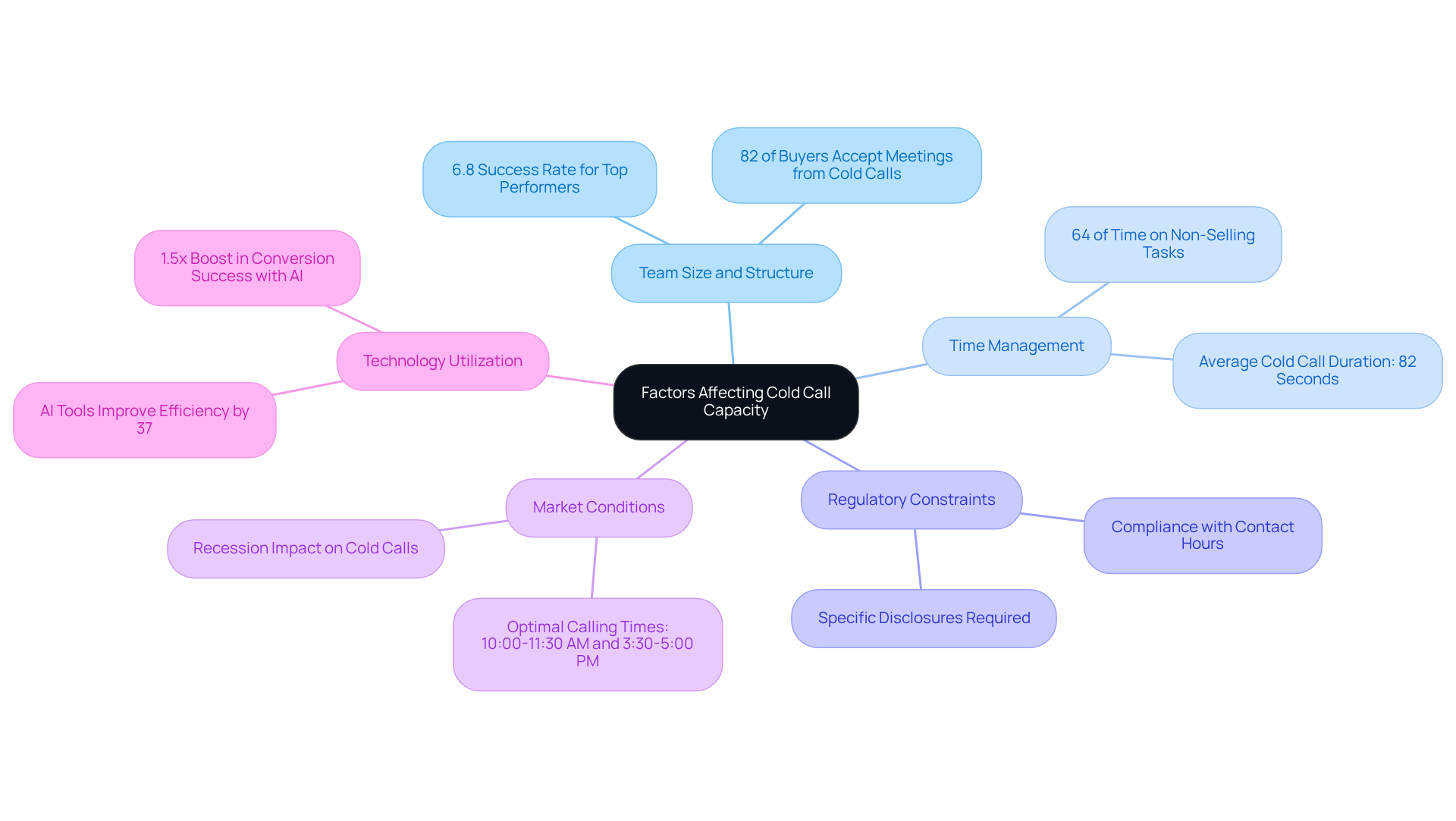
- Assess Team Size and Structure: Evaluate whether your sales team is adequately staffed to meet your calling goals. A larger team can manage more communications, but it’s essential that each member is efficiently trained. Research shows that top-performing teams attain a chilly contact success rate of 6.8%, emphasizing the significance of skill enhancement in maximizing team productivity. Furthermore, 82% of purchasers agree to meetings with salespeople who reach out cold, reinforcing the effectiveness of this approach.
- Evaluate Time Management: Analyze how much time each sales representative spends on conversations versus other tasks. With reports indicating that sales representatives allocate 64% of their time to non-selling tasks, or adopting automation tools, like [Intone's AI voice agents](https://intone.io/features/customer-support), can greatly free up time for outreach. These agents help reduce the time spent on repetitive tasks, allowing reps to focus on high-value interactions, enhancing overall productivity. It's also important to note that how many cold calls per day can be effectively managed considering the average cold call duration in 2026 is 82 seconds, which emphasizes the need for efficient time management during calls.
- Understand Regulatory Constraints: In sectors such as finance, regulations may restrict contact hours or necessitate specific disclosures. Intone's AI voice agents are created to guarantee adherence to these regulations, assisting your team in avoiding penalties while maximizing outreach opportunities during allowable hours.
- Monitor Market Conditions: Economic factors can influence the effectiveness of cold calls. For instance, during a recession, prospects may be less receptive to sales pitches. Staying informed about market trends enables you to adjust your strategy, ensuring that your approach aligns with current buyer sentiment.
- Utilize Technology: Leverage CRM systems and AI tools, such as Intone's AI voice agents, to enhance your communication capacity. Intone's solutions can assist in automating outbound campaigns for debt collection, loan qualification, and product offers, resulting in a 1.5x boost in conversion success compared to human agents. These technologies can help prioritize leads, automate follow-ups, and provide valuable insights into prospect behavior. Companies that effectively manage their sales pipelines achieve 28% higher revenue growth, underscoring the impact of technology on sales performance. Additionally, consider the optimal times to reach out, which are between 10:00-11:30 AM and 3:30-5:00 PM, to maximize connection rates.
Track and Improve Cold Calling Performance
To refine your outreach strategy, establishing a robust system for monitoring and improving performance is essential. Here’s how to effectively leverage CRM systems in 2026:
- Establish Key Metrics: Start by identifying the most critical metrics for your outreach efforts. Focus on communication volume, connection percentages, conversion percentages, and average communication duration to assess effectiveness. Notably, the typical success percentage for telemarketing is reported at 2.3%, underscoring the importance of closely monitoring these metrics.
- Employ a CRM System: A Customer Relationship Management (CRM) system is vital for recording communications, tracking interactions, and analyzing data. This allows you to observe performance trends over time, enabling informed decisions based on real-time insights. For instance, CRM systems can enhance connection levels, as 82% of buyers are open to meeting after a cold outreach, highlighting the significant impact of effective CRM application.
- Conduct Regular Reviews: Schedule weekly or monthly performance assessments to evaluate your team's progress toward goals. Discuss successes and challenges, and be ready to adjust strategies based on these insights. Regular reviews can pinpoint areas for improvement, especially considering that 93% of leads convert after the sixth attempt, emphasizing the need for persistence and strategy refinement.
- Implement A/B Testing: Experiment with different scripts, call times, and approaches to discover what resonates best with your audience. Use the data collected to and boost overall effectiveness. This method can lead to increased engagement levels, as teams employing precision targeting and multichannel strategies see success percentages rise to 6.7%.
- Provide Ongoing Training: Invest in continuous training for your sales team. Regular workshops and coaching sessions can enhance skills and maintain motivation, ultimately driving better results. Continuous training has been shown to yield about 50% higher net sales per employee, reinforcing the value of investing in your team's development.
By incorporating these practices with a CRM system, sales teams can significantly enhance their outreach metrics, resulting in increased conversion rates and more successful client interactions. Effective CRM systems for cold calling in 2026 include platforms like Apollo, which improve lead generation and tracking capabilities.

Conclusion
Optimizing a sales strategy through effective cold calling is essential for achieving success in today’s competitive landscape. It hinges on understanding both the quantity and quality of outreach efforts. By analyzing industry benchmarks and adapting to your team’s specific needs, you can create a structured approach that not only meets but exceeds expectations. Remember, success in cold calling isn’t just about making a high volume of calls; it’s about forging strategic, high-quality connections.
Key arguments highlight the importance of setting realistic cold call targets based on industry standards. Leveraging advanced technologies like AI for better lead qualification can significantly enhance your outreach efforts. Additionally, continuously monitoring performance through CRM systems is crucial. Balancing call quantity with quality, while regularly reviewing and refining strategies, is essential for maintaining high engagement and conversion rates. A well-rounded approach that focuses on both metrics and personal interactions yields the best results.
In a landscape where cold calling remains a vital tool for sales success, embracing these best practices is not just beneficial; it’s crucial. Sales teams should strive not only for higher call volumes but also for meaningful interactions that resonate with prospects. By fostering a culture of continuous improvement and leveraging technology, organizations can enhance their outreach effectiveness. This ultimately leads to increased conversions and sustained growth. Taking these steps will optimize your sales strategies and solidify relationships with potential clients in an increasingly competitive market.
Frequently Asked Questions
What are the typical cold call volumes in the finance sector?
In the finance sector, the number of cold calls made per day typically ranges from 30 to 100, with top-performing sales representatives aiming for about 40 strategic interactions daily.
How many cold calls should successful SDR teams target?
Successful SDR teams should target approximately 50 to 80 cold calls per day to maximize their outreach efforts.
What key performance indicators (KPIs) should be focused on for cold calling?
Important KPIs to focus on include communication volume, connection percentages, and conversion rates.
What is the typical success percentage for cold outreach attempts in 2026?
The typical success percentage for outreach attempts in 2026 is around 2.3%, meaning one meeting may require 40 to 45 calls.
How do top performers achieve higher success rates in cold calling?
Top performers can achieve success rates of 5-8% by using precision targeting and multichannel follow-up strategies.
How can I evaluate my current outreach performance?
You can evaluate your performance by comparing it to industry benchmarks to see if you are meeting, exceeding, or falling short of the averages, which will help identify strengths and weaknesses.
How should I adjust my outreach objectives based on industry benchmarks?
Based on your findings, set practical and attainable targets for outreach efforts, aiming for the industry average while ensuring high-quality interactions. Maintaining a 3:1 pipeline-to-quota ratio is also advisable.
Why is it important to stay updated on industry benchmarks?
It is important to stay updated because benchmarks can shift with market dynamics. Subscribing to industry reports or following relevant blogs helps keep your knowledge current and allows you to adapt your strategies accordingly.