
Introduction
Understanding the complexities of conversational AI pricing is crucial for businesses looking to boost customer engagement and operational efficiency. As organizations increasingly depend on AI-driven solutions, the choice between subscription and pay-per-use models stands out as a critical decision. This choice can significantly influence financial planning and service delivery. Each pricing structure presents unique advantages and potential challenges.
So, how can companies effectively navigate this intricate landscape to identify the best fit for their specific needs?
Define Conversational AI: Key Concepts and Importance
Conversational AI represents a groundbreaking shift in how machines interact with humans, leveraging natural language processing (NLP) and machine learning to create seamless, human-like conversations. This technology encompasses chatbots, voice assistants, and various automated systems that are designed to understand, process, and respond to user inputs in a conversational manner.
The significance of conversational AI cannot be overstated. It enhances user experiences, automates repetitive tasks, and boosts operational efficiency across diverse industries. By facilitating smooth communication, businesses can connect with clients more effectively, resulting in heightened satisfaction and improved conversion rates.
Take Intone's 24/7 AI voice agents, for instance. These agents provide instant support and manage orders, enabling businesses to address customer inquiries swiftly and efficiently. With , companies can tailor interactions to align with their brand identity, fostering trust and allowing for real-time performance monitoring through an analytics dashboard.
This capability ensures that sales processes are not only efficient but also responsive, ultimately leading to enhanced operational outcomes. By embracing conversational AI pricing, organizations position themselves at the forefront of innovation, ready to meet the evolving demands of their customers.

Compare Pricing Models: Subscription vs. Pay-Per-Use
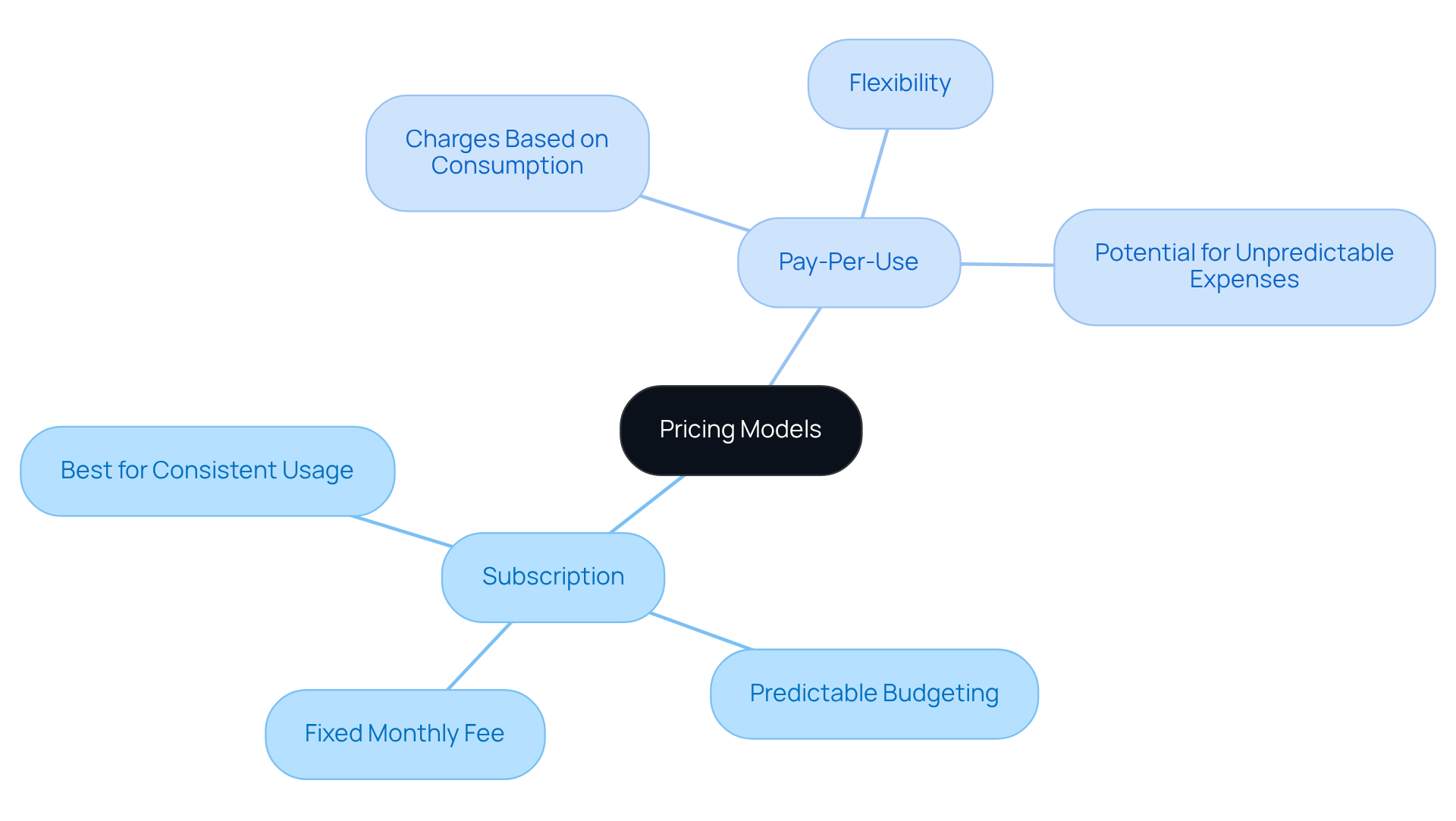
When it comes to , understanding the structures is crucial for making informed decisions. The two primary models are subscription and pay-per-use, each catering to different business needs.
- Subscription systems typically involve a fixed monthly fee, granting users access to the service regardless of how often they utilize it. This model offers predictability in budgeting, making it an excellent choice for companies with consistent usage patterns. For instance, businesses that rely on regular interactions can benefit from the stability that a subscription provides.
- On the other hand, pay-per-use systems charge customers based on their actual consumption-whether that’s the number of interactions or the minutes spent using the service. This approach offers remarkable flexibility, potentially saving costs for organizations with fluctuating demands. However, it’s essential to consider that this model can lead to unpredictable expenses, complicating budget management.
In summary, choosing between subscription and pay-per-use conversational AI pricing structures requires careful consideration of your organization's usage patterns and financial strategy. Assess your needs to determine which model aligns best with your operational goals.
Evaluate Pros and Cons: Subscription and Pay-Per-Use Models
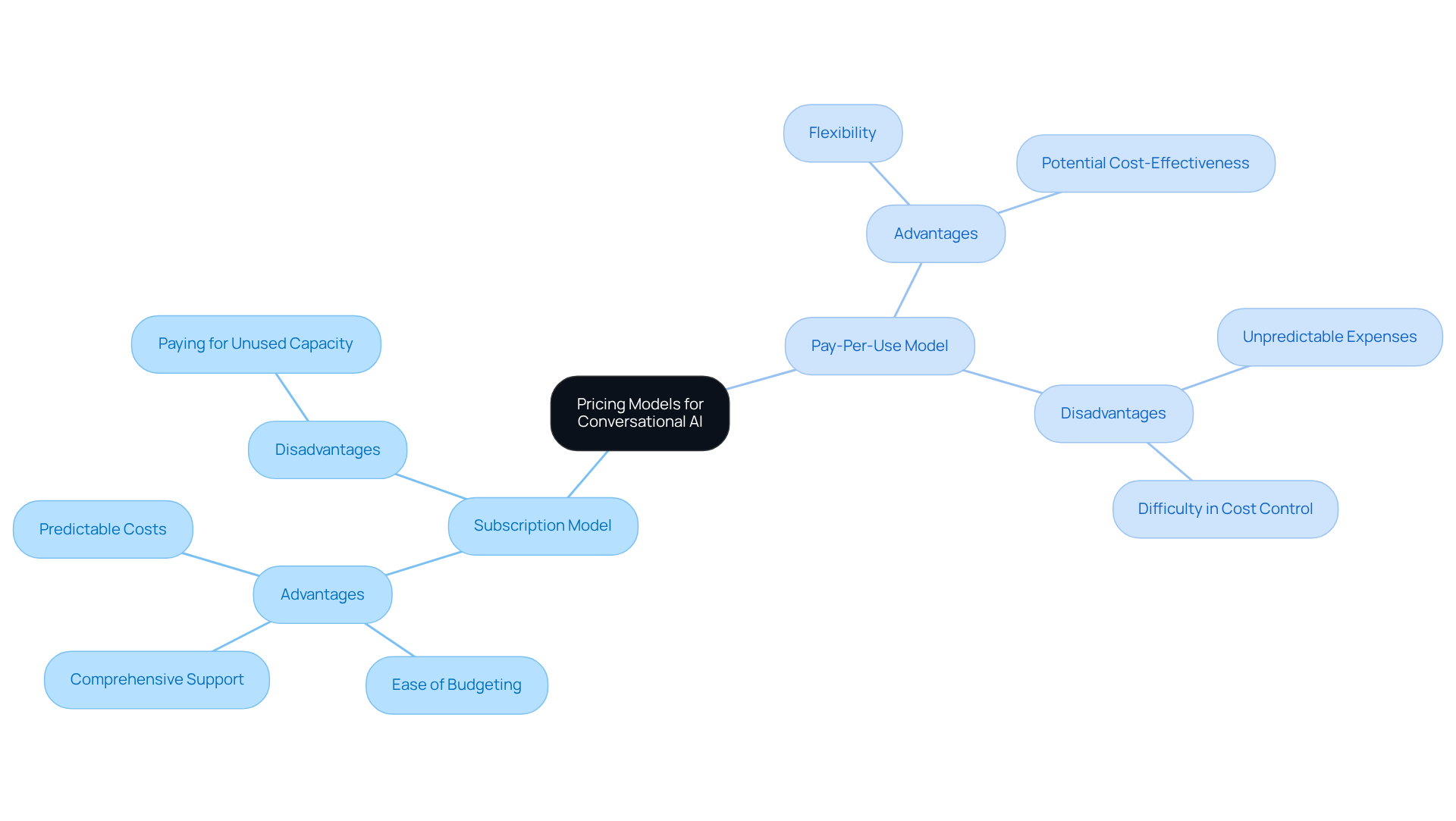
The subscription system offers significant advantages, such as predictable costs, ease of budgeting, and often comprehensive support, which are important factors in conversational AI pricing. A recent survey by Deloitte revealed that 67% of CFOs prioritize 'cost predictability' when evaluating conversational AI pricing for their AI investments. This trend favors subscription frameworks, even though they may introduce inefficiencies. However, businesses must be cautious, as this model can lead to paying for unused capacity during fluctuating usage.
Conversely, the pay-per-use system provides flexibility and can be more cost-effective for enterprises with varying requirements. A report from OpenView Venture Partners found that companies employing usage-based pricing experienced 38% higher revenue growth compared to those relying solely on subscription models. Yet, this approach can lead to , complicating financial planning.
Moreover, companies may struggle to control costs if consumption spikes unexpectedly. Sudden increases in demand can result in bills that far exceed initial expectations. Therefore, understanding the benefits and challenges of both pricing frameworks, along with emerging hybrid models that combine elements of each, is essential for companies to choose the arrangement that best aligns with their operational needs, particularly in terms of conversational AI pricing.
Determine Suitability: Choosing the Right Model for Your Business
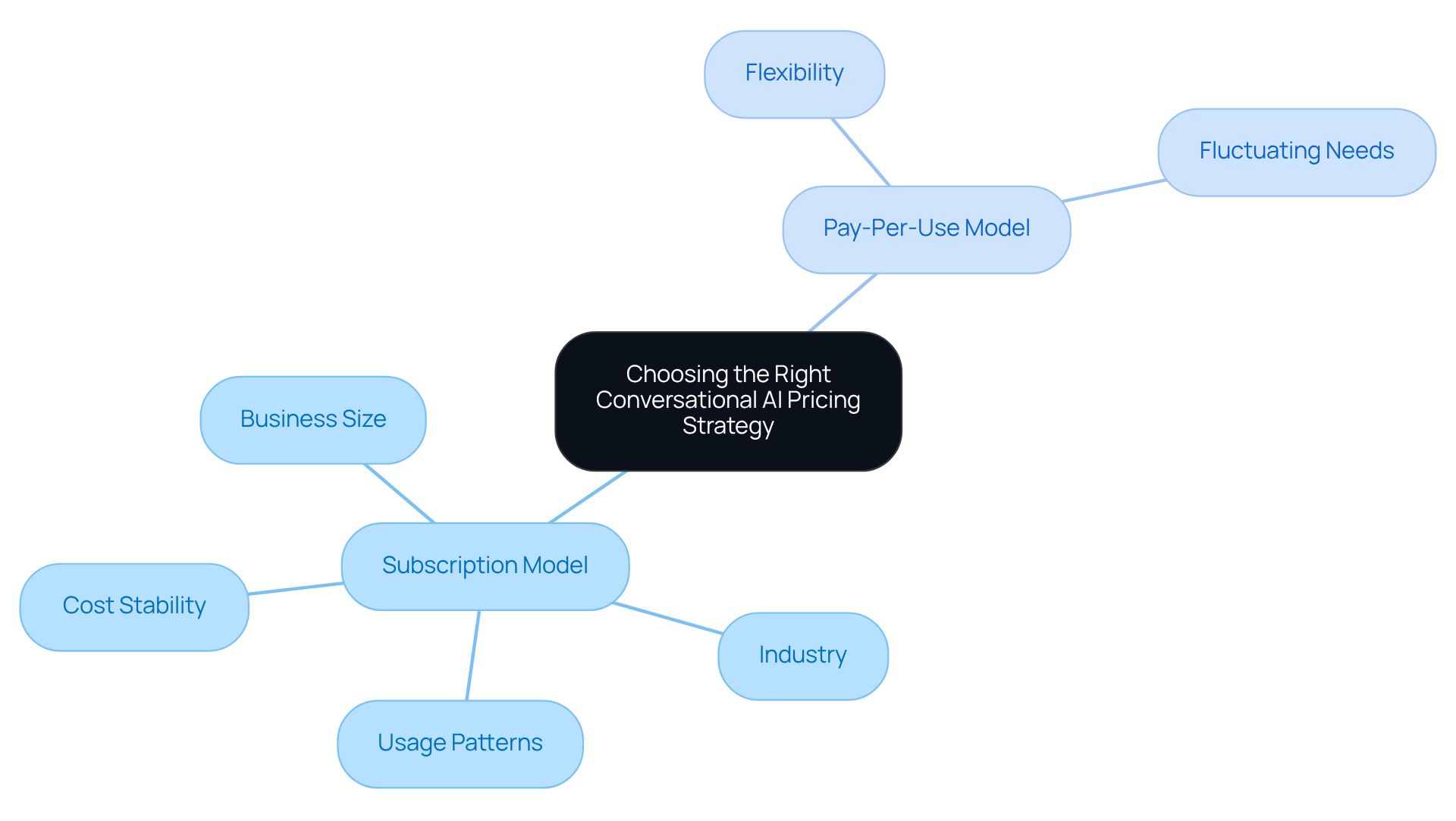
Choosing the right conversational AI pricing strategy is crucial for organizations, influenced by key factors such as business size, industry, and usage patterns. For businesses with consistent and predictable usage, a subscription model often proves advantageous. This approach not only offers budget stability but also ensures comprehensive support, particularly in high-volume sectors like finance and customer support, where call volumes and interaction rates are substantial. In these scenarios, a subscription model can streamline operations and significantly enhance customer engagement.
Conversely, smaller enterprises or those with fluctuating needs may find a pay-per-use model more fitting. This option allows them to incur costs only for the services they utilize, providing essential flexibility for companies that do not require constant access to conversational AI capabilities.
Ultimately, selecting the should align with the organization’s operational objectives and financial strategies. Companies must carefully evaluate their specific needs, including anticipated call volumes and customer interaction rates, to determine which model best supports their goals and maximizes the value derived from conversational AI. By making an informed choice, organizations can ensure they leverage conversational AI effectively, driving both efficiency and customer satisfaction.
Conclusion
Understanding the dynamics of conversational AI pricing - specifically the comparison between subscription and pay-per-use models - reveals the critical need to align these frameworks with organizational objectives. Each model presents distinct advantages and challenges that can significantly influence operational efficiency and cost management. By grasping these distinctions, businesses can make informed decisions that not only enhance customer engagement but also streamline processes.
Key insights from this discussion underscore that subscription models offer predictability and stability, making them ideal for organizations with consistent usage patterns. In contrast, pay-per-use models provide the flexibility necessary for those with fluctuating demands. The choice between these pricing structures should be guided by factors such as business size, industry requirements, and anticipated usage. This ensures that the selected strategy aligns with both financial objectives and operational goals.
Ultimately, the significance of selecting the right conversational AI pricing model cannot be overstated. As organizations navigate the evolving landscape of AI technology, a strategic approach to pricing will not only optimize costs but also enhance customer satisfaction and drive innovation. Evaluating specific needs and leveraging the appropriate model will empower businesses to harness the full potential of conversational AI, positioning them for success in a competitive marketplace.
Frequently Asked Questions
What is conversational AI?
Conversational AI is a technology that enables machines to interact with humans using natural language processing (NLP) and machine learning, creating seamless, human-like conversations through chatbots, voice assistants, and automated systems.
Why is conversational AI important?
Conversational AI is important because it enhances user experiences, automates repetitive tasks, and improves operational efficiency across various industries, allowing businesses to communicate more effectively with clients and increase satisfaction and conversion rates.
How do Intone's AI voice agents function?
Intone's 24/7 AI voice agents provide instant support and manage orders, enabling businesses to swiftly and efficiently address customer inquiries.
Can businesses customize their conversational AI solutions?
Yes, businesses can customize AI voice solutions to align with their brand identity, fostering trust and enhancing customer interactions.
What benefits does real-time performance monitoring offer in conversational AI?
Real-time performance monitoring through an analytics dashboard allows businesses to track and improve their sales processes, ensuring they are efficient and responsive to customer needs.
How does conversational AI contribute to operational outcomes?
By automating tasks and facilitating smooth communication, conversational AI leads to enhanced operational outcomes, helping organizations meet the evolving demands of their customers.