
Introduction
Establishing strong connections with patients is not just beneficial; it’s essential in the healthcare sales landscape. Trust and communication play pivotal roles in influencing outcomes. This article explores five best practices aimed at enhancing patient interactions, providing healthcare professionals with valuable insights to foster meaningful relationships. But how can providers ensure their communication resonates and empowers patients to engage actively in their care?
By implementing these strategies, healthcare professionals can not only improve their interactions but also drive better patient outcomes. Let's delve into these practices that can transform the way providers connect with their patients.
Establish a Positive Connection with Patients
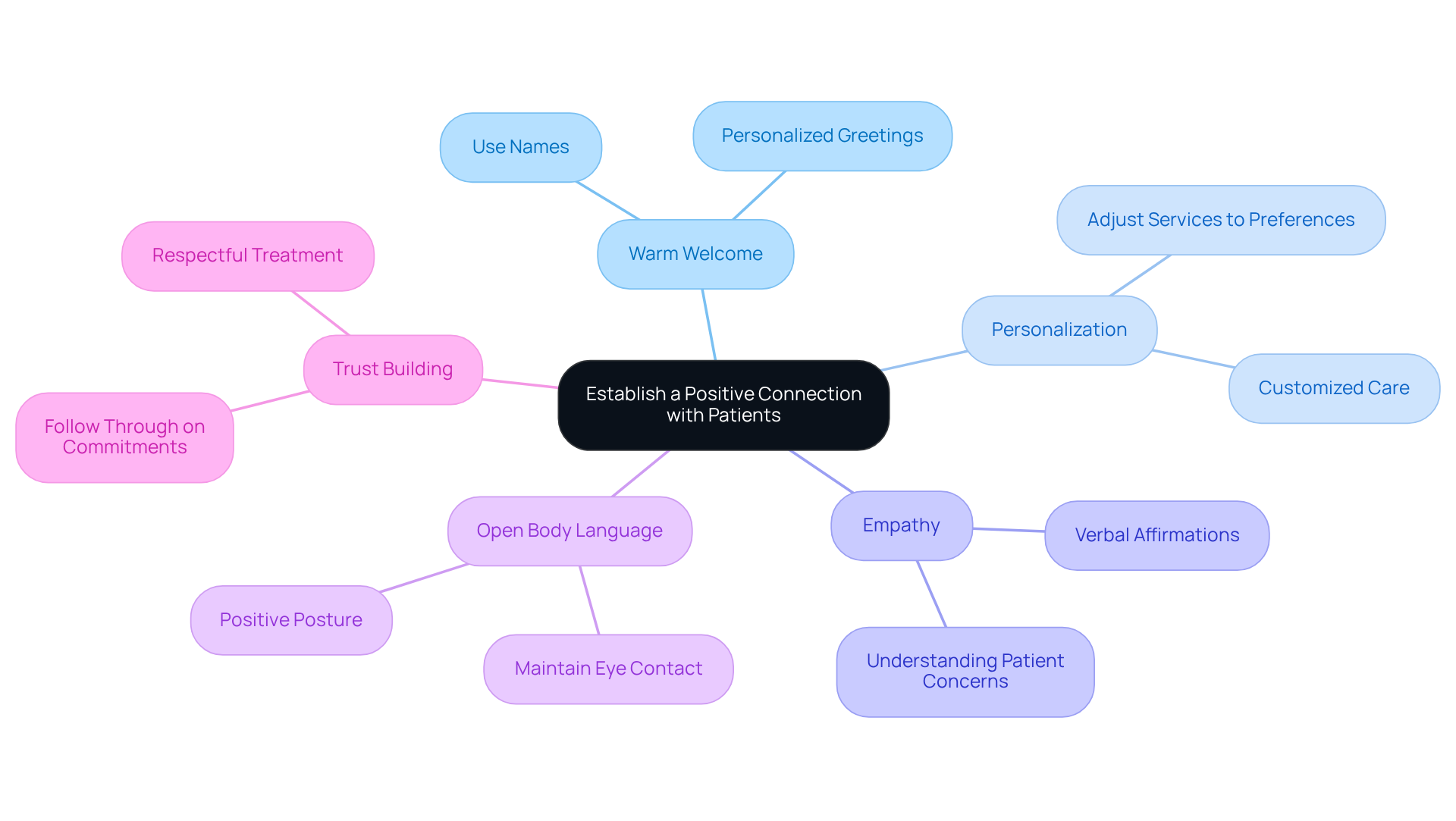
Establishing a positive relationship with clients begins with . Start by warmly welcoming individuals and using their names to personalize the interaction. Research shows that customized care greatly enhances client contentment by adjusting services to personal preferences. Individuals are more likely to share their concerns when they feel appreciated and respected. For instance, have reported significantly higher satisfaction scores among their clients. Dr. Peter Pronovost stresses that empathy must be embedded in staff conduct and patient interactions, which is essential for .
To strengthen this connection, employ , maintain eye contact, and through verbal affirmations. These simple yet impactful gestures , encouraging individuals to communicate more openly and effectively. By prioritizing these strategies, you not only enhance but also foster long-lasting relationships that are built on trust and respect.
Demonstrate Active Listening Skills
Active listening is not just a skill; it’s a vital component of in healthcare. It requires complete focus on the individual’s words, transcending mere hearing. To truly practice active listening, healthcare providers should employ techniques such as:
- Nodding
- Summarizing the individual’s statements
For instance, if a patient expresses anxiety about a treatment plan, a thoughtful response could be, "I understand that you're worried about the side effects." Following this, asking, "Can you elaborate on what specifically troubles you?" not only validates the patient’s feelings but also , enhancing understanding and .
By in patient interactions, healthcare providers demonstrate empathy, ensuring that clients feel acknowledged - an essential step in establishing a strong rapport. Moreover, during patient interactions reinforces the patient’s confidence in the provider’s commitment to their care, ultimately leading to greater satisfaction and adherence to treatment plans. Incorporating the Teach-Back method further ensures that patients comprehend and consent to the next steps, enhancing communication.
It’s equally important to pay attention to nonverbal cues, as these can offer valuable insights into the individual’s emotional state. Recognizing potential barriers to active listening, such as distractions and personality differences, equips providers to navigate challenges and improve their communication skills. Research has shown that in patient interactions correlates with improved safety and satisfaction for patients, underscoring its significance in clinical practice.
In conclusion, is not merely beneficial; it is essential for enhancing patient interactions and fostering trust in patient care. By implementing these strategies, healthcare providers can significantly improve their patient interactions, leading to better outcomes for both patients and practitioners.

Establish a Shared Agenda with Patients
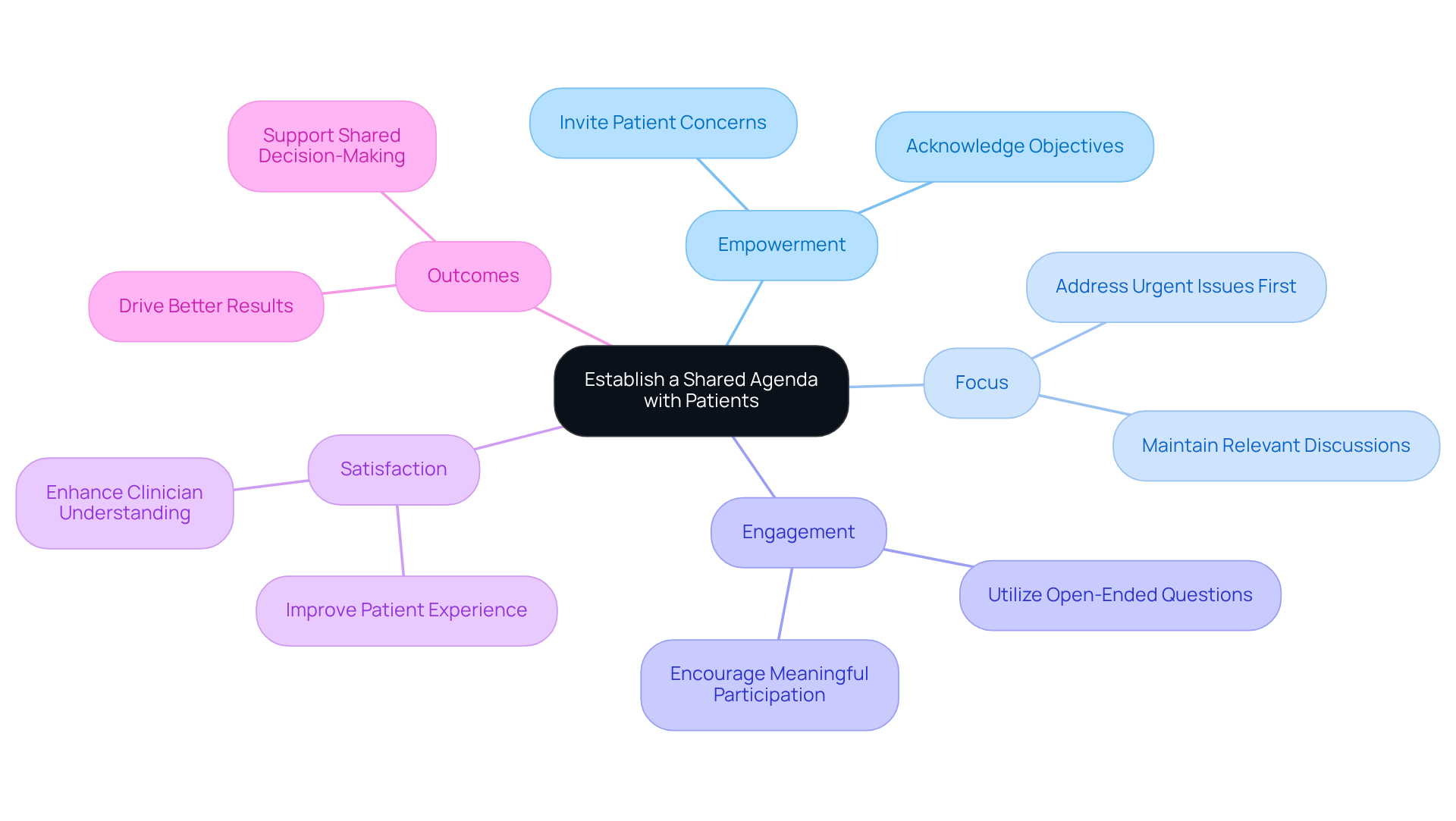
At the outset of each patient interaction, it’s crucial to establish a . Invite individuals to express their main concerns and objectives for the conversation. For instance, you might ask, "What specific questions do you have today that I can help address?" This practice not only but also ensures that discussions remain focused and relevant.
Collaborative agenda setting allows you to first, significantly enhancing . Research shows that when individuals feel their concerns are acknowledged, they are more likely to engage meaningfully. This engagement leads to and outcomes.
By fostering an environment of , you create a partnership that benefits both the client and the clinician. Ultimately, this approach drives , reinforcing the value of prioritizing s.
Utilize Open-Ended Questions and Reflective Statements
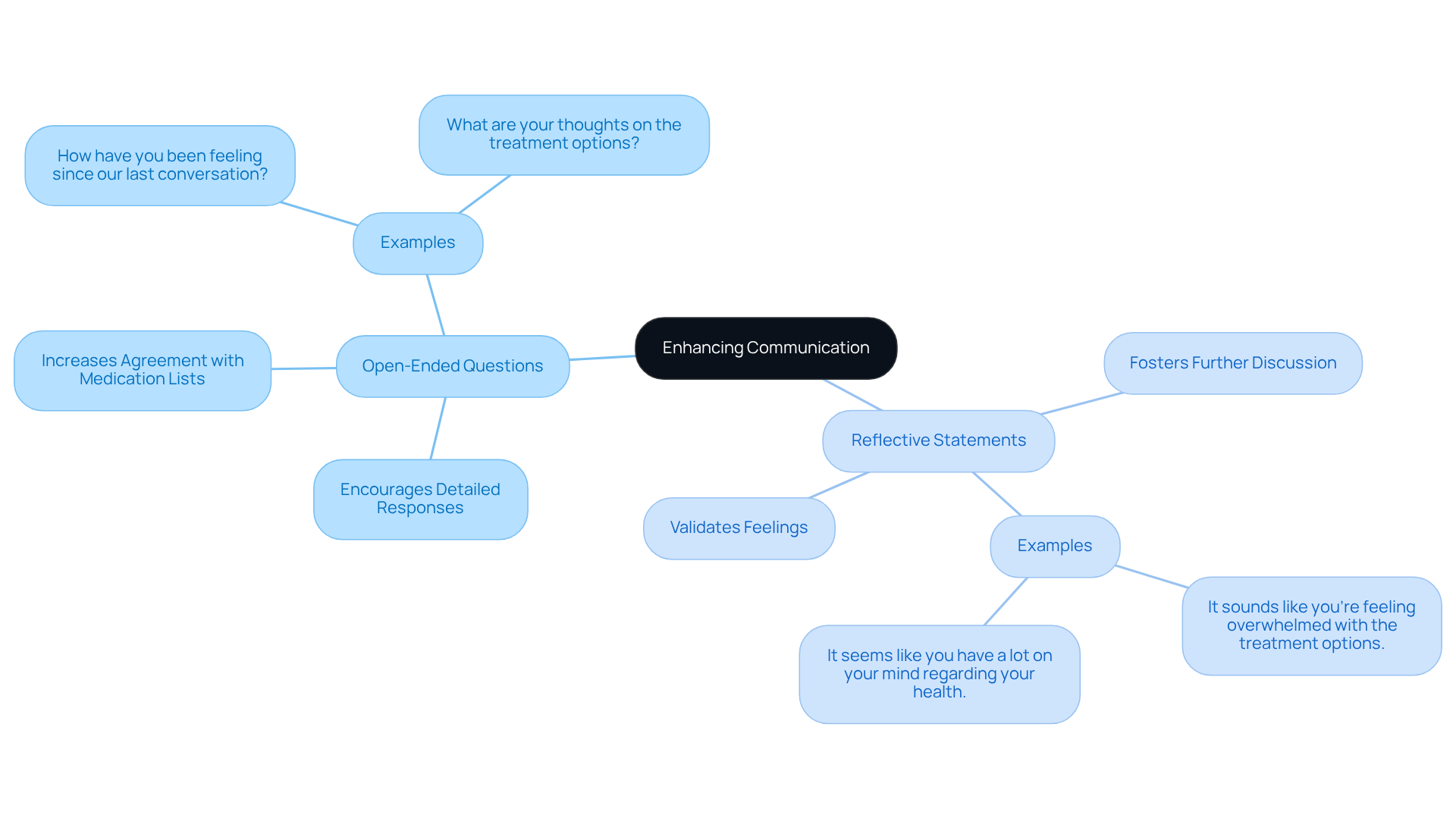
Integrating open-ended inquiries into your discussions is essential for motivating individuals to articulate themselves fully. Instead of asking, 'Are you feeling better?' consider rephrasing it as, 'How have you been feeling since our last conversation?' This approach encourages more , offering valuable insights into the individual's experience.
Research indicates that in medical records, underscoring their effectiveness in enhancing communication. Furthermore, employing and dialogue. For instance, saying, 'It sounds like you're feeling overwhelmed with the treatment options,' not only validates their feelings but also fosters further discussion.
Dr. John Hickner emphasizes that with individuals, highlighting that these and involvement. By , you can effectively manage common obstacles such as time constraints and physician fatigue, ultimately .
Provide Clear Explanations to Patients
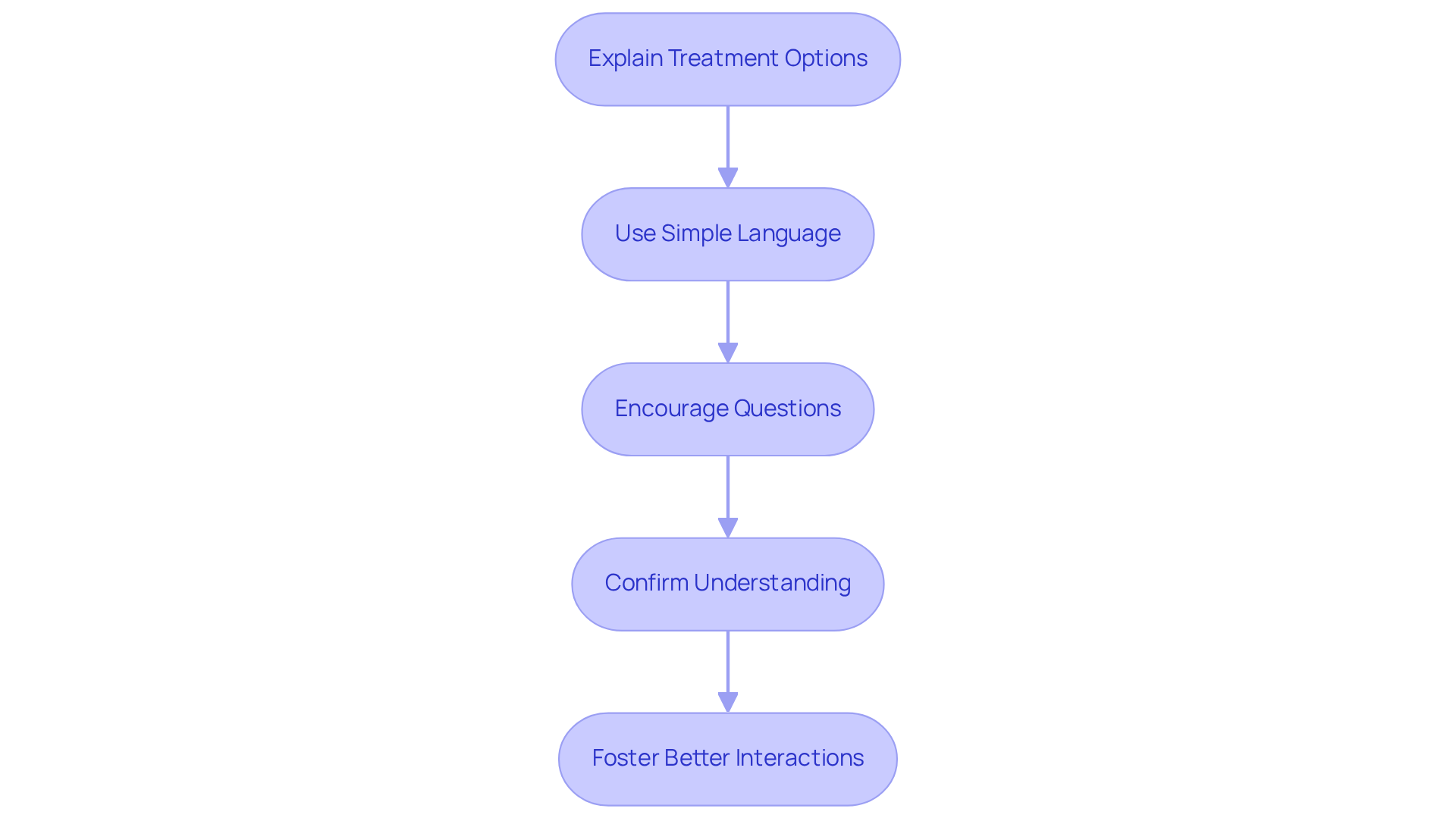
When discussing or sales proposals, it's essential to use to explain complex concepts. Avoid jargon and technical terms that may confuse individuals. For example, instead of saying, 'This medication will inhibit the enzyme,' you might say, 'This medication helps your body work better by blocking a specific process.'
Encouraging patient interactions by prompting them to is crucial. by employing techniques like 'teach-back,' where you ask them to explain the information in their own words. This approach not only ensures they grasp the key points but also empowers them to feel confident in their decisions.
By prioritizing clarity and engagement, you , which ultimately lead to a more informed experience and .
Conclusion
Establishing effective patient interactions in sales is not just beneficial; it’s essential for fostering trust and enhancing satisfaction. By prioritizing genuine connections, active listening, and clear communication, healthcare providers can create an environment that meets patients' needs and builds long-lasting relationships. This personalized approach, grounded in empathy and understanding, is crucial for successful patient engagement.
Consider the various best practices highlighted throughout this discussion. Establishing a positive connection, demonstrating active listening, setting a shared agenda, utilizing open-ended questions, and providing clear explanations are all vital strategies. Each plays a significant role in enhancing communication, ensuring that patients feel valued and understood. By implementing these techniques, healthcare providers can significantly improve their interactions, leading to better patient outcomes.
The importance of effective patient interactions cannot be overstated. By adopting these best practices, healthcare professionals not only enhance patient satisfaction but also contribute to improved health outcomes. Embracing these strategies fosters a culture of open communication and collaboration, reinforcing the idea that patient care is a partnership. Taking actionable steps toward enhancing patient interactions can lead to a more positive experience for everyone involved, paving the way for more successful healthcare sales and improved overall well-being.
Frequently Asked Questions
How can healthcare providers establish a positive connection with patients?
Healthcare providers can establish a positive connection by warmly welcoming patients, using their names to personalize interactions, and emphasizing genuine involvement. Research indicates that customized care enhances patient satisfaction by aligning services with personal preferences.
What role does empathy play in patient interactions?
Empathy is crucial for creating a welcoming environment. It should be embedded in staff conduct and patient interactions, as it fosters appreciation and respect, leading to higher satisfaction scores among clients.
What nonverbal communication techniques can enhance patient interactions?
Effective nonverbal communication techniques include using open body language, maintaining eye contact, and demonstrating empathy through verbal affirmations. These gestures create a welcoming atmosphere that encourages open communication.
What is active listening and why is it important in healthcare?
Active listening is a vital communication skill that involves fully focusing on a patient's words rather than just hearing them. It is important because it enhances understanding, builds trust, and contributes to improved patient satisfaction and safety.
What techniques can healthcare providers use to practice active listening?
Techniques for active listening include nodding, summarizing the patient’s statements, and asking clarifying questions. For example, acknowledging a patient's anxiety and asking for more details can validate their feelings and promote deeper dialogue.
How can the Teach-Back method improve patient communication?
The Teach-Back method ensures that patients understand and consent to the next steps in their care. By summarizing and confirming understanding, healthcare providers enhance communication and reinforce patient confidence.
What are some common barriers to effective active listening in patient interactions?
Common barriers include distractions and personality differences. Recognizing these challenges helps healthcare providers navigate them and improve their communication skills.
What is the overall impact of mastering active listening in patient care?
Mastering active listening is essential for enhancing patient interactions and fostering trust. It leads to better outcomes for both patients and practitioners, as effective communication correlates with improved safety and satisfaction.
List of Sources
- Establish a Positive Connection with Patients
- Understanding the Importance of Building Rapport to Enhance Patient Experience in Telehealth (https://medicaltechoutlook.com/cxoinsight/understanding-the-importance-of-building-rapport-to-enhance-patient-experience-in-telehealth-nwid-2372.html)
- 20 Ways Healthcare Businesses Can Improve The Patient Experience (https://forbes.com/councils/forbesbusinesscouncil/2024/11/13/20-ways-healthcare-businesses-can-improve-the-patient-experience)
- New data finds patient experience hits a five-year high, though inequity and generational differences remain | Press Ganey (https://pressganey.com/news/new-data-finds-patient-experience-hits-a-five-year-high-though-inequity-and-generational-differences-remain)
- What Is Patient Experience? Strategies To Improve It in 2026 (https://nextiva.com/blog/how-to-improve-patient-experience.html)
- Differential Effect of Patient- and Provider-Level Factors on Patient Satisfaction Scores in Academic General Internal Medicine Clinics - PMC (https://pmc.ncbi.nlm.nih.gov/articles/PMC11347540)
- Demonstrate Active Listening Skills
- The Power of Listening: Communication Skills That Transform (https://chenmed.com/blog/power-listening-communication-skills-transform-senior-care)
- The Importance of Listening in the Patient Experience (https://cipherhealth.com/blog/the-importance-of-listening-in-the-patient-experience)
- qualityinteractions.com (https://qualityinteractions.com/blog/active-listening-in-clinical-conversations-tip-sheet)
- Practice Tip of the Week | Active Listening and Verbatim Techniques for Nurse Wellbeing - Texas Nurses Association (https://texasnurses.org/news/680278/Practice-Tip-of-the-Week--Active-Listening-and-Verbatim-Techniques-for-Nurse-Wellbeing.htm)
- The Role of Active Listening in Value-Based Care | Welcome Health (https://welcomehealth.org/the-role-of-active-listening-in-value-based-care)
- Establish a Shared Agenda with Patients
- Patient Created Pre-visit Agendas Improve Communication and Efficiency - OpenNotes (https://opennotes.org/news/pre-visit-agendas)
- Collaborating With Patients On Visit Agendas Improves Communication | Healthcare IT Today (https://healthcareittoday.com/2017/04/26/collaborating-with-patients-on-visit-agendas-improves-communication)
- Agenda Setting During Follow-Up Encounters in a University Primary Care Outpatient Clinic (https://tandfonline.com/doi/full/10.1080/10410236.2016.1168003)
- Eliciting the Patient’s Agenda- Secondary Analysis of Recorded Clinical Encounters - PMC (https://pmc.ncbi.nlm.nih.gov/articles/PMC6318197)
- ajmc.com (https://ajmc.com/view/primary-care-communication-improved-when-patients-specified-agendas-before-visit)
- Utilize Open-Ended Questions and Reflective Statements
- When doctor asks what's wrong, patients often cut off before giving a full answer | CBC News (https://cbc.ca/news/health/doctor-patient-visits-1.4755498)
- Effective Open-Ended Questions: Enhancing Client Engagement and Therapeutic Outcomes (https://blueprint.ai/blog/effective-open-ended-questions-enhancing-client-engagement-and-therapeutic-outcomes)
- Tailored opening questions to the context of using medical questionnaires: Qualitative analysis in first‐visit consultations - PMC (https://pmc.ncbi.nlm.nih.gov/articles/PMC10000256)
- Asking open-ended questions can drive better patient outcomes (https://fiercehealthcare.com/practices/asking-open-ended-questions-can-drive-better-patient-outcomes)
- Open-ended questions improve accuracy of patient medication lists | UIC today (https://today.uic.edu/open-ended-questions-improve-accuracy-of-patient-medication-lists)
- Provide Clear Explanations to Patients
- Effective Communication Plays a Key Role in Patient Satisfaction (https://chausa.org/news-and-publications/publications/health-progress/archives/fall-2023/effective-communication-plays-a-key-role-in-patient-satisfaction)
- Why Patient Communication is Key to Better Healthcare Outcomes (https://certifyhealth.com/blog/why-patient-communication-is-key-to-better-healthcare-outcomes)
- cipherhealth.com (https://cipherhealth.com/blog/importance-of-communication-in-healthcare)
- The Importance of Effective Communication With Patients - Medical Director (https://medicaldirector.com/news/practice-management/effective-communication-with-patients)
- The importance of communicating with the patient (https://cvirendovascular.org/2025/10/24/the-importance-of-communicating-with-the-patient)