
Introduction
The landscape of sales is continuously evolving, and the methods of outreach remain pivotal in driving success. Cold calling and warm calling represent two distinct strategies, each with its own merits and challenges. As sales managers strive to optimize their teams' effectiveness, understanding the nuances between these approaches is crucial.
What if the key to achieving higher conversion rates lies not just in the number of calls made, but in the relationships established prior to those calls? Exploring the dynamics of cold versus warm outreach reveals stark contrasts in effectiveness and strategic advantages that can be leveraged for improved sales outcomes.
Consider this: research shows that warm calls can lead to conversion rates that are significantly higher than cold calls. This insight underscores the importance of nurturing relationships before making outreach efforts. By focusing on building rapport, sales teams can enhance their effectiveness and drive better results.
In conclusion, the distinction between cold and warm calling is not merely academic; it has real implications for sales success. By prioritizing relationship-building, sales managers can empower their teams to achieve greater outcomes in an ever-evolving sales landscape.
Define Cold Calling and Warm Calling
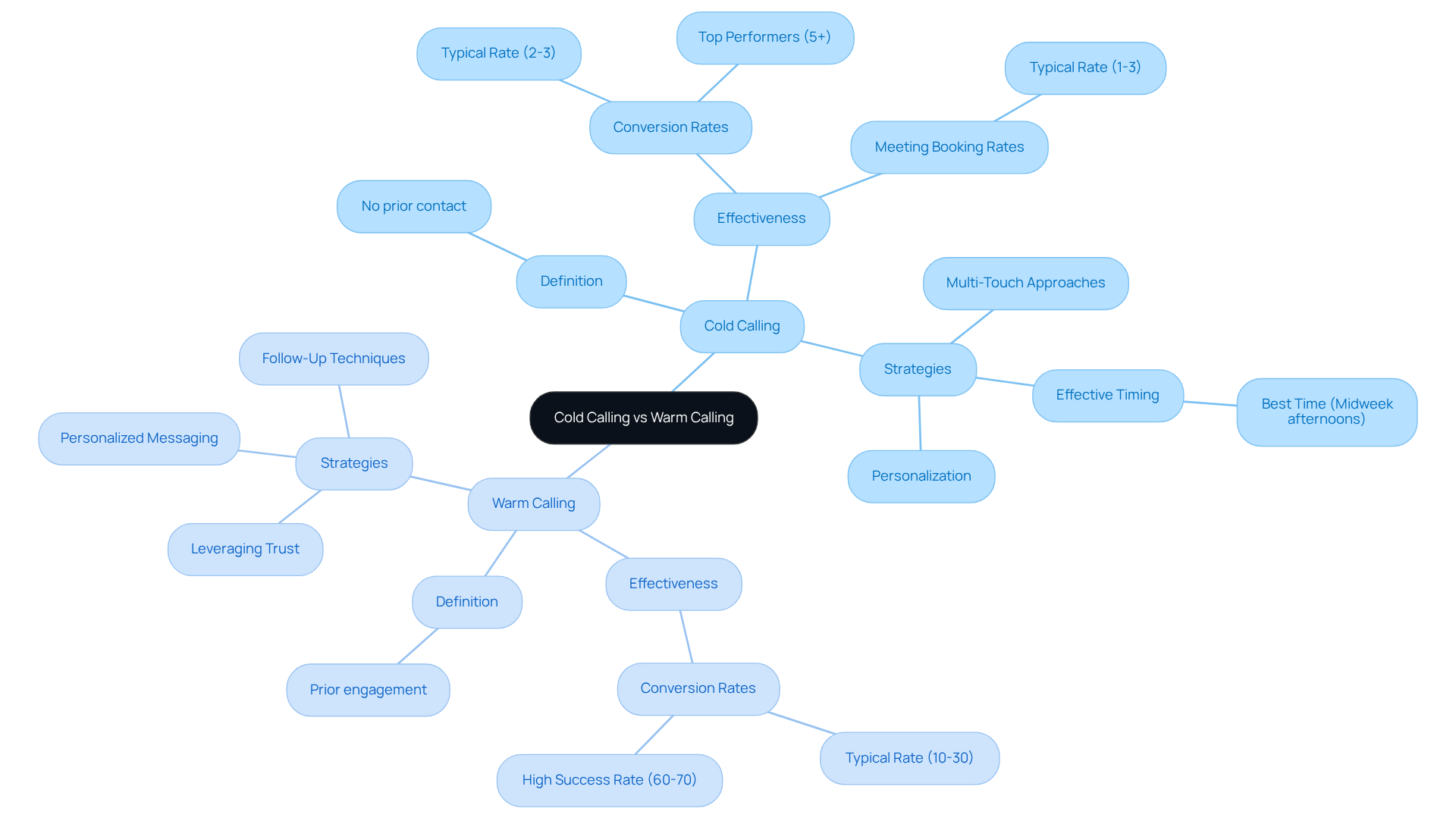
is the practice of reaching out to potential customers who have had no prior interaction with the salesperson or the company. This method is often employed to generate new leads and expand the customer base. In contrast, involves contacting prospects who have previously engaged with the company-whether through inquiries, past purchases, or other forms of interaction. This prior engagement typically makes friendly calls more effective, as the prospect is already somewhat familiar with the brand or product being offered.
Statistics reveal that 84% of purchasers prefer to engage with a salesperson they know and trust, underscoring the significance of familiarity in warm outreach. Warm outreach can achieve , significantly higher than the usual , which range from 2% to 3%. Successful sales teams leverage this familiarity by referencing specific actions taken by prospects, personalizing their outreach and enhancing engagement.
Case studies illustrate that organizations utilizing experience a notable improvement in their communication strategies. For instance, teams that focus on quality targeting and personalized messaging frequently achieve conversion levels exceeding 5%. Furthermore, leading achievers can attain of 5% or more. Moreover, combining telemarketing with tactics-such as following up on earlier interactions-can yield a 287% greater response compared to single-channel methods, emphasizing the effectiveness of a .
In summary, while unsolicited outreach remains a vital tool for lead generation, presents a more effective strategy by building on existing relationships and familiarity. This approach ultimately leads to higher and improved sales outcomes. The distinctions between cold calling vs warm calling are becoming increasingly blurred, making it essential for sales teams to adapt their strategies accordingly.
Contrast Key Characteristics of Cold and Warm Calling
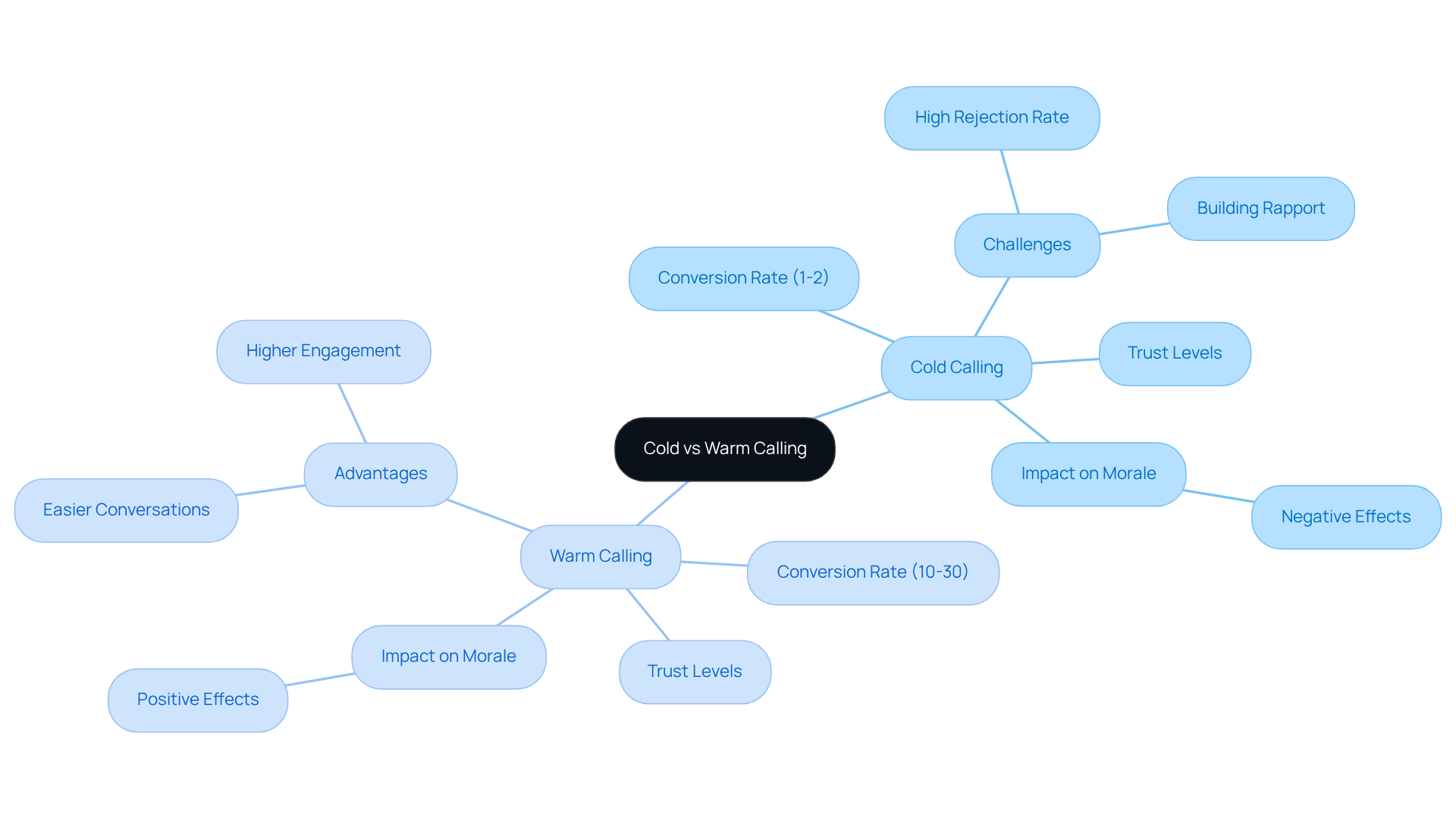
The concept of explains that , resulting in lower trust levels and increased resistance from recipients. Sales representatives often face challenges in building rapport and credibility during these interactions, resulting in high rejection rates. For instance, statistics reveal that the is a mere 1% to 2%. Many potential clients hesitate to engage due to the unexpected nature of the call. Nevertheless, over 50% of B2B leads still originate from cold outreach in 2025, underscoring its ongoing significance in sales strategies.
In contrast, the discussion of highlights how friendly outreach leverages existing relationships or prior interactions, establishing a foundation of familiarity and trust. This approach markedly increases the likelihood of a positive response, as prospects are generally more open to conversations with someone they recognize. When discussing , it's notable that boasts a conversion rate ranging from 10% to 30%, demonstrating its effectiveness in engaging potential customers. Furthermore, 84% of B2B decision-makers initiate their purchasing process with referrals, highlighting the advantages of personal calls.
Experts stress the critical role of trust in sales interactions. For example, . Additionally, individuals are 4.2 times more likely to schedule a meeting when there is an existing personal connection. This trust factor not only facilitates smoother conversations but also enhances the chances of closing deals.
The characteristics of warm outreach include personalized engagement based on prior interactions, fostering a positive environment and boosting sales team morale. Conversely, telephone outreach often breeds skepticism, requiring sales representatives to educate prospects from scratch, which demands additional effort and time. Moreover, the heightened rejection frequency associated with unsolicited outreach can negatively impact the sales team's morale. By understanding these dynamics, and develop strategies that maximize the success of their outreach efforts.
Evaluate Effectiveness: Cold Calling vs Warm Calling
Studies indicate that friendly outreach greatly surpasses unsolicited calls in terms of success levels. When comparing , can achieve , while cold calls typically hover around 1% to 3%. This stark contrast is primarily due to the existing rapport and trust that warm calling has over cold calling, allowing for more .
Furthermore, warm outreach tends to result in . Prospects are more inclined to discuss their needs and how the product can address them. In contrast, unsolicited outreach often requires additional effort to inform and convince potential clients who may be unaware of the offering. For instance, focusing on can boost the success proportion from 2% to 18%, emphasizing the significance of cultivating connections prior to outreach.
It's also noteworthy that , highlighting the challenges faced in this process. Effective timing plays a crucial role; contacting prospects between 4 p.m. and 5 p.m. can enhance success percentages by 71%. This demonstrates that while indicates unsolicited outreach remains a viable strategy, the effectiveness of personalized contact is evident in its higher conversion rates and .

Implement Strategies for Successful Cold and Warm Calling
Effective cold outreach strategies hinge on thorough prospect research, empowering sales professionals to and personalize interactions. A is essential for capturing attention, while preparation for common objections equips sales teams to navigate challenging conversations with confidence. Moreover, integrating technology - like predictive dialers - boosts efficiency by automating call processes and optimizing outreach timing.
Conversely, relies on leveraging prior interactions to create a more engaging experience. By referencing past communications, sales professionals establish familiarity, and personalizing conversations based on the prospect's history fosters a deeper connection. Prompt follow-ups after initial contact are crucial for maintaining momentum. Establishing connections through attentive listening and demonstrating genuine interest in the prospect's needs significantly enhances the success of friendly calls, leading to higher conversion rates.
Case studies reveal that warm calling can achieve , highlighting the differences in effectiveness when comparing , which only sees rates of 1% to 2%. This significant difference highlights the necessity of and leveraging established relationships, especially when considering , to drive sales success. By combining both strategies, sales teams can maximize their outreach effectiveness, ensuring a balanced approach that capitalizes on the strengths of each method.

Conclusion
The exploration of cold calling versus warm calling highlights the critical importance of relationship-building in sales strategies. Cold calling remains a relevant method for generating leads; however, it often struggles with low conversion rates due to the absence of prior interaction and trust. In contrast, warm calling leverages existing relationships, leading to significantly higher engagement and success rates. This distinction emphasizes the necessity for sales teams to prioritize familiarity and personal connections over blind outreach.
Key insights reveal that warm outreach can achieve conversion rates ranging from 10% to 30%, while cold calling typically sees rates between 1% and 3%. The effectiveness of warm calling is further underscored by statistics indicating that 84% of buyers prefer engaging with salespeople they know and trust. By implementing personalized strategies and nurturing leads through prior interactions, sales teams can enhance their outreach efforts and improve overall sales performance.
In conclusion, adapting sales strategies to incorporate both cold and warm calling techniques is essential for maximizing effectiveness in the competitive landscape of sales. Recognizing the advantages of warm outreach and focusing on building trust and rapport with prospects enables sales managers to not only improve conversion rates but also foster long-term customer relationships. Embracing these insights empowers sales teams to navigate the evolving dynamics of customer engagement and drive lasting success in their outreach efforts.
Frequently Asked Questions
What is cold calling?
Cold calling is the practice of reaching out to potential customers who have had no prior interaction with the salesperson or the company, often to generate new leads and expand the customer base.
What is warm calling?
Warm calling involves contacting prospects who have previously engaged with the company, such as through inquiries or past purchases, making these calls generally more effective due to the prospect's familiarity with the brand or product.
How do conversion rates compare between cold calling and warm calling?
Warm calling can achieve conversion rates between 10% and 30%, while cold calling typically has conversion rates ranging from 2% to 3%.
Why is familiarity important in warm outreach?
Familiarity is significant in warm outreach because statistics show that 84% of purchasers prefer to engage with a salesperson they know and trust, which enhances the effectiveness of the outreach.
What strategies do successful sales teams use for warm outreach?
Successful sales teams leverage familiarity by referencing specific actions taken by prospects, personalizing their outreach, and enhancing engagement.
How can structured coaching and training impact communication strategies in sales?
Organizations utilizing structured coaching and training can experience notable improvements in their communication strategies, often achieving conversion levels exceeding 5%.
What is the benefit of combining telemarketing with friendly outreach tactics?
Combining telemarketing with friendly outreach tactics, such as following up on earlier interactions, can yield a 287% greater response compared to single-channel methods.
What is the overall conclusion about cold calling and warm calling?
While cold calling is a vital tool for lead generation, warm calling is generally more effective by building on existing relationships and familiarity, leading to higher conversion rates and improved sales outcomes.
List of Sources
- Define Cold Calling and Warm Calling
- Who Still Answers the Phone? A Generational Playbook for 2026 (https://cmswire.com/digital-marketing/telemarketing-isnt-deadbut-your-old-playbook-is)
- Cold Calling vs Warm Calling in 2026: 5 Trends You Need to Know (https://martal.ca/cold-calling-vs-warm-calling-lb)
- Cold Calling vs. Warm Calling: Key Differences and When to Use Each (https://callcenterstudio.com/blog/cold-calling-vs-warm-calling-key-differences-and-when-to-use-each)
- Cold Calling Vs. Warm Calling: Insights From 25 Years Of Sales (https://salesbuzz.com/cold-calling-vs-warm-calling)
- cleverly.co (https://cleverly.co/blog/cold-calling-statistics)
- Contrast Key Characteristics of Cold and Warm Calling
- The Differences Between “Cold” and “Warm” Sales Calls—And Why it Matters to Your Sales Team | Smith.ai (https://smith.ai/blog/the-differences-between-cold-and-warm-sales-calls-and-why-it-matters-to-your-sales-team)
- Warm Calling vs Cold Calling: Data-Driven Analysis - Leads at Scale | Get Leads at Scale and Grow Your Sales (https://leadsatscale.com/insights/warm-calling-vs-cold-calling-data-driven-analysis)
- Who Still Answers the Phone? A Generational Playbook for 2026 (https://cmswire.com/digital-marketing/telemarketing-isnt-deadbut-your-old-playbook-is)
- Cold Calling vs. Warm Calling: Everything You Need To Know (https://ai-bees.io/post/cold-calling-vs-warm-calling)
- Is Cold Calling Effective in 2025? Data Insights & Trends (https://martal.ca/is-cold-calling-effective-lb)
- Evaluate Effectiveness: Cold Calling vs Warm Calling
- Cold calling vs warm calling: the facts (https://sopro.io/resources/blog/cold-calling-vs-warm-calling)
- The State of Cold Calling in 2025 (https://cognism.com/cold-calling-report-2025)
- Who Still Answers the Phone? A Generational Playbook for 2026 (https://cmswire.com/digital-marketing/telemarketing-isnt-deadbut-your-old-playbook-is)
- scrap.io (https://scrap.io/what-is-the-success-rate-of-cold-calling)
- cleverly.co (https://cleverly.co/blog/cold-calling-statistics)
- Implement Strategies for Successful Cold and Warm Calling
- Warm Calling vs Cold Calling: Data-Driven Analysis - Leads at Scale | Get Leads at Scale and Grow Your Sales (https://leadsatscale.com/insights/warm-calling-vs-cold-calling-data-driven-analysis)
- Cold Calling vs Warm Calling: What’s the Best Sales Strategy in 2025? (https://linkedin.com/pulse/cold-calling-vs-warm-whats-best-sales-strategy-2025-anybiz-2joxc)
- Warm Calling: Crafting Winning Sales Conversations | Mailchimp (https://mailchimp.com/resources/warm-calling)
- Top 25 Cold Calling Statistics Sales Reps Must Know in 2026 (https://salesgenie.com/blog/cold-calling-statistics-for-sales-representatives)
- Turn Cold Calls into Warm Calls: Strategies For Better Conversions (https://trellus.ai/post/turn-cold-calls-into-warm-calls)