

Introduction
The rise of automation in the finance sector has ignited a crucial conversation about the roles of bots and artificial intelligence (AI) in enhancing sales strategies. As finance managers navigate this rapidly evolving landscape, grasping the distinct functionalities and advantages of these technologies is essential.
- Bots excel at streamlining repetitive tasks,
- while AI provides a sophisticated approach to customer interaction and data analysis, presenting a unique opportunity for revenue growth.
Yet, the challenge remains: which technology best aligns with specific business needs?
- Can bots deliver efficiency without sacrificing personalization,
- or does AI offer the necessary edge for deeper customer engagement?
This dialogue is not just theoretical; it’s a pivotal consideration for any finance professional aiming to thrive in a competitive market.
Define Bots and AI: Understanding the Basics
The discussion of bots vs AI involves understanding how bots, or software applications designed for automation, execute predefined tasks such as answering FAQs or processing transactions without human intervention. They excel at handling simple, repetitive functions efficiently. In contrast, the comparison of bots vs AI highlights that Artificial Intelligence (AI) encompasses systems that simulate human intelligence, capable of learning from data and adapting to new scenarios. AI can analyze complex datasets, recognize patterns, and make informed decisions, enabling it to tackle tasks requiring higher cognitive functions.
For finance managers, understanding these distinctions is crucial for choosing the right technology to improve transaction processes. The comparison of bots vs AI shows that while bots efficiently handle simple tasks, AI offers opportunities for enhanced customer interaction and the creation of advanced marketing strategies. For instance, companies employing AI-driven chatbots have reported a remarkable 67% rise in revenue, demonstrating the significant impact of AI on income generation. Additionally, 41% of companies are already utilizing chatbots for lead generation, emphasizing the increasing trend towards automation in commerce.
Industry leaders underscore the importance of grasping these technologies. As one expert noted, "The future of commerce lies in the intelligent use of AI tools to drive measurable growth and enhance customer interactions." This perspective highlights the necessity for finance managers to , ensuring they leverage the full capabilities of these technologies in their marketing strategies.

Examine Roles: How Bots and AI Enhance Sales Strategies
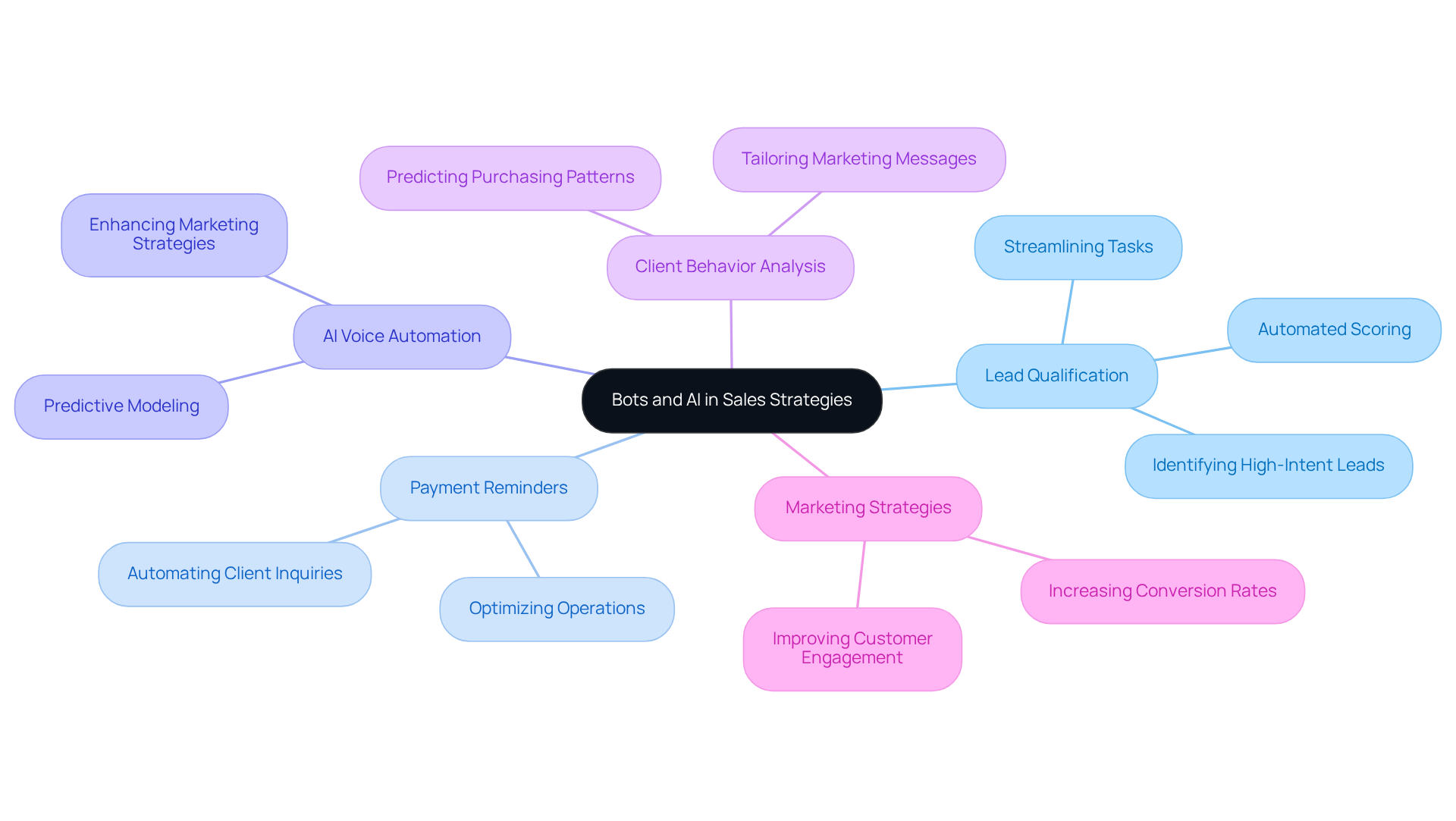
In today's competitive commercial landscape, automated systems are not just tools; they are essential for streamlining repetitive tasks. By effectively managing lead qualification, these systems screen out unsuitable leads based on established criteria, allowing sales teams to concentrate on more complex interactions that drive results. Additionally, the comparison of bots vs AI shows that bots take charge of payment reminders and handle simple client inquiries, optimizing operations and freeing up valuable time for sales staff to focus on what truly matters.
However, the real game-changer is Intone's AI voice automation, which significantly enhances marketing strategies through sophisticated data analysis and predictive modeling. Intone's AI systems excel at assessing client behavior, predicting future purchasing patterns, and tailoring marketing messages accordingly. This empowers finance managers to adapt their strategies effectively, leading to improved customer engagement and increased conversion rates.
For instance, Intone's AI can identify high-intent leads and prioritize them for follow-up, thereby streamlining the conversion process. With tools designed for and fine-tuning agent behavior in real time, Intone equips sales teams to respond swiftly and optimize their strategies for superior outcomes. The integration of such advanced technology not only boosts efficiency but also positions sales teams for success in a rapidly evolving market.
Analyze Pros and Cons: Bots vs AI in Sales
When examining bots vs ai, distinct advantages and disadvantages come to light. Bots are often cost-effective and straightforward to implement, making them ideal for businesses looking to automate basic tasks quickly. They offer 24/7 availability, ensuring inquiries are addressed without delay. However, their limitations become evident when faced with complex queries or unique situations, as they lack the ability to adapt without human intervention.
On the other hand, AI systems leverage advanced capabilities like natural language processing and machine learning, allowing for more significant interactions and the ability to adjust to user needs over time. Intone's AI representatives exemplify this adaptability, offering effortless deployment and customization tailored to specific business requirements. Users can upload scripts, training materials, and call recordings, which are utilized to customize the AI agent specifically for their business. With intelligent analytics, finance managers can monitor performance, compare agents, and gain , significantly improving conversion rates and client satisfaction. For instance, sales teams employing AI report a 15% increase in conversion rates and finalize 45% more agreements compared to those not using AI, underscoring its effectiveness in engaging clients.
Despite these advantages, AI implementations can be more costly and require ongoing maintenance and training to ensure optimal performance. For finance managers, the choice between bots vs ai depends on specific revenue goals, budget constraints, and the complexity of interactions they wish to automate. As the landscape evolves, understanding these dynamics - especially with solutions like Intone's AI agents - will be crucial for enhancing marketing strategies.

Evaluate Implications: Impact on Sales Teams and Customer Engagement
The integration of bots vs AI into marketing processes significantly transforms how sales teams operate and enhances customer engagement strategies. Bots adeptly manage routine inquiries and tasks, enabling representatives to concentrate on high-value interactions. This shift not only boosts job satisfaction but also enhances productivity among sales personnel. However, an excessive reliance on bots may diminish the personal touch in client communications, potentially alienating those who favor human interaction. Therefore, it is crucial for sales teams to strike a balance between automation and personal engagement to maintain robust client relationships.
On the other hand, AI markedly improves user engagement by delivering personalized experiences grounded in data-driven insights. AI systems analyze client interactions and preferences, empowering sales teams to tailor their strategies effectively. This level of personalization cultivates and enhances retention rates. For example, GCS successfully scaled their revenue efficiency by utilizing Intone's [customizable AI voice agents](https://intone.io/features/debt-collection), which required no setup or tuning-just a clear articulation of their needs. Organizations that embrace AI-driven personalization have reported a 25% increase in email performance and a 41% rise in SMS click-through rates, underscoring the power of tailored messaging.
Despite these benefits, the implementation of AI necessitates substantial training and adjustment for teams as they acclimate to new workflows and technologies. Research indicates that 69% of vendors employing AI have shortened their transaction periods by an average of one week, while 68% assert that AI has aided them in securing more agreements overall. Consequently, finance managers must meticulously assess these implications when incorporating bots vs AI into their sales strategies, balancing efficiency with the essential need for personal engagement.

Conclusion
The comparison between bots and AI reveals a pivotal distinction in how these technologies can enhance sales strategies for finance managers. Bots excel in automating repetitive tasks and managing simple inquiries, while AI systems offer a deeper level of engagement and adaptability. This allows for more sophisticated interactions and personalized customer experiences. Understanding these differences is essential for finance professionals aiming to leverage technology for improved operational efficiency and revenue growth.
Key insights illustrate that bots can streamline basic functions, freeing up valuable time for sales teams to focus on complex interactions that drive results. In contrast, AI's advanced capabilities enable predictive modeling and data analysis, significantly enhancing marketing strategies and customer engagement. Organizations utilizing AI-driven solutions demonstrate a clear correlation between their adoption and improved performance metrics, such as increased conversion rates and revenue.
Ultimately, integrating bots and AI into sales processes transcends mere automation; it strategically enhances how sales teams operate and interact with customers. Finance managers must carefully consider the balance between automation and personal engagement to foster strong client relationships while embracing the advanced capabilities that AI brings to the table. As the landscape of sales technology continues to evolve, staying informed about the potential of bots and AI will be crucial for driving success in an increasingly competitive market.
Frequently Asked Questions
What are bots and how do they function?
Bots are software applications designed for automation that execute predefined tasks such as answering FAQs or processing transactions without human intervention. They excel at handling simple, repetitive functions efficiently.
How does Artificial Intelligence (AI) differ from bots?
AI encompasses systems that simulate human intelligence, capable of learning from data and adapting to new scenarios. Unlike bots, AI can analyze complex datasets, recognize patterns, and make informed decisions, enabling it to tackle tasks requiring higher cognitive functions.
Why is it important for finance managers to understand the differences between bots and AI?
Understanding these distinctions is crucial for finance managers when choosing the right technology to improve transaction processes and enhance customer interactions, ultimately impacting their marketing strategies.
What benefits do AI-driven chatbots provide to companies?
Companies employing AI-driven chatbots have reported a 67% rise in revenue, indicating a significant impact on income generation. Additionally, 41% of companies are using chatbots for lead generation, reflecting the growing trend towards automation in commerce.
What do industry leaders say about the future of commerce in relation to AI?
Industry leaders emphasize that the future of commerce lies in the intelligent use of AI tools to drive measurable growth and enhance customer interactions, highlighting the necessity for finance managers to leverage these technologies effectively.