
Introduction
Effective communication in sales transcends mere information exchange; it’s about building authentic connections that yield tangible results. By mastering the art of active listening and personalizing interactions, sales professionals can not only address customer needs but also cultivate loyalty and satisfaction. Yet, with technology advancing rapidly and client expectations soaring, how can sales teams ensure they are genuinely engaging their customers? This article explores four best practices designed to transform customer conversations into meaningful dialogues, ultimately enhancing both sales effectiveness and client relationships.
Understand Customer Needs Through Active Listening
Active listening is a vital skill that requires complete focus on the client's message, fostering deeper understanding and thoughtful responses. To effectively implement this practice, consider these strategies:
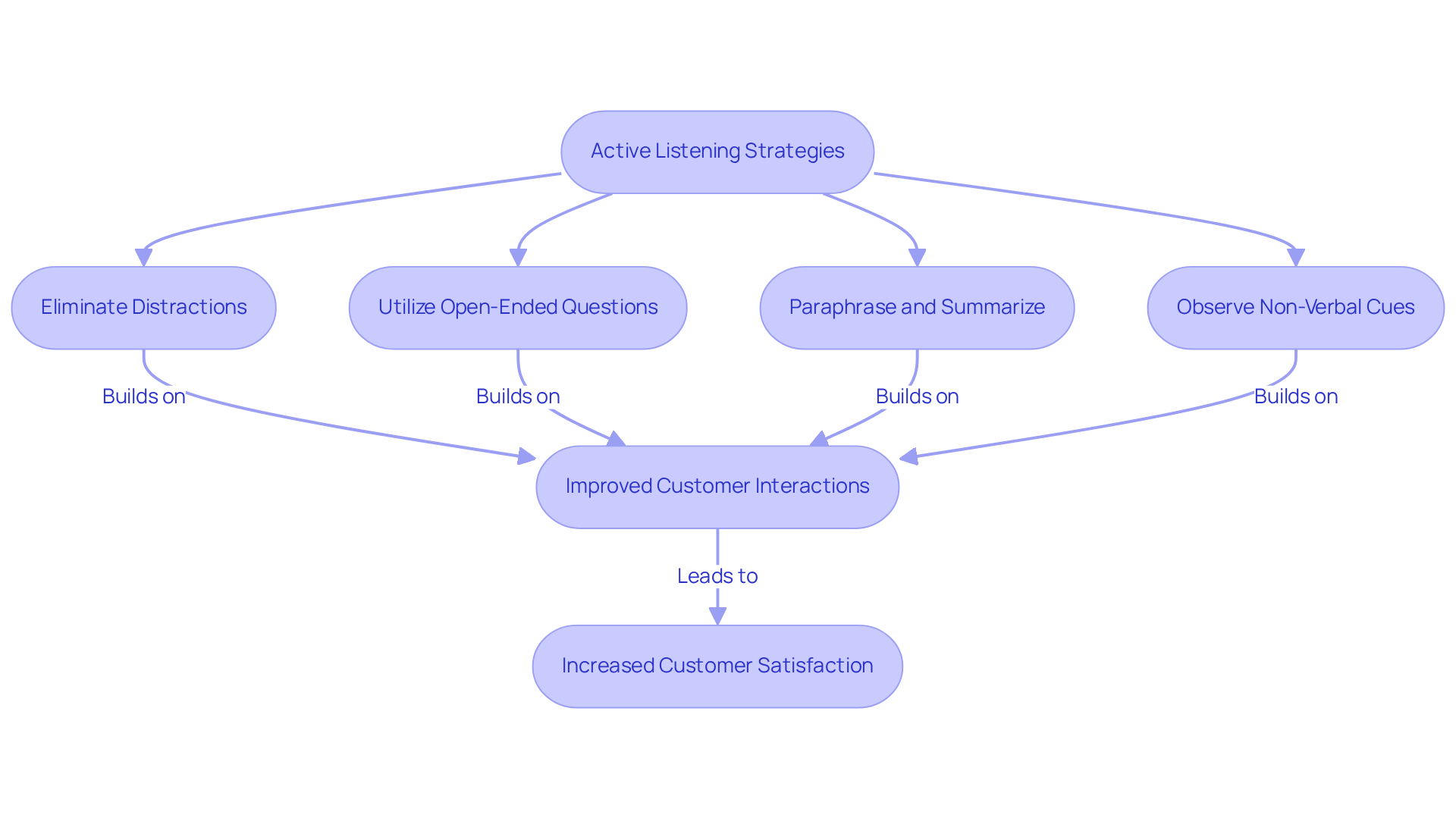
- Eliminate Distractions: Being fully present during conversations is essential. Set aside your phone and avoid multitasking to engage meaningfully.
- Utilize Open-Ended Questions: Encourage clients to elaborate on their needs and concerns. Questions like 'Can you tell me more about your challenges?' invite detailed responses and deeper insights.
- Paraphrase and Summarize: After the client speaks, restate their points to confirm your understanding. This not only shows that you are actively listening but also helps clarify any potential misunderstandings.
- Observe Non-Verbal Cues: Pay attention to body language and tone, as these can provide additional context to the customer's words, revealing unspoken concerns and emotions.
Mastering active listening is essential for professionals talking to customers, as it enables them to identify high-intent leads and tailor their pitches effectively. Research indicates that active listening can enhance sales effectiveness by up to 8%, significantly improving conversion rates. As industry experts emphasize, the ability to listen actively while talking to customers transforms commercial interactions from mere transactions into meaningful dialogues, ultimately leading to greater customer satisfaction and loyalty. By prioritizing active listening and talking to customers, business teams can build stronger relationships and achieve better outcomes.
Incorporating Intone's AI voice agents into your selling strategy can further enhance this process. By customizing the AI agents to engage with clients based on their unique needs and preferences, sales teams can leverage intelligent analytics to gain insights into client behavior. Users can submit their use cases, training materials, and call recordings to tailor the AI agents specifically for their business requirements. Tools like Intone's AI agents can assist in real-time by providing guidance and summarizing key points during calls, ensuring that active listening is not only practiced but also supported by technology. By prioritizing active listening and utilizing Intone's customizable solutions, sales teams can cultivate stronger relationships and drive better outcomes.
Personalize Communication to Build Rapport
Personalization in sales communication is essential for forging meaningful connections with clients. Here are effective strategies to elevate your approach:
-
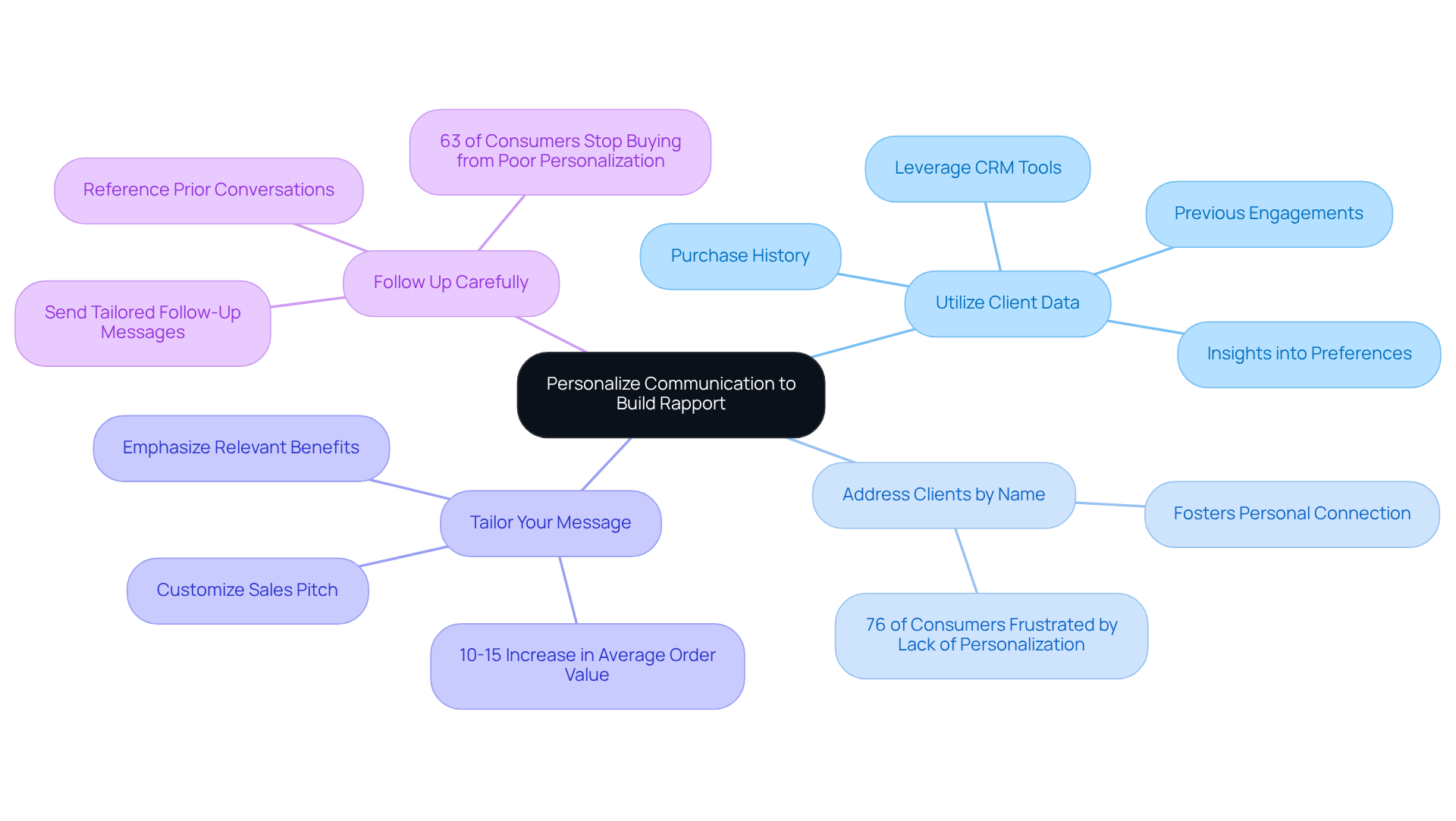
Utilize Client Data: Leverage CRM tools to gather insights into client preferences, previous engagements, and purchase history. This data informs your communication strategy, enabling more relevant conversations while talking to customers that resonate with your audience.
-
Address Clients by Name: Incorporating an individual's name into the dialogue fosters a personal connection, making them feel valued and acknowledged. In fact, studies reveal that 76% of consumers feel frustrated when personalized interactions do not occur, underscoring the necessity of personalization in communication.
-
Tailor Your Message: Customize your sales pitch to align with the specific needs and interests of the client. For instance, if an individual has shown interest in a particular product, emphasize its benefits during your conversation. Personalization can lead to a significant increase in average order value, with top performers achieving revenue lifts of 10-15%.
-
Follow Up Carefully: After initial engagements, send tailored follow-up messages that reference prior conversations or address specific client concerns. This not only reinforces the relationship but also demonstrates attentiveness, which can lead to higher conversion rates. However, be cautious; 63% of consumers will stop buying from brands that employ poor personalization tactics.
By talking to customers and implementing these personalization tactics, sales experts can create a more captivating experience that resonates with clients, ultimately enhancing conversion rates and fostering long-term loyalty.
Leverage Technology for Efficient Customer Interactions
Integrating technology into transaction processes significantly boosts efficiency and enhances the experience of talking to customers. Here’s how you can leverage these advancements:
-
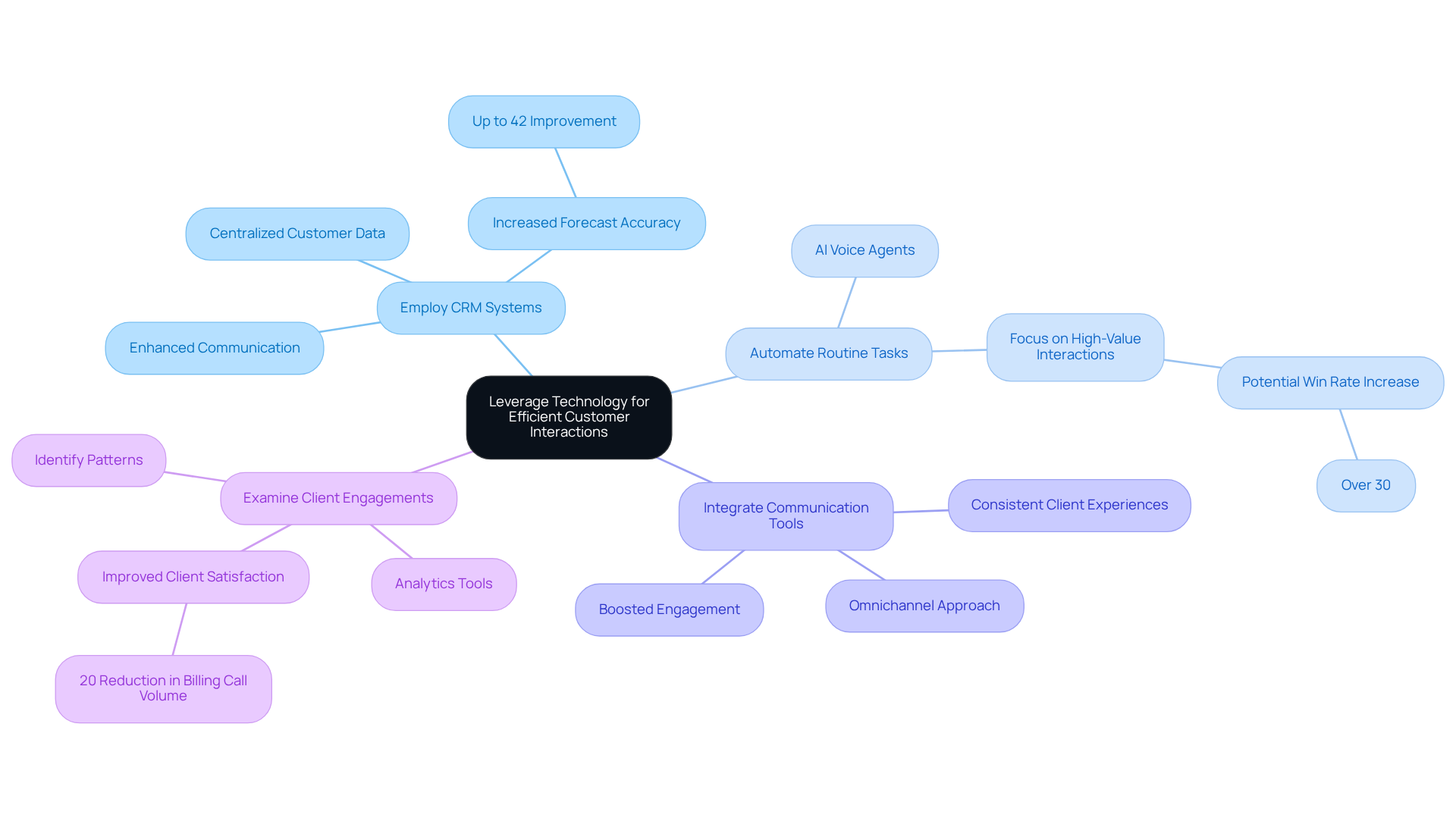
Employ CRM Systems: A robust CRM system is essential for managing customer interactions, tracking sales efforts, and analyzing customer data. This centralization not only enhances communication but also increases forecast accuracy by up to 42%, enabling better resource allocation.
-
Automate Routine Tasks: AI voice agents excel at managing repetitive tasks like lead qualification and follow-ups. By automating these processes, sales representatives can focus on high-value interactions, potentially increasing win rates by over 30%.
-
Integrate Communication Tools: Utilize a variety of tools, such as chatbots, email automation, and video conferencing, to ensure seamless client interactions across multiple channels. This omnichannel approach guarantees consistent experiences for clients, especially when talking to customers, and significantly boosts engagement.
-
Examine Client Engagements: Analytics tools are invaluable for assessing client interactions, allowing sales teams to identify patterns and inform future strategies. Companies using AI-driven systems have reported notable improvements in client satisfaction and engagement, with some achieving a 20% reduction in billing call volume.
By embracing these technological advancements, sales teams can enhance their efficiency and effectiveness when talking to customers, leading to improved client satisfaction and higher conversion rates.
Implement Feedback Loops for Continuous Improvement
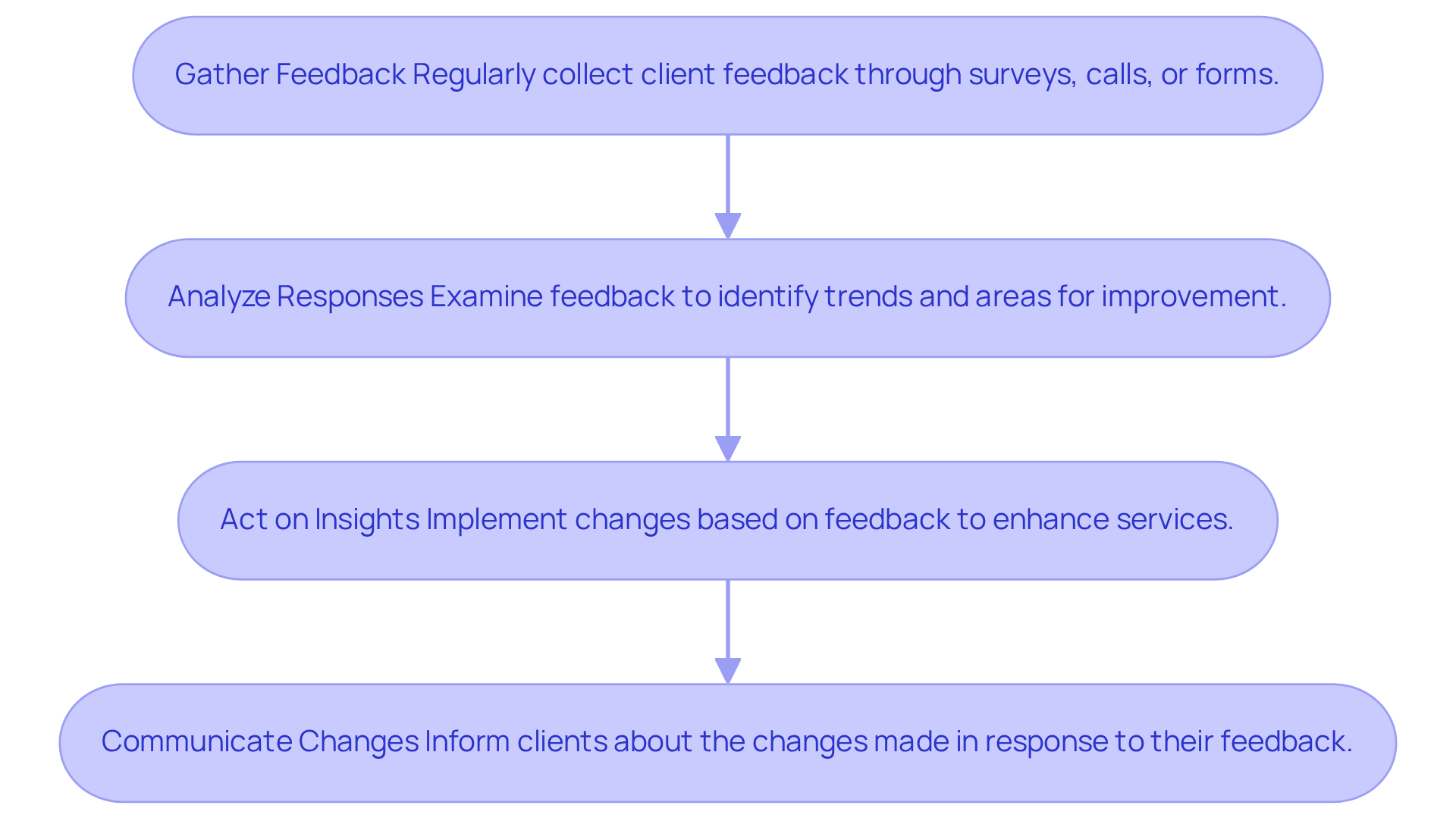
Creating response cycles is crucial for the continuous improvement of sales processes, especially when integrating Intone's AI voice agents. Here’s how to effectively implement these loops:
-
Talking to customers involves regularly gathering feedback from clients through surveys, follow-up calls, or response forms. This data is vital for talking to customers, assessing client satisfaction, and identifying areas for improvement. To personalize your AI agents effectively, upload your scripts and training materials to streamline the information-gathering process while talking to customers.
-
Analyze Responses: Examine the collected input to reveal recurring themes and issues. This analysis should inform adjustments to your sales strategies and communication methods. As Kyo Zapanta aptly puts it, "A response loop is the mechanism that converts all that raw input into enhancements." Intone's smart analytics can help identify trends and insights from client interactions, enhancing your ability to respond effectively.
-
Act on Insights: Implement informed changes based on the feedback gathered from clients. This may involve refining your marketing presentation, modifying product options, or upgrading support services by talking to customers. For instance, SmartBuyGlasses successfully increased their Net Promoter Score (NPS) by 30% after establishing a structured response system with Zonka Feedback. Similarly, leveraging Intone's AI agents allows for real-time adjustments to sales strategies based on insights gained from talking to customers.
-
Communicate Changes: Inform clients about the changes made in response to their feedback. This practice not only demonstrates that you value their input but also reinforces your commitment to enhancing their experience. It’s essential to avoid superficial resolutions of communication cycles, as many firms do, which can lead to client disengagement. By utilizing Intone's AI voice agents for talking to customers, you can ensure that communication regarding changes is timely and tailored, further engaging your clients.
By effectively implementing feedback loops and leveraging Intone's AI solutions, sales teams can continuously refine their strategies, resulting in heightened customer satisfaction and improved sales performance.
Conclusion
Effective communication with customers stands as a cornerstone of successful sales strategies. By prioritizing active listening, personalizing interactions, leveraging technology, and implementing feedback loops, sales professionals can transform their engagements into meaningful connections that drive customer satisfaction and loyalty. Each of these practices contributes to a holistic approach that not only meets but anticipates client needs.
Consider these key strategies:
- Active listening fosters understanding and builds trust.
- Personalization enhances rapport and relevance.
- Technology streamlines interactions and increases efficiency.
- Feedback loops ensure continuous improvement in sales processes.
Together, these elements create a customer-centric environment that enhances sales performance and cultivates long-term relationships.
In a rapidly evolving market, embracing these best practices is essential for any sales team aiming to thrive. By focusing on effective communication, businesses can improve their conversion rates and create a loyal customer base that feels valued and understood. Taking action on these insights will elevate individual sales efforts and contribute to a more robust and responsive sales culture overall.
Frequently Asked Questions
What is active listening and why is it important?
Active listening is a vital skill that involves complete focus on the client's message, fostering deeper understanding and thoughtful responses. It is important because it helps professionals identify high-intent leads and tailor their pitches effectively, ultimately leading to greater customer satisfaction and loyalty.
What strategies can enhance active listening?
Strategies to enhance active listening include eliminating distractions, utilizing open-ended questions, paraphrasing and summarizing what the client says, and observing non-verbal cues like body language and tone.
How can eliminating distractions improve active listening?
Eliminating distractions, such as setting aside your phone and avoiding multitasking, allows you to be fully present during conversations, which is essential for engaging meaningfully with clients.
Why are open-ended questions important in active listening?
Open-ended questions encourage clients to elaborate on their needs and concerns, inviting detailed responses that provide deeper insights into their challenges.
How does paraphrasing and summarizing benefit the listening process?
Paraphrasing and summarizing the client's points confirms your understanding and shows that you are actively listening. It also helps clarify any potential misunderstandings.
What role do non-verbal cues play in active listening?
Non-verbal cues, such as body language and tone, provide additional context to the customer's words, revealing unspoken concerns and emotions that can enhance understanding.
What impact does active listening have on sales effectiveness?
Research indicates that active listening can enhance sales effectiveness by up to 8%, significantly improving conversion rates and transforming interactions from transactions into meaningful dialogues.
How can Intone's AI voice agents support active listening?
Intone's AI voice agents can be customized to engage with clients based on their unique needs and preferences, providing guidance and summarizing key points during calls, thus supporting the practice of active listening with technology.
What benefits do sales teams gain from prioritizing active listening?
By prioritizing active listening, sales teams can build stronger relationships with clients, achieve better outcomes, and ultimately drive greater customer satisfaction and loyalty.