

Introduction
The journey of telemarketing reveals a stark contrast between its traditional roots and the innovative strategies shaping today's sales landscape. Tracing back to the mid-20th century, businesses first harnessed the power of the telephone to connect with clients. As the industry matured, it adapted to technological advancements and shifting consumer expectations, leading to a modern landscape where personalized engagement is paramount.
Companies face increasing scrutiny over their outreach methods, raising concerns about compliance and consumer trust. This evolution demands a reevaluation of traditional telemarketing practices in light of innovative strategies that prioritize relationship-building and data-driven approaches.
Historical Overview of Telemarketing: Origins and Evolution
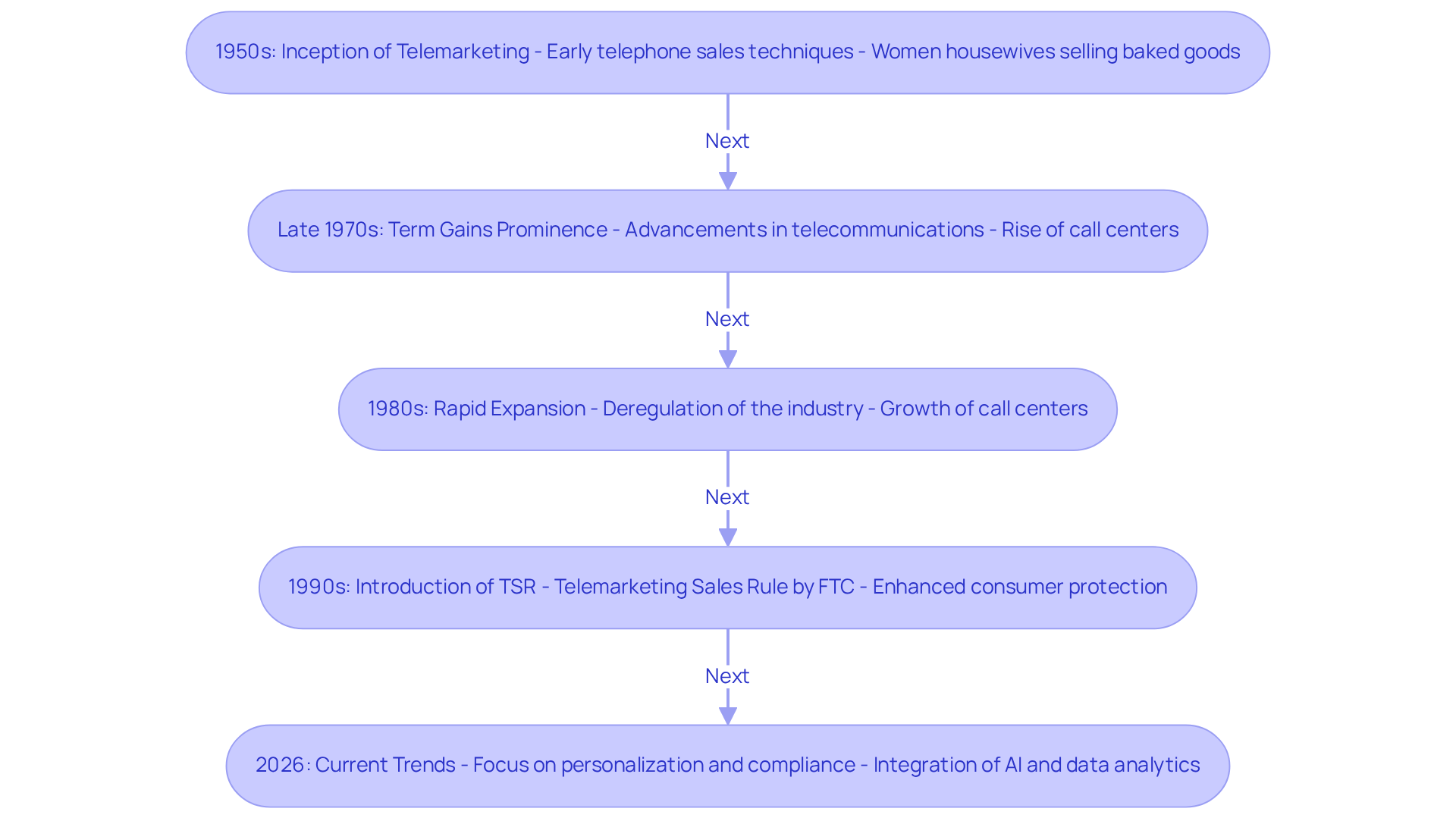
Telemarketing has undergone a remarkable transformation since its inception, evolving from simple phone calls to a sophisticated marketing strategy. It began to develop in the mid-20th century, with its foundations established in the 1950s, which raises the question of when did telemarketing start as companies first employed the telephone to engage directly with clients. The term 'telemarketing' gained prominence in the late 1970s, coinciding with advancements in telecommunications technology. Early telemarketing efforts were often basic, relying on manual dialing and simple scripts. In the 1980s, the sector expanded rapidly, fueled by deregulation and the rise of call centers that connected businesses with wider audiences.
A significant turning point occurred in the 1990s with the introduction of the Telemarketing Sales Rule (TSR) by the Federal Trade Commission (FTC). This regulation aimed to reduce deceptive practices and enhance consumer protection, fundamentally reshaping industry standards by promoting transparency and ethical conduct. Over the years, telemarketing has transitioned from a predominantly outbound calling strategy to a more integrated approach, leveraging data analytics and customer relationship management (CRM) systems to improve targeting and effectiveness.
As of 2026, telemarketing is increasingly viewed through a critical lens, balancing its potential for lead generation with the imperative of compliance and consumer trust. The evolution of telemarketing is steering businesses towards personalization and customer-centric strategies. As they navigate this complex landscape, the ability to balance compliance with effective engagement will determine their success in the telemarketing arena.
Modern Sales Techniques: Strategies and Innovations
In a landscape where consumer expectations are rapidly evolving, traditional marketing methods are no longer sufficient to drive success. Key strategies that are reshaping contemporary marketing include:
- Data-Driven Selling: Data-driven selling empowers sales teams to tailor their strategies based on deep insights into client behavior and preferences. This approach enhances lead quality, as organizations adopting data-driven methods can create a more qualified pool of prospects likely to convert. Intone's AI voice agents deliver real-time analytics, enabling teams to monitor performance and modify strategies promptly.
- Social Selling: Engaging prospective clients through social media platforms nurtures relationships and establishes trust prior to direct transactions. This approach is particularly effective in the finance sector, where establishing credibility is crucial. Nearly 31% of B2B professionals report that social selling aids in relationship building, enhancing brand visibility.
- Personalization: Crafting tailored messages and offers based on customer data significantly enhances the relevance of promotional pitches, leading to improved conversion rates. Customizable AI voice agents enable personalized interactions, ensuring outreach resonates with individual prospects. As buyers increasingly reject generic messaging, personalized outreach becomes essential for effective engagement.
- AI and Automation: Utilizing AI-driven tools automates repetitive tasks like lead qualification and follow-ups, enabling representatives to focus on high-value interactions. This shift boosts productivity, addressing the staggering reality that sales representatives spend nearly two-thirds of their time on tasks that don't generate revenue, as highlighted by industry experts. Intone's high-volume dialing strategies can be configured to meet specific campaign goals, streamlining processes and increasing efficiency.
- Consultative Selling: Consultative selling is essential in today's market, emphasizing the importance of understanding client needs and providing tailored solutions. This approach aligns with the changing buyer's path, where individuals perform 70-90% of their research prior to interacting with representatives. The AI voice agents enhance this by enabling real-time feedback and ongoing performance enhancement, ensuring that teams can adjust to customer requirements effectively.
These techniques demonstrate a broader trend towards customer-focused strategies, highlighting the significance of establishing long-term relationships rather than merely finalizing transactions. As industries adapt to these changes, the ability to foster genuine relationships will determine which companies thrive in the future.

Comparative Analysis: Telemarketing vs. Modern Sales Techniques
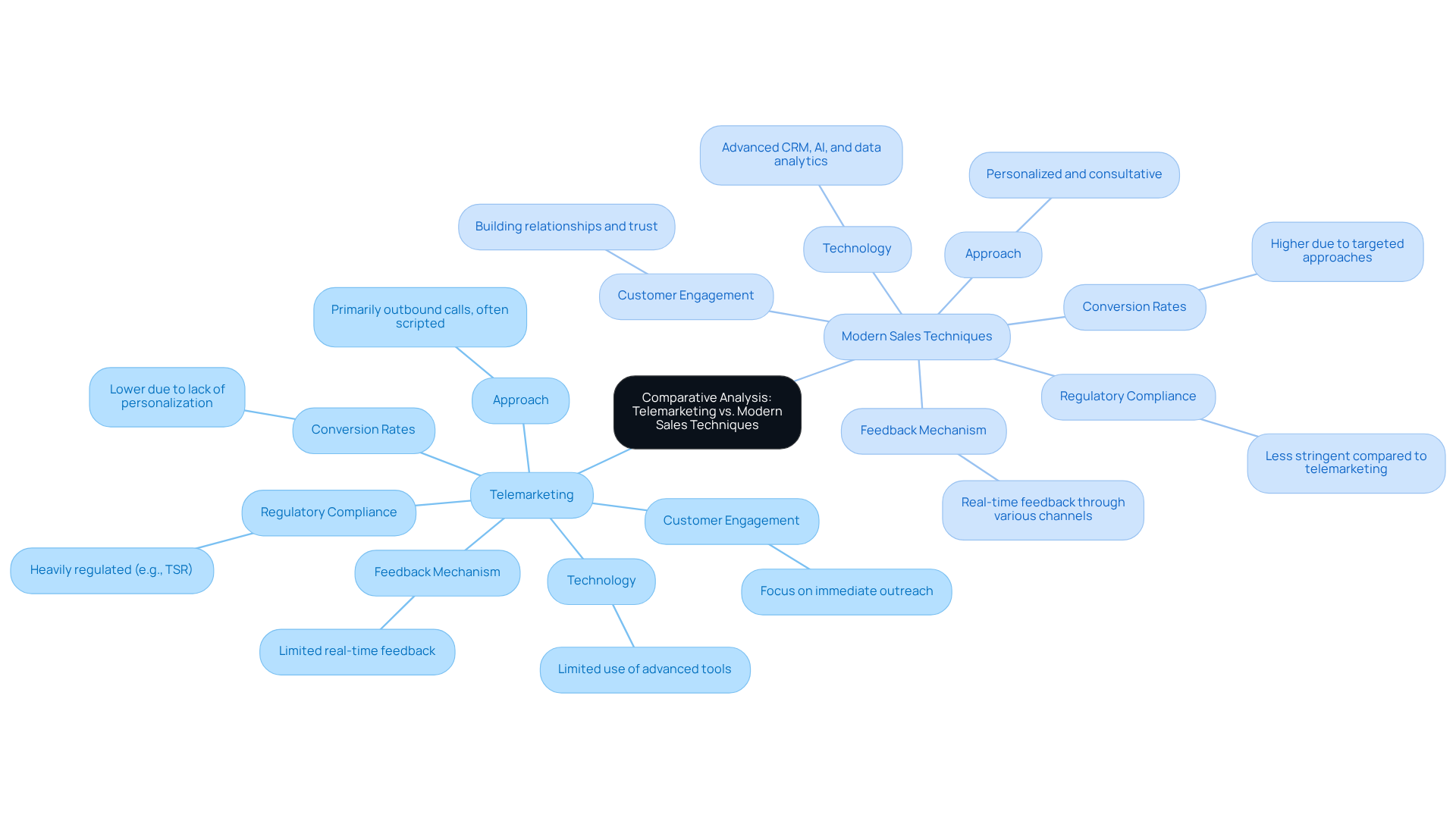
While telemarketing has its place, the landscape of sales has evolved dramatically, demanding a shift towards more personalized approaches. The comparison between telemarketing and modern sales techniques reveals distinct differences and similarities:
- Criteria
- Approach: Primarily outbound calls, often scripted
- Technology: Advanced CRM, AI, and data analytics, including Intone's AI sales agents that can be effortlessly deployed and customized to meet specific business needs
- Customer Engagement: Focused on building relationships and trust, enhanced by Intone's smart analytics that allow for tailored interactions
- Regulatory Compliance: Heavily regulated (e.g., TSR)
- Conversion Rates: Higher due to targeted approaches and personalization, supported by Intone's real-time insights that track performance and optimize strategies
- Feedback Mechanism: Real-time feedback through various channels, facilitated by Intone's live dashboard for actionable insights
In certain industries, like debt collection or urgent sales, telemarketing still proves effective when immediate outreach is crucial. In contrast, modern marketing methods offer a more comprehensive strategy that aligns with today’s consumer expectations, prioritizing personalization and relationship-building. The AI voice agents from the company greatly improve these strategies by offering customized interactions and practical insights, effectively addressing the shortcomings of conventional telemarketing. As businesses adapt to these changes, the choice between traditional and modern methods will define their success in meeting consumer expectations.
The Role of Technology: AI and Automation in Sales
In a rapidly evolving market, the integration of AI and automation is no longer optional; it's essential for staying competitive. Technology is fundamentally transforming commercial processes, particularly through the integration of AI and automation. Key elements include:
- AI-Powered Insights: AI tools analyze large datasets to reveal patterns and forecast customer behavior. This enables sales teams to make data-informed choices that improve targeting and interaction.
- Automation of Repetitive Tasks: Automating tasks such as lead qualification, follow-ups, and data entry allows sales representatives to redirect their efforts towards strategic activities that drive revenue growth. AI voice agents efficiently handle high-volume dialing strategies, ensuring representatives stay focused on closing deals.
- Improved Client Interactions: AI-powered chatbots and voice assistants facilitate real-time engagement with clients, providing instant replies and assistance that enhance satisfaction. These agents can be tailored to meet specific business requirements, improving client interaction.
- Performance Monitoring: Real-time analytics enable teams to continuously track performance metrics through Intone's analytics dashboard, offering immediate feedback on campaign effectiveness. This capability allows teams to adjust strategies dynamically and optimize campaigns for superior outcomes.
Without these advancements, sales teams risk falling behind in a competitive market. These technological advancements not only boost operational efficiency but also enrich the customer experience, making interactions more relevant and timely. Embracing these innovations positions organizations for success in an evolving marketplace. Organizations that leverage these technologies will not only enhance efficiency but also redefine customer engagement in ways previously thought impossible.

Regulatory Impact: Compliance Challenges in Telemarketing and Sales
In an era where consumer rights and privacy are paramount, navigating the regulatory landscape of telemarketing is more critical than ever. Both telemarketing and contemporary marketing methods function within a complex network of regulatory frameworks aimed at safeguarding consumer rights and privacy. Key compliance challenges include:
- Telemarketing Sales Rule (TSR): This regulation establishes stringent guidelines for telemarketers, mandating transparency, obtaining consumer consent, and prohibiting deceptive practices. Non-compliance can lead to penalties that significantly affect operational activities.
- General Data Protection Regulation (GDPR): For organizations interacting with clients in the EU, GDPR enforces strict data protection standards that affect how customer information is gathered, stored, and used in sales procedures. Compliance with GDPR is essential, as violations can result in fines reaching up to €20 million or 4% of global annual turnover. Furthermore, organizations must determine a legitimate legal foundation for handling personal information, which is essential for compliance requirements.
- Telephone Consumer Protection Act (TCPA): This U.S. law governs telemarketing calls, necessitating prior consent from consumers before any automated calls can be made. Violations can result in significant penalties, including $500 per call or text in statutory damages, escalating to $1,500 if the violation is deemed willful. This requirement influences how companies strategize their outreach efforts, ensuring they respect consumer preferences.
- State-Specific Regulations: Different states enforce their own telemarketing laws, adding layers of complexity for companies operating across multiple jurisdictions. For example, Virginia requires honoring text opt-out requests for a period of 10 years, which necessitates organizations to establish strong systems for managing opt-out requests efficiently.
Successfully navigating these regulatory landscapes requires a proactive mindset and strategic planning. Sales teams must be well-informed and equipped to comply with legal standards while interacting with clients effectively. Legal expert Celestine Bahr emphasizes, 'Consent withdrawal must be as easy as giving consent,' highlighting the need for user-friendly compliance processes. Ultimately, the commitment to compliance is not just a legal obligation; it is a strategic imperative that can define a company's future success.

Conclusion
The evolution of telemarketing reveals a critical challenge for businesses: adapting to a rapidly changing consumer landscape. This transformation underscores a critical need: businesses must adapt to meet modern consumer expectations, where personalization and trust are essential.
Throughout the article, we examined key developments in telemarketing, including the regulatory landscape shaped by the Telemarketing Sales Rule and the rise of innovative sales techniques. The integration of AI and automation has further revolutionized the sales process, enabling organizations to enhance customer interactions and streamline operations. By comparing traditional telemarketing with contemporary sales methods, it becomes clear that shifting towards a more customer-centric approach is vital.
Without adaptation, businesses risk alienating their customers and losing market share. As they navigate this complex landscape, embracing technology and prioritizing compliance will be essential for building lasting relationships with consumers. To remain competitive, businesses must not only embrace change but also foster genuine connections with their customers.
Frequently Asked Questions
When did telemarketing first begin?
Telemarketing began to develop in the mid-20th century, with its foundations established in the 1950s when companies first employed the telephone to engage directly with clients.
How did the term 'telemarketing' become popular?
The term 'telemarketing' gained prominence in the late 1970s, coinciding with advancements in telecommunications technology.
What were early telemarketing efforts like?
Early telemarketing efforts were often basic, relying on manual dialing and simple scripts.
What significant changes occurred in telemarketing during the 1980s?
The sector expanded rapidly in the 1980s, fueled by deregulation and the rise of call centers that connected businesses with wider audiences.
What was the impact of the Telemarketing Sales Rule (TSR) introduced in the 1990s?
The TSR aimed to reduce deceptive practices and enhance consumer protection, fundamentally reshaping industry standards by promoting transparency and ethical conduct.
How has telemarketing evolved over the years?
Telemarketing has transitioned from a predominantly outbound calling strategy to a more integrated approach, leveraging data analytics and customer relationship management (CRM) systems to improve targeting and effectiveness.
What is the current perspective on telemarketing as of 2026?
Telemarketing is increasingly viewed through a critical lens, balancing its potential for lead generation with the imperative of compliance and consumer trust, steering businesses towards personalization and customer-centric strategies.
What is data-driven selling?
Data-driven selling empowers sales teams to tailor their strategies based on insights into client behavior and preferences, enhancing lead quality and creating a more qualified pool of prospects.
How does social selling benefit businesses?
Social selling engages prospective clients through social media, nurturing relationships and establishing trust prior to direct transactions, which is particularly effective in the finance sector.
Why is personalization important in modern sales techniques?
Personalization enhances the relevance of promotional pitches by crafting tailored messages based on customer data, leading to improved conversion rates.
What role does AI and automation play in sales?
AI-driven tools automate repetitive tasks like lead qualification and follow-ups, allowing representatives to focus on high-value interactions and boosting productivity.
What is consultative selling and why is it important?
Consultative selling emphasizes understanding client needs and providing tailored solutions, aligning with the changing buyer's path where individuals conduct significant research before interacting with representatives.
What is the broader trend in modern marketing strategies?
There is a trend towards customer-focused strategies that prioritize establishing long-term relationships rather than merely finalizing transactions, which will determine which companies thrive in the future.
List of Sources
- Historical Overview of Telemarketing: Origins and Evolution
- The History of Telemarketing - Teleservices (https://teleservices.co.nz/the-history-of-telemarketing)
- The past, present and future of telemarketing - Leadfellow (https://leadfellow.com/telemarketing)
- Do Not Call: The History of Do Not Call and How Telemarketing Has Evolved - National Association of Attorneys General (https://naag.org/attorney-general-journal/do-not-call-the-history-of-do-not-call-and-how-telemarketing-has-evolved)
- The History of Telemarketing - Air Marketing (https://air-marketing.co.uk/2018/11/23/it-wasnt-always-a-piece-of-cake-the-history-of-telemarketing)
- Modern Sales Techniques: Strategies and Innovations
- Forward-Thinking Sales Strategies to Embrace in 2026 (https://uschamber.com/co/grow/sales/sales-strategies-to-embrace-in-new-year)
- Five Trends That Highlight the New Reality of Selling in 2026 - The Hustle (https://promojournal.com/Five-Trends-That-Highlight-the-New-Reality-of-Selling-in-2026?i=9150)
- The Future of Selling in 2026: 13 Trends That Will Reshape Sales Teams (https://mtdsalestraining.com/mtdblog/future-of-selling-2026)
- 8 Latest Sales Trends to Follow in 2026 (https://betterproposals.io/blog/8-latest-sales-trends-to-follow)
- 15 sales technology trends that will impact GTM in 2026 (https://highspot.com/blog/sales-technology-trends)
- Comparative Analysis: Telemarketing vs. Modern Sales Techniques
- Forward-Thinking Sales Strategies to Embrace in 2026 (https://uschamber.com/co/grow/sales/sales-strategies-to-embrace-in-new-year)
- Marketing Trends for 2026: What’s Changing & How Established Businesses Can Expand Their Customer Base (https://web.uri.edu/risbdc/marketing-trends-for-2026-whats-changing-how-established-businesses-can-expand-their-customer-base)
- Sales and Marketing Trends in 2026- business.com (https://business.com/articles/the-5-things-entrepreneurs-should-know-about-sales-and-marketing-today)
- Five Trends That Highlight the New Reality of Selling in 2026 - The Hustle (https://promojournal.com/Five-Trends-That-Highlight-the-New-Reality-of-Selling-in-2026?i=9150)
- Cold Calling vs Warm Calling in 2026: 5 Trends You Need to Know (https://martal.ca/cold-calling-vs-warm-calling-lb)
- The Role of Technology: AI and Automation in Sales
- AI Agents Take Center Stage – Will Sales Teams That Automate Win in 2026? (https://futurumgroup.com/insights/ai-agents-take-center-stage-will-sales-teams-that-automate-win-in-2026)
- Sales in 2026: Will AI Take Your Job or Make You Better at It? (https://marketsandmarkets.com/blog/ICT/ai-sales-in-2026)
- How Artificial Intelligence is Revolutionizing Sales and Marketing in 2026 (https://linkedin.com/pulse/how-artificial-intelligence-revolutionizing-sales-marketing-2026-wtk4e)
- Sales Process Automation Software Business Report 2026: A $19.5 Billion Industry by 2030 - Surge in Adoption in Healthcare for Consultative and Solution Selling Expands Market Opportunities (https://globenewswire.com/news-release/2026/03/04/3249110/28124/en/sales-process-automation-software-business-report-2026-a-19-5-billion-industry-by-2030-surge-in-adoption-in-healthcare-for-consultative-and-solution-selling-expands-market-opportun.html)
- How AI Will Redefine Sales Productivity in 2026 (https://vivun.com/blog/how-ai-will-redefine-sales-productivity-in-2026)
- Regulatory Impact: Compliance Challenges in Telemarketing and Sales
- GDPR Changes: What To Know for Ongoing Compliance in 2026 (https://usercentrics.com/knowledge-hub/gdpr-changes)
- The 2026 Guide to AI Compliance in Customer Communications: TCPA, FCC, and State Laws Every Sales Team Must Know (https://apten.ai/blog/ai-compliance-guide-2026-tcpa-fcc-state-laws)
- How Does GDPR Affect Businesses: Impact Guide for 2026 - GDPR Local (https://gdprlocal.com/how-gdpr-affects-businesses)
- Telephone and Texting Compliance News — April 2026 (https://mintz.com/insights-center/viewpoints/2776/2026-04-15-telephone-and-texting-compliance-news-april-2026)
- FTC Seeks Comment on Updates to Negative Option Marketing Rule (https://wiley.law/alert-FTC-Seeks-Comment-on-Updates-to-Negative-Option-Marketing-Rule)