

Introduction
A career in debt collection sits at the crucial intersection of finance and human interaction, playing an essential role in our economic landscape by ensuring debts are recovered efficiently. As businesses face cash flow challenges, the demand for skilled debt collectors has surged. This surge presents a unique opportunity for individuals to contribute to financial stability while honing vital communication and negotiation skills. Yet, the profession is not without its complexities.
How can debt collectors navigate the delicate balance between recovery and maintaining positive customer relationships in an increasingly automated world?
Defining a Career in Debt Collection
A career in debt collection is pivotal for retrieving money owed by individuals or companies to lenders. Creditors, typically employed by recovery agencies or financial entities, engage with borrowers to negotiate repayment arrangements as they pursue a career in debt collection and facilitate the settlement of unpaid obligations. This role requires a unique blend of communication skills, empathy, and a comprehensive understanding of financial regulations. Debt collectors manage various types of debts, including credit card balances, medical bills, and loans, which can lead to a rewarding career in debt collection as they play a crucial role in maintaining the financial health of businesses by ensuring cash flow through timely collections.
Effective communication is essential in this field, as it directly influences recovery outcomes. Research shows that AI-driven predictive scoring models have improved recovery figures by an average of 25%, underscoring the importance of timely and clear communication strategies. With the integration of Intone's AI voice agents, financial recovery professionals can significantly enhance their negotiation effectiveness. These agents handle reminders, disputes, and payment scheduling around the clock, ensuring compliance and boosting recovery rates by 30%. Moreover, the personalization of AI agents allows for tailored interactions based on specific business needs, further optimizing the collection process.
Additionally, creditors must navigate complex regulatory frameworks, making knowledge of compliance crucial to avoid legal challenges. The typical hourly wage for accounts receivable agents in the finance industry is approximately $18.79, with earnings ranging from $13.30 to $24.94 per hour, depending on experience and employer.
In addition to negotiation skills, account representatives must exhibit strong organizational abilities to manage multiple accounts and effectively follow up on late payments. The job satisfaction rating for financial agents is 3.75 out of 5, reflecting a generally positive perception of their career in debt collection. As the sector evolves, the integration of technology and AI, such as Intone's customizable AI voice agents, is expected to enhance communication and operational efficiency, with these agents projected to lead borrower interaction in financial recovery by 2026. This further emphasizes the critical role of proficient recovery agents in the financial landscape.

The Importance of Debt Collection in Finance
Debt recovery is crucial in the finance sector, significantly impacting both liquidity and profitability for businesses. By recovering overdue payments, collection agencies help organizations maintain a healthy cash flow, essential for operational stability. Notably, 52% of recovery agencies have invested heavily in technology to enhance agent productivity and manage compliance risks, demonstrating a commitment to improving recovery rates.
Moreover, effective financial collection practices can fortify customer relationships. Offering flexible repayment options and ensuring clear communication not only aids in recovering funds but also fosters trust and loyalty among customers. Recent statistics reveal that 56% of creditors leverage AI and machine learning solutions to enable self-service negotiations, thereby enhancing the overall customer experience.
In a broader context, efficient receivable retrieval contributes to economic stability by ensuring that credit remains accessible. This availability allows businesses to operate without undue financial strain, ultimately benefiting the economy at large. As the financial recovery sector evolves, it increasingly emphasizes respect and collaboration, leading to improved consumer perceptions and satisfaction. Many consumers now report positive experiences with debt recovery agencies, citing kindness and dignity in their treatment.
In summary, the integration of modern technology and a focus on customer-centric practices in collection not only boosts recovery rates but also enhances the profitability and liquidity of businesses, making it a vital component of financial management.

Key Responsibilities and Skills in Debt Collection
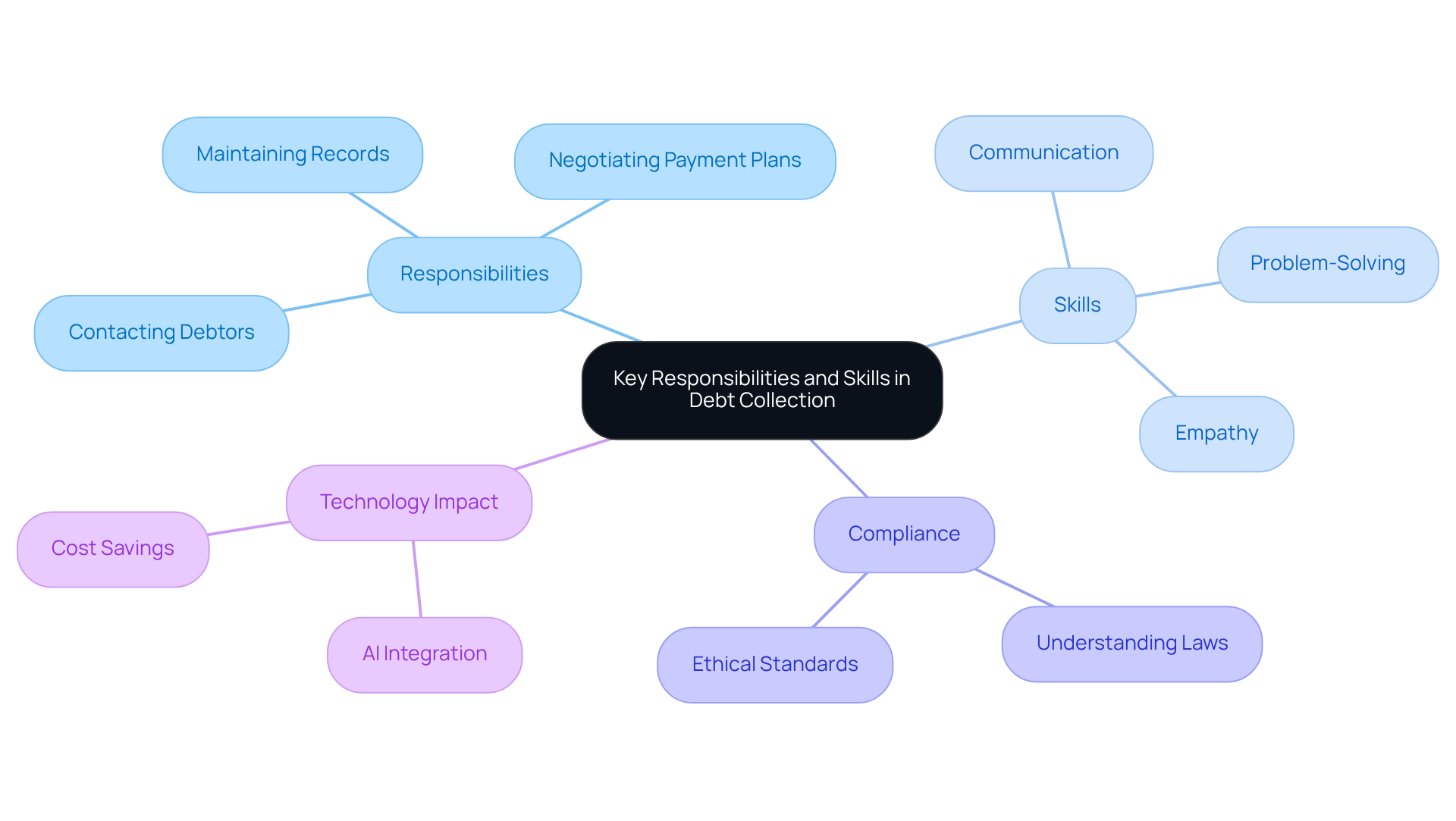
Debt recovery agents are essential players in the financial services industry, tasked with crucial responsibilities such as contacting debtors, negotiating payment plans, and meticulously maintaining records of all interactions. As of 2026, the average number of payment arrangements negotiated by credit recovery agents has seen a notable increase, underscoring the growing demand for effective financial recovery strategies.
Strong communication skills are vital for these agents, enabling them to convey information clearly and negotiate terms effectively. Equally important is the ability to empathize with individuals facing significant financial challenges. Industry leaders stress that understanding a debtor's situation can lead to more successful outcomes. One expert noted, "Those that engage earlier preserve flexibility, protect relationships, and reduce downstream costs."
Moreover, a comprehensive understanding of relevant laws and regulations, such as the Fair Debt Collection Practices Act (FDCPA), is imperative for ensuring compliance and upholding ethical standards. Effective collectors excel in problem-solving and adapt their approaches to the unique circumstances of each borrower, thereby enhancing recovery outcomes while fostering positive relationships.
The integration of AI, particularly through Intone's voice agents, is projected to significantly boost recovery rates by 30%. This is achieved through persistent follow-ups and strict adherence to pre-approved scripts, ensuring 24/7 compliance. Such technological advancements highlight the financial impact of embracing AI in receivables management, with forecasts suggesting potential savings of $80 billion in labor expenses worldwide by 2026.
The Evolution of Debt Collection Practices
The financial recovery landscape has undergone a remarkable transformation, driven by technological advancements, shifts in consumer behavior, and evolving regulatory standards. Historically marked by aggressive tactics and a lack of transparency, the industry has significantly adapted since the Fair Debt Collection Practices Act (FDCPA) was introduced in 1978, aiming to protect consumers from unethical practices.
In recent years, the integration of artificial intelligence and automation has revolutionized receivables management. Agencies are now able to enhance operational efficiency and foster better customer relationships. Notably, 57% of collection agencies have adopted AI for account segmentation and predictive analytics, representing a significant shift from traditional methods. This evolution allows for more tailored communication strategies that resonate with diverse debtor profiles, ultimately boosting engagement levels and recovery outcomes.
Modern debt collectors are leveraging omnichannel communication strategies, reaching debtors through various platforms such as phone, email, and text messaging. This multifaceted approach not only increases the likelihood of successful interactions but also aligns with consumer preferences, particularly among younger demographics like Gen Z, who engage three times more through in-app notifications compared to other channels.
Intone's AI voice agents exemplify this evolution, consistently following up with debtors and significantly improving debt recovery success. These agents strictly adhere to pre-approved scripts, ensuring compliance and consistency in communication. Organizations utilizing such AI-driven solutions report recovery rates soaring by up to 30%, underscoring the effectiveness of continuous follow-ups in enhancing financial recovery efficiency.
Case studies further illustrate the impact of these technological advancements. Organizations embracing AI-driven solutions have reported a staggering 40% reduction in operational expenses and a 30% increase in customer satisfaction scores, thanks to the technology's ability to swiftly identify and address customer needs. Moreover, intelligent automation can slash debtor coverage costs by up to 70%, enabling operations to be up to eight times faster and significantly boosting collector productivity.
As the industry continues to evolve, the emphasis on responsible technology use and compliance remains crucial. The deployment of autonomous agents, such as those from Intone, ensures adherence to regulatory standards, minimizing risks associated with human error. This evolution reflects a broader commitment to ethical practices in debt collection, ensuring that interactions are conducted with respect and understanding, ultimately benefiting both creditors and consumers.

Conclusion
A career in debt collection stands as a vital pillar of the financial ecosystem, enabling the recovery of owed funds and ensuring the liquidity essential for businesses to flourish. This profession demands not only exceptional communication and negotiation skills but also a solid grasp of regulatory frameworks and the ability to empathize with debtors. As the industry evolves, the integration of technology - especially AI - is revolutionizing debt collection, boosting both efficiency and the overall debtor experience.
Key insights throughout this article underscore the crucial role debt collectors play in sustaining financial health for businesses and the economy at large. Effective communication strategies, strict compliance with regulations, and the adoption of innovative technologies like AI-driven voice agents are instrumental in optimizing recovery rates and nurturing positive relationships with customers. The statistics presented highlight significant improvements in recovery outcomes and customer satisfaction, illustrating the necessity of modernization in this field.
Reflecting on the dynamic nature of debt collection, it becomes evident that embracing technological advancements and a customer-centric approach is vital for success. As the landscape continues to shift, aspiring professionals should explore the opportunities within this field, recognizing that a career in debt collection not only contributes to individual financial stability but also plays a significant role in the broader economic framework. Engaging with this industry now can pave the way for a fulfilling and impactful career, reinforcing the essential nature of debt collection in today’s financial systems.
Frequently Asked Questions
What is a career in debt collection?
A career in debt collection involves retrieving money owed by individuals or companies to lenders. Debt collectors, typically employed by recovery agencies or financial entities, negotiate repayment arrangements and facilitate the settlement of unpaid obligations.
What skills are required for a career in debt collection?
A successful career in debt collection requires strong communication skills, empathy, and a comprehensive understanding of financial regulations. Additionally, organizational abilities are essential for managing multiple accounts and following up on late payments.
What types of debts do debt collectors manage?
Debt collectors manage various types of debts, including credit card balances, medical bills, and loans.
How does communication impact debt collection outcomes?
Effective communication is crucial in debt collection as it directly influences recovery outcomes. Research indicates that AI-driven predictive scoring models have improved recovery figures by an average of 25%.
How can technology enhance debt collection?
The integration of AI technologies, such as Intone's AI voice agents, can significantly enhance negotiation effectiveness. These agents handle reminders, disputes, and payment scheduling, ensuring compliance and boosting recovery rates by 30%.
What is the typical wage for accounts receivable agents in the finance industry?
The typical hourly wage for accounts receivable agents is approximately $18.79, with earnings ranging from $13.30 to $24.94 per hour, depending on experience and employer.
What is the job satisfaction rating for financial agents in debt collection?
The job satisfaction rating for financial agents in debt collection is 3.75 out of 5, indicating a generally positive perception of their career.
How is the debt collection sector expected to evolve in the future?
The sector is expected to evolve with the integration of technology and AI, which will enhance communication and operational efficiency. AI voice agents are projected to lead borrower interactions in financial recovery by 2026.
List of Sources
- Defining a Career in Debt Collection
- Debt Collector Hourly Pay in 2026 | PayScale (https://payscale.com/research/US/Job=Debt_Collector/Hourly_Rate)
- What are the debt collection industry trends for 2026? (https://prodigaltech.com/blog/debt-collection-industry-trends-for-2026)
- Debt Collection Industry Challenges and Trends 2026 (https://moveo.ai/blog/debt-collection-industry-challenges-and-trends)
- What’s Changing in US Debt Collections in 2026 and Why It Matters Now for Creditors - Optio Solutions (https://optiosolutions.com/whats-changing-in-us-debt-collections-in-2026-and-why-it-matters-now-for-creditors)
- Debt Collections Trends 2026: Key Developments with Huw Vaughan | Raúl Gaitas posted on the topic | LinkedIn (https://linkedin.com/posts/raulgaitas_curious-about-the-five-key-trends-shaping-activity-7437442399456575488-nbqJ)
- The Importance of Debt Collection in Finance
- The debt collection industry has changed-and it's better for everyone - American Profit Recovery (https://americanprofit.net/the-debt-collection-industry-has-changed-and-its-better-for-everyone)
- The Future of Debt Collection: Compliance, AI and the Shift Toward Digital Engagement - ACA International (https://acainternational.org/news/the-future-of-debt-collection-compliance-ai-and-the-shift-toward-digital-engagement)
- What's the State of U.S. Business Debt Entering 2026? - The Kaplan Group (https://kaplancollectionagency.com/business-advice/whats-the-state-of-u-s-business-debt-entering-2026)
- More Than Half of Debt Collection Companies Saw Increased Volume of Accounts in Past 12 Months (https://newsroom.transunion.com/more-than-half-of-debt-collection-companies-saw-increased-volume-of-accounts-in-past-12-months)
- 2026 Report on Employer Firms: Findings from the 2025 Small Business Credit Survey (https://fedsmallbusiness.org/reports/survey/2026/2026-report-on-employer-firms)
- Key Responsibilities and Skills in Debt Collection
- How to Collect on Debt (https://gilliammikula.com/a-2026-guide-to-in-house-debt-collection-4-strategies-for-success)
- Five KPIs for the Collections Department | Thomson Reuters Legal (https://legal.thomsonreuters.com/en/insights/articles/the-5-kpis-for-the-collections-department)
- What’s Changing in US Debt Collections in 2026 and Why It Matters Now for Creditors - Optio Solutions (https://optiosolutions.com/whats-changing-in-us-debt-collections-in-2026-and-why-it-matters-now-for-creditors)
- Debt Collection Industry Challenges and Trends 2026 (https://moveo.ai/blog/debt-collection-industry-challenges-and-trends)
- Debt settlement statistics 2026 (https://consumeraffairs.com/finance/debt-settlement-statistics.html)
- The Evolution of Debt Collection Practices
- What’s Changing in US Debt Collections in 2026 and Why It Matters Now for Creditors - Optio Solutions (https://optiosolutions.com/whats-changing-in-us-debt-collections-in-2026-and-why-it-matters-now-for-creditors)
- The Future of Debt Collection: Compliance, AI and the Shift Toward Digital Engagement - ACA International (https://acainternational.org/news/the-future-of-debt-collection-compliance-ai-and-the-shift-toward-digital-engagement)
- Debt Collection Industry Challenges and Trends 2026 (https://moveo.ai/blog/debt-collection-industry-challenges-and-trends)
- New Technology is Changing the Game for Debt Collectors (https://microbilt.com/news/new-technological-resources-for-debt-collectors)