

Introduction
Conversational AI IVR is transforming the sales landscape, turning traditional customer interactions into dynamic, personalized experiences. This innovative technology streamlines communication, enhances lead qualification, and boosts conversion rates, giving businesses a significant competitive edge. Yet, as organizations rush to adopt these AI-driven solutions, they encounter critical challenges in implementation and optimization.
How can sales teams effectively harness the power of conversational AI IVR to maximize their performance and ensure lasting success?
Understand Conversational AI IVR and Its Role in Sales
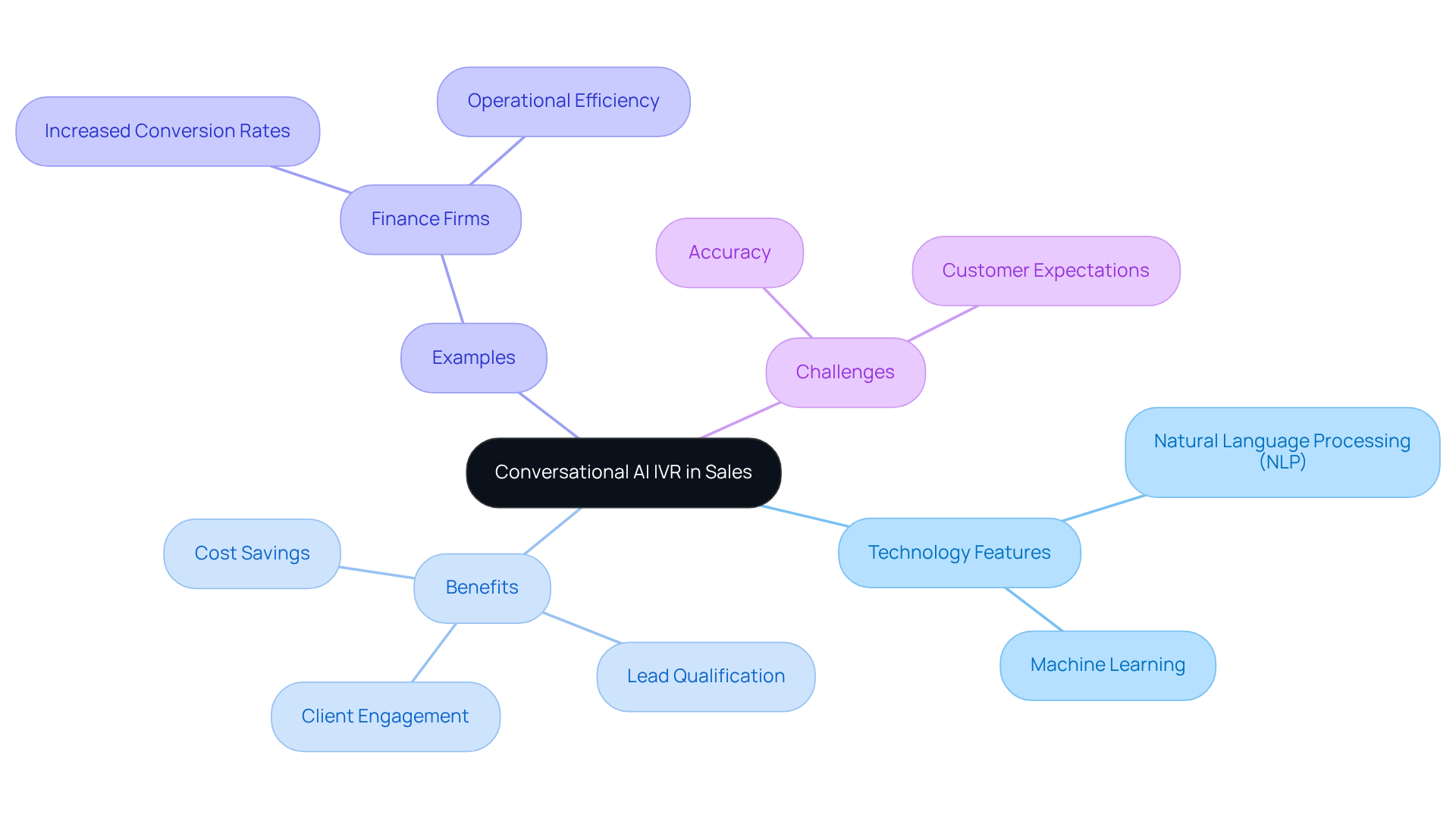
(Interactive Voice Response) solutions utilize advanced technologies like natural language processing (NLP) and machine learning to facilitate human-like interactions with users. fosters natural conversations, allowing clients to articulate their needs and receive customized responses, unlike that depend on rigid menu options. This technology is crucial in commerce, , enhancing , and streamlining communication processes.
For example, finance firms that utilize can swiftly identify high-intent leads and guide them to the appropriate representatives. This capability significantly and operational efficiency. Companies that have embraced , such as those offered by Intone, report a reduction in live-agent calls by over 10%, leading to substantial cost savings and improved satisfaction scores.
Moreover, Intone's AI voice agents deliver , enabling businesses to track shifts in key metrics and refine agent behavior for peak performance. As the industry evolves, the integration of is anticipated to become a cornerstone in optimizing sales processes and enhancing client interactions. Industry leaders emphasize the importance of this technology, predicting it will serve as the operational backbone of by 2026.
However, businesses must remain cognizant of potential , including ensuring accuracy and managing customer expectations. Organizations can fully harness the power of by addressing these issues to transform their strategies.
Identify Key Benefits of Conversational AI IVR for Sales Teams
Unlocking the Power of for Sales Teams
Attention: offers a wealth of advantages for sales teams, transforming how they operate and engage with clients.
Interest:
- Increased Efficiency: Automating routine inquiries and allows sales teams to focus on high-value tasks, significantly boosting productivity. With AI handling repetitive tasks, representatives can dedicate their efforts to closing deals rather than getting bogged down by administrative duties.
- Improved Customer Experience: Clients value the ability to interact naturally with AI technologies, which fosters higher satisfaction and loyalty. This meets modern expectations for seamless communication, ultimately enhancing client retention.
- : AI IVR systems excel at identifying and prioritizing high-intent leads, ensuring representatives connect with the most promising prospects. Organizations utilizing AI-driven personalization have reported up to a 25% increase in prospect reply rates, showcasing the effectiveness of tailored outreach.
- Cost Savings: By automating repetitive tasks, , allowing for more efficient budget allocation. This strategic reallocation can lead to a decrease in client acquisition costs by approximately 25%, significantly .
- : Sales teams gain valuable insights from AI IVR interactions, enabling continuous strategy refinement and performance improvement. For instance, a telecom firm experienced a remarkable 30% rise in conversion rates after implementing , highlighting its potential to drive substantial revenue results.
By integrating into their operations, sales teams can , elevate customer satisfaction, and increase conversion rates. This not only leads to improved performance but also positions organizations for long-term success.
By embracing the transformative power of today, you can watch your sales performance soar.

Implement Effective Strategies for Integrating Conversational AI IVR
To effectively integrate conversational AI IVR into sales processes, consider these essential strategies:
- : Start by establishing specific goals for your AI IVR setup. Whether it’s reducing call handling times or , having clear objectives will guide your implementation process and ensure alignment with desired business outcomes.
- : Utilize past call information to train your AI framework. This enhances its ability to comprehend client inquiries and respond appropriately. By customizing interactions based on previous client behavior, you not only improve accuracy but also foster a more personalized customer experience.
- Guarantee Effortless Integration: Collaborate closely with IT teams to ensure that your AI IVR solution merges . A cohesive approach to customer interactions enhances efficiency and facilitates smooth data transfer across networks.
- : Comprehensive training for sales representatives is crucial. Equip them with the knowledge to collaborate effectively with the AI IVR setup. Understanding its capabilities will maximize the benefits of this technology, empowering your team to leverage it to its fullest potential.
- Monitor and Adjust: Continuously observe the performance of your AI IVR setup. Make adjustments based on feedback and analytics. For instance, a that adopted these strategies experienced a 25% and a significant rise in client satisfaction. This illustrates the tangible advantages of a well-defined and executed AI IVR strategy.

Optimize and Monitor Conversational AI IVR for Sustained Success
To ensure the long-term success of , it is crucial to implement optimization and monitoring practices that drive performance and enhance user experience. Here are key strategies to consider:
- : Conduct periodic evaluations of your AI IVR framework's performance by analyzing key metrics such as call resolution rates, , and conversion rates. Organizations that regularly review these metrics can pinpoint areas for improvement, ultimately enhancing overall service quality.
- : Leverage to gain insights into client interactions. These tools can monitor performance metrics like and Average Handle Time (AHT), enabling businesses to recognize trends and efficiently enhance their solutions. For instance, organizations employing analytics have reported significant improvements in and client satisfaction, underscoring the growing importance of analytics in the call center AI market.
- Request User Input: Actively seek regarding their experiences with the AI IVR service. This information is vital for making necessary modifications and ensuring that the framework meets client expectations. Surveys conducted after interactions can provide insights into client sentiment and highlight areas needing attention, including metrics like the Customer Effort Score (CES) to assess ease of use.
- : Keep abreast of advancements in AI and IVR technologies to ensure your system remains competitive and effective. The rapid development of AI solutions necessitates that businesses adapt their strategies to leverage new capabilities and features that enhance client interactions. Notably, 63% of organizations are in the final stages of developing for service and sales, emphasizing the need to stay current.
- Iterate and Improve: Use the insights gained from monitoring and feedback to continuously enhance your AI IVR solution. For example, a client in the insurance industry that adopted these practices reported a 40% increase in , highlighting the importance of ongoing optimization. By iterating on the system based on real-time data and customer input, businesses can ensure their AI IVR evolves alongside customer expectations.

Conclusion
Conversational AI IVR is not just a trend; it’s a crucial strategy for enhancing sales processes. By engaging clients in a more dynamic and effective manner, businesses can significantly improve their interactions. Leveraging advanced technologies like natural language processing and machine learning allows organizations to create personalized experiences that streamline communication, elevate customer satisfaction, and drive conversion rates.
The benefits of implementing conversational AI IVR are compelling. Increased efficiency, improved customer experiences, and substantial cost savings are just the beginning. With real-time analytics, sales teams can continuously refine their strategies, focusing on high-value tasks and connecting with the most promising leads. Effective implementation strategies, such as setting clear objectives and utilizing historical data, are essential for maximizing the potential of AI-driven IVR systems.
In today’s complex sales environment, embracing conversational AI IVR is not merely an option; it’s a necessity for sustained success. Organizations must prioritize the optimization and monitoring of their AI IVR solutions to adapt to evolving customer expectations and technological advancements. By doing so, companies position themselves at the forefront of customer engagement, leading to enhanced sales performance and long-term growth.
Now is the time to act. Invest in conversational AI IVR solutions to transform your sales processes and ensure your organization thrives in the competitive landscape.
Frequently Asked Questions
What is Conversational AI IVR?
Conversational AI IVR (Interactive Voice Response) solutions use advanced technologies like natural language processing (NLP) and machine learning to enable human-like interactions with users, allowing for natural conversations and customized responses.
How does Conversational AI IVR differ from traditional IVR systems?
Unlike traditional IVR systems that rely on rigid menu options, Conversational AI IVR allows clients to articulate their needs more freely, leading to more personalized and effective interactions.
What role does Conversational AI IVR play in sales?
Conversational AI IVR is crucial in commerce as it automates lead qualification, enhances client engagement, and streamlines communication processes, ultimately boosting conversion rates and operational efficiency.
Can you provide an example of how Conversational AI IVR is used in finance?
Finance firms using Conversational AI IVR can quickly identify high-intent leads and direct them to the appropriate representatives, significantly improving conversion rates.
What benefits have companies experienced by adopting AI-driven IVR systems?
Companies that have adopted AI-driven IVR systems, like those from Intone, have reported over a 10% reduction in live-agent calls, leading to significant cost savings and improved customer satisfaction scores.
What additional features do Intone's AI voice agents provide?
Intone's AI voice agents offer real-time analytics, allowing businesses to track changes in key metrics and refine agent behavior for optimal performance.
What is the future outlook for Conversational AI IVR in client engagement?
Industry leaders predict that Conversational AI IVR will become a fundamental element in optimizing sales processes and enhancing client interactions, serving as the operational backbone of client engagement by 2026.
What challenges should businesses be aware of when implementing Conversational AI IVR?
Businesses must be mindful of potential challenges such as ensuring accuracy and managing customer expectations to fully leverage the benefits of Conversational AI IVR.
List of Sources
- Understand Conversational AI IVR and Its Role in Sales
- Conversational AI foundational to CX in 2026 (https://nojitter.com/ai-automation/conversational-ai-foundational-to-cx-in-2026)
- palmbeachdailynews.com (https://palmbeachdailynews.com/press-release/story/18125/contact-center-ai-accelerates-the-transformation-of-customer-service)
- Contact Center Automation Trends | IBM (https://ibm.com/think/insights/contact-center-automation-trends)
- The Future of IVR Systems: Key Trends and Predictions for 2026 (https://blog.klearcom.com/the-future-of-ivr-systems-what-to-expect-in-2026-and-beyond)
- capita.com (https://capita.com/news-and-insights/insights/2026/cx-trends-for-2026)
- Identify Key Benefits of Conversational AI IVR for Sales Teams
- The 7 Best AI Sales Tools to Close More Deals in 2026 - ReactIn (https://reactin.io/blog/the-7-best-ai-sales-tools-to-close-more-deals-in-2026)
- nextiva.com (https://nextiva.com/blog/conversational-ai-for-sales.html)
- AI in Sales 2025: 40+ Statistics Every Growth Leader Needs to Know (https://rev-empire.com/blog/ai-in-sales-statistics-2025)
- 37 Powerful Statistics That Prove AI Boosts Sales Efficiency| ROM (https://repordermanagement.com/blog/ai-boosts-sales-efficiency)
- Modernizing IVR with Conversational AI for Better CX (https://ascentpartners.io/insights/modernizing-ivr-with-conversational-ai-for-better-cx)
- Implement Effective Strategies for Integrating Conversational AI IVR
- Statistics on AI Agents for Sales (https://datagrid.com/blog/ai-agents-sales-statistics-adoption)
- convoso.com (https://convoso.com/blog/call-center-ivr-best-practices)
- Maximize Sales with AI-Based IVR: Key Strategies for Success | Intone - Blog (https://intone.io/post/maximize-sales-with-ai-based-ivr-key-strategies-for-success)
- AI in Sales 2025: Statistics, Trends & Generative AI Insights (https://cirrusinsight.com/blog/ai-in-sales)
- Optimize and Monitor Conversational AI IVR for Sustained Success
- Twilio’s Latest Report Highlights Conversational AI’s Rapid Adoption, Challenges, and Perception Gaps (https://businesswire.com/news/home/20251113237668/en/Twilios-Latest-Report-Highlights-Conversational-AIs-Rapid-Adoption-Challenges-and-Perception-Gaps)
- IVR Analytics: 13 Key Metrics Your IVR Should Track (https://landistechnologies.com/blog/ivr-analytics)
- Top 6 AI Call Metrics for Customer Service AI Voice Agents | Retell AI | Retell AI (https://retellai.com/blog/top-6-ai-voice-agent-customer-service-metrics)
- Is This the Year AI Redefines the Call Center? (https://cmswire.com/contact-center/is-this-the-year-ai-dominates-the-call-center)
- New Study Reveals AI’s Key Role in Improving Customer Service (https://callcentrehelper.com/new-study-ai-needed-in-cx-252849.htm)