
Introduction
The landscape of outbound AI calling has undergone a remarkable transformation, shifting from manual processes to sophisticated technologies that redefine sales interactions. This evolution presents a unique opportunity for sales managers to leverage advanced AI systems, enhancing both efficiency and effectiveness in their outreach strategies.
However, as organizations embrace these innovations, they must grapple with the challenge of integrating AI while ensuring compliance and maintaining the personal touch that fosters client relationships. What best practices can sales leaders adopt to navigate this new terrain and maximize the potential of AI-driven outbound calling?
By understanding these dynamics, sales leaders can position themselves at the forefront of this technological shift, ensuring they not only adapt but thrive in an increasingly competitive environment.
Understand the Evolution of Outbound AI Calling
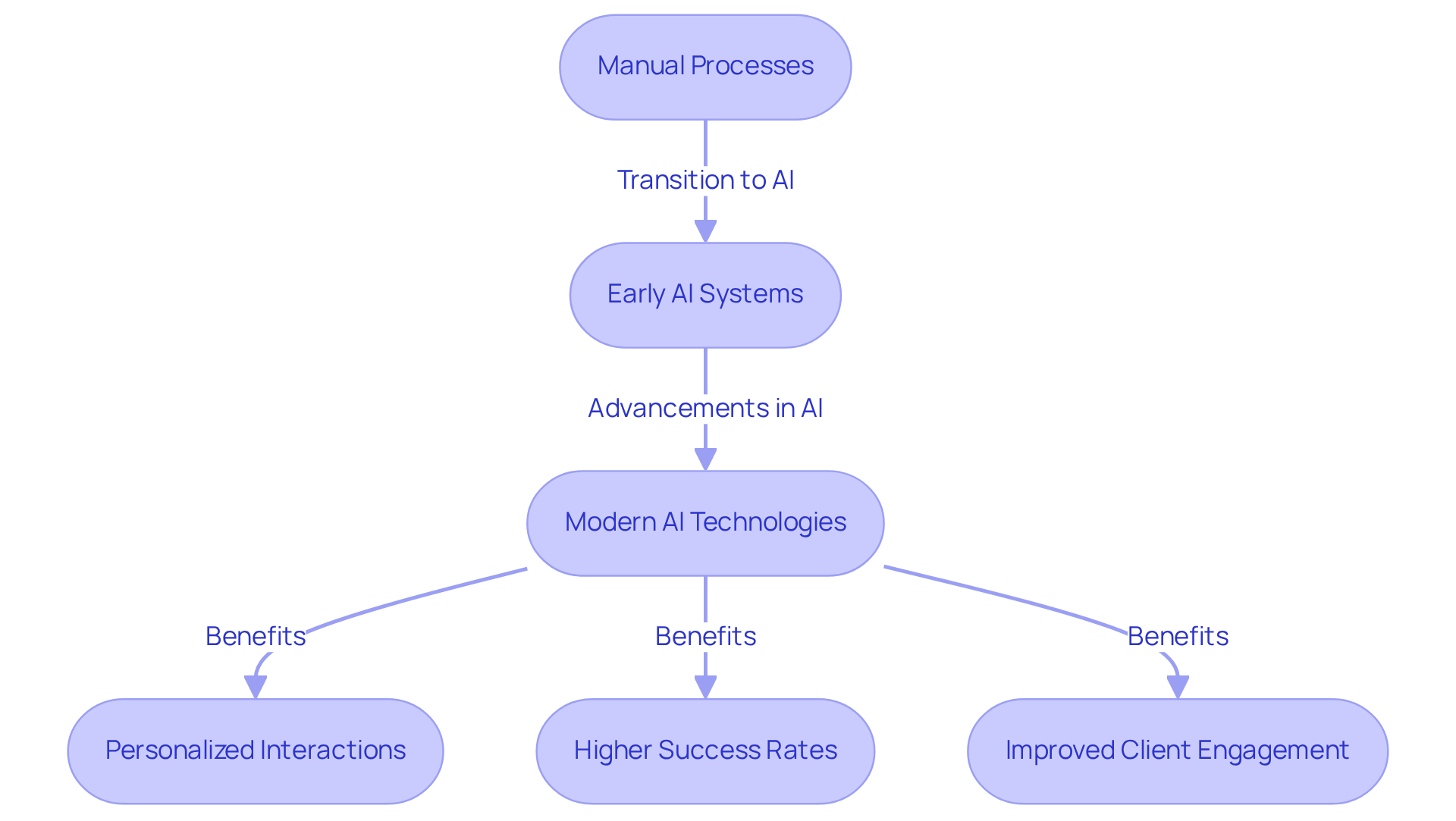
The transformation of has been significant over the past decade. Initially, this space was dominated by manual processes, with sales calls heavily reliant on human agents to engage prospects. However, advancements in have dramatically reshaped this landscape. Modern AI technologies now enable , along with , facilitating more personalized and efficient interactions.
Early AI systems were limited to basic scripts and struggled to adapt to dynamic conversations. In contrast, today’s AI voice agents can , adjusting their approach based on the prospect’s tone and engagement level. This evolution not only but also significantly boosts success metrics, as can more effectively identify compared to traditional methods.
For instance, organizations utilizing in their strategies have reported , showcasing the effectiveness of integrating technology into their business processes. Moreover, responding to inquiries within five minutes can increase conversion chances by nine times, underscoring the competitive edge that promptness provides in the selling process. Intone's automated messages and built-in integrations also facilitate upselling strategies and , further enhancing outreach effectiveness.
Sales supervisors should view this evolution as a pivotal moment in strategy. By incorporating , businesses can achieve and operational efficiency through , ultimately enhancing revenue performance and client satisfaction.
Identify Core Components of an Effective Outbound AI System
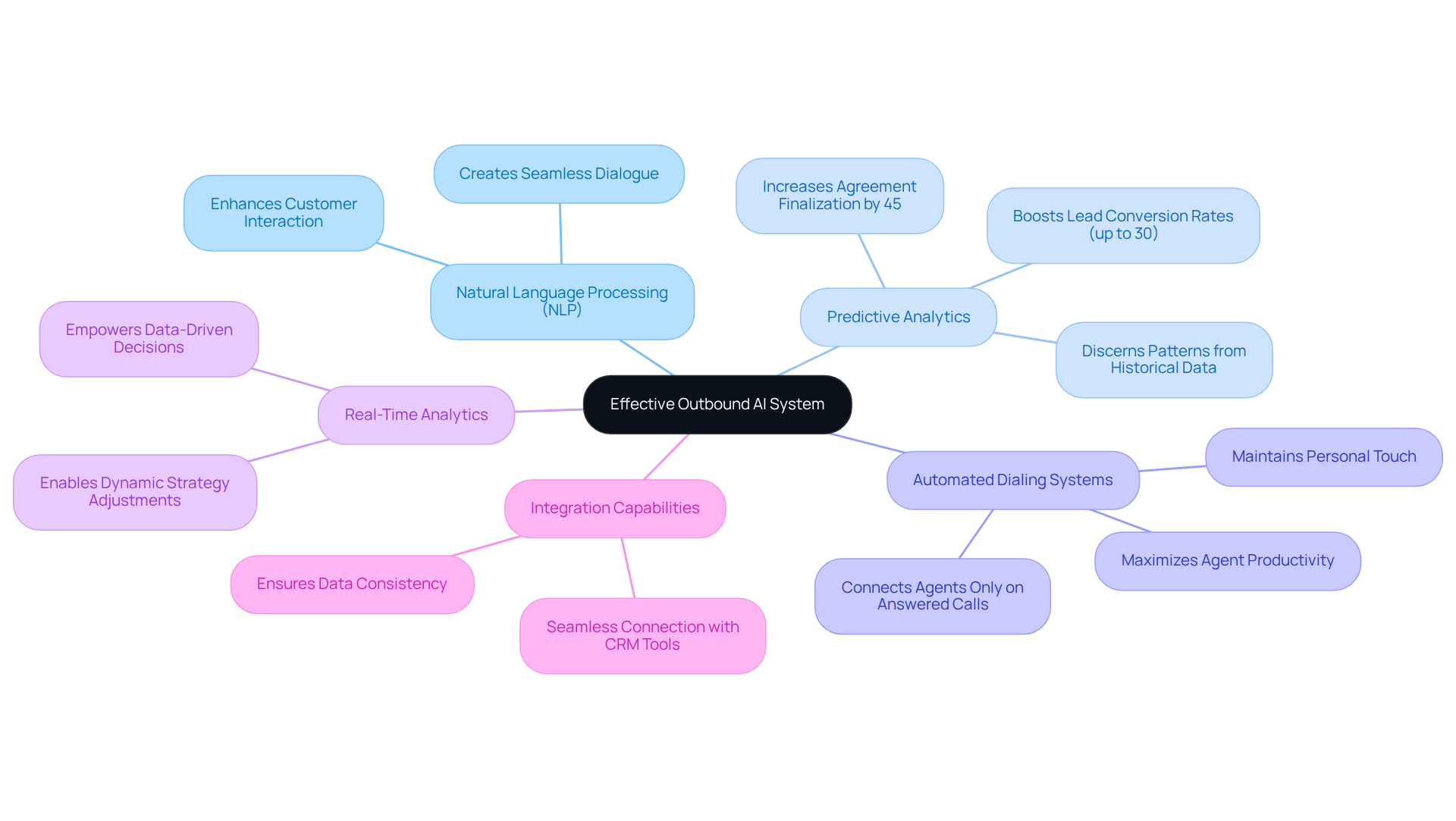
An effective outbound AI system comprises several core components that work synergistically to optimize sales processes:
- : This technology empowers Intone's to comprehend and respond to human language in a conversational manner. By fostering interactions that feel more natural and engaging, NLP is crucial for creating seamless dialogue between the agent and the customer, ultimately enhancing the overall experience.
- : allows Intone's AI to discern patterns and forecast which leads are most likely to convert. This capability enables marketing teams to focus their efforts on , significantly boosting success rates. Companies leveraging have reported lead conversion rates climbing up to 30%. Furthermore, representatives utilizing AI and machine learning tools finalize 45% more agreements, underscoring the efficacy of these technologies in driving business success.
- : Intone's enhance efficiency by automatically dialing numbers and connecting agents only when a call is answered. This approach maximizes agent productivity and increases the time spent on meaningful conversations. However, it is essential to maintain a balance and avoid over-automating interactions, as this can overwhelm customers and diminish the personal touch vital in commerce.
- : Monitoring call performance in real-time empowers managers to make informed, data-driven decisions and dynamically adjust strategies. Intone's analytics dashboard provides immediate feedback on performance, enabling swift responses to trends, which is crucial in a fast-paced commercial environment.
- : A successful AI system must seamlessly connect with existing CRM and commerce tools, ensuring smooth workflows and data consistency. Intone's are designed to integrate with your existing systems, maximizing the effectiveness of AI solutions and improving overall performance.
By prioritizing these components, can establish a robust outbound AI system that not only enhances productivity but also leads to improved conversion outcomes. As Bernard Marr emphasizes, "AI is not about replacing humans but about augmenting them, bringing humans and machines closer together to .
Implement Best Practices for Optimizing AI-Driven Outbound Calls
To optimize AI-driven outbound calls, must embrace several key practices that can significantly enhance their effectiveness:
- Craft : AI agents should employ natural, conversational language that resonates with prospects. These scripts must be adaptable, allowing for variations based on customer responses to foster a more personalized interaction. Research indicates that tailored engagement can lead to a and a 15% improvement in success ratios.
- Prioritize : Early qualifying questions are crucial for swiftly identifying high-intent leads. This strategy not only boosts efficiency but also allows human agents to concentrate their efforts on the most promising prospects. Data shows that opportunities qualified using BANT criteria close at levels .
- Utilize : Regularly testing different scripts, call times, and approaches is vital for understanding what resonates best with your audience. Insights derived from these tests can continuously refine strategies, leading to improved outcomes. Businesses that frequently engage in often see a significant uptick in engagement and sales performance.
- Monitor : Tracking key performance indicators (KPIs) such as connection rates, conversion levels, and client satisfaction scores is essential. Analyzing these metrics helps pinpoint areas for improvement, ensuring that the AI calling strategy remains effective and aligned with business objectives. Organizations leveraging AI-driven scoring have reported a .
- Provide : Ongoing training for both AI systems and human agents is imperative. This practice ensures that all team members are equipped with the latest strategies and tools to engage effectively with prospects. can yield a 38% improvement in success metrics, underscoring its importance in maintaining a competitive edge.
By implementing these best practices, can significantly enhance the effectiveness of their outbound AI calling, leading to improved conversion rates and heightened client satisfaction.

Ensure Compliance and Security in Outbound AI Operations
Compliance and security are crucial in outbound AI calling operations. Sales managers must take decisive steps to ensure their systems are both secure and compliant:
- : Implement end-to-end encryption for all data transmitted during calls. This measure safeguards from unauthorized access, ensuring confidentiality.
- : Conduct of AI systems to confirm compliance with relevant regulations, such as . This process involves examining data management practices and ensuring that consent from clients is obtained before calls are initiated.
- Access Controls: Establish strict access controls to limit who can access sensitive data. Employ role-based access to guarantee that only authorized individuals can view or manage client information, thereby enhancing security.
- Training on Compliance: Provide regarding compliance requirements and best practices for data protection. This ensures that everyone involved in outbound AI calling understands their responsibilities and the importance of adherence to regulations.
- : Develop a clear to address any that may arise. This plan should outline steps for containment, investigation, and notification of affected parties, ensuring a swift and effective response.
By prioritizing compliance and security, sales managers can build trust with customers and protect their organizations from potential legal issues.

Conclusion
The landscape of outbound AI calling has undergone a remarkable transformation, fundamentally reshaping how sales teams engage with prospects. By harnessing advanced technologies like natural language processing and predictive analytics, businesses can now facilitate more personalized and efficient interactions. This evolution not only enhances customer experiences but also significantly boosts conversion rates, underscoring the critical role that AI plays in modern sales strategies.
Key components of an effective outbound AI system - such as automated dialing, real-time analytics, and seamless integration with existing tools - are essential for optimizing sales processes. Implementing best practices, including:
- Crafting conversational scripts
- Prioritizing lead qualification
- Conducting A/B testing
can further enhance the effectiveness of AI-driven outbound calls. Moreover, ensuring compliance and security through data encryption and regular audits is vital for maintaining customer trust and protecting sensitive information.
Ultimately, embracing these advancements and best practices in outbound AI calling transcends mere technology adoption; it’s about transforming sales strategies to drive better results. As organizations look to the future, leveraging AI effectively will be key to staying competitive in an ever-evolving marketplace. Sales managers are encouraged to take proactive steps, integrating these insights into their operations to unlock the full potential of outbound AI calling and achieve sustained success.
Frequently Asked Questions
What has transformed outbound AI calling over the past decade?
Outbound AI calling has evolved from manual processes reliant on human agents to utilizing advanced AI technologies, including predictive analytics and natural language processing, for more personalized and efficient interactions.
How did early AI systems in outbound calling perform compared to modern systems?
Early AI systems were limited to basic scripts and struggled with dynamic conversations, while modern AI voice agents can analyze client responses in real-time and adjust their approach based on tone and engagement level.
What benefits do modern outbound AI calling systems provide?
Modern systems enhance customer experience, improve success metrics, and can identify high-intent leads more effectively than traditional methods.
What success rates have organizations reported when using Intone's AI in their outbound calling strategies?
Organizations using Intone's AI have reported success rates up to 7× higher compared to traditional outbound calling methods.
How does prompt response to inquiries affect conversion chances?
Responding to inquiries within five minutes can increase conversion chances by nine times, highlighting the importance of promptness in the selling process.
What additional features does Intone's AI provide for outbound calling?
Intone's AI includes automated messages and built-in integrations that facilitate upselling strategies and client re-engagement, enhancing outreach effectiveness.
How should sales supervisors approach the evolution of outbound AI calling?
Sales supervisors should view this evolution as a pivotal moment in strategy, incorporating Intone's AI solutions to improve outreach effectiveness and operational efficiency, ultimately enhancing revenue performance and client satisfaction.
List of Sources
- Understand the Evolution of Outbound AI Calling
- What Is an AI Dialler? 2026 Guide to Predictive, Smart Outbound Calling - IPscape (https://ipscape.com/resources/blog/what-is-an-ai-dialler-2026-guide-to-predictive-smart-outbound-calling)
- Outbound SDR Statistics 2025 | AI, Metrics & Performance Data (https://salesso.com/blog/outbound-sdr-statistics)
- New G2 Report: How AI is Reshaping the B2B Sales Playbook (https://company.g2.com/news/ais-net-impact-on-sales)
- 2025 Cold Calling Statistics: Boost Results with AI-Driven Outreach (https://martal.ca/cold-call-statistics-lb)
- AI Is Making Cold Calling Cool Again (https://forbes.com/sites/michaelashley/2025/08/05/ai-is-making-cold-calling-cool-again)
- Identify Core Components of an Effective Outbound AI System
- 28 Best Quotes About Artificial Intelligence | Bernard Marr (https://bernardmarr.com/28-best-quotes-about-artificial-intelligence)
- Statistics on AI Agents for Sales (https://datagrid.com/blog/ai-agents-sales-statistics-adoption)
- 35 AI Quotes to Inspire You (https://salesforce.com/artificial-intelligence/ai-quotes)
- 18 Inspiring Agentic AI Quotes From Industry Leaders (https://atera.com/blog/agentic-ai-quotes)
- Outbound Voice AI: 2026 Insights (https://telnyx.com/resources/outbound-voice-ai)
- Implement Best Practices for Optimizing AI-Driven Outbound Calls
- 35 Lead Qualification Statistics: Essential Data for B2B Sales Success in 2026 | Landbase (https://landbase.com/blog/lead-qualification-statistics)
- AI in Sales 2025: 40+ Statistics Every Growth Leader Needs to Know (https://rev-empire.com/blog/ai-in-sales-statistics-2025)
- Statistics on AI Agents for Sales (https://datagrid.com/blog/ai-agents-sales-statistics-adoption)
- trellus.ai (https://trellus.ai/post/cold-calling-statistics)
- 50 Statistics of AI in Sales Enablement (https://cubeo.ai/50-statistics-of-ai-in-sales-enablement)
- Ensure Compliance and Security in Outbound AI Operations
- New Best Practices Guide for Securing AI Data Released | CISA (https://cisa.gov/news-events/alerts/2025/05/22/new-best-practices-guide-securing-ai-data-released)
- Top 8 KPIs for AI Outbound Sales & Call Center ROI | Retell AI | Retell AI (https://retellai.com/blog/the-8-kpis-every-ai-outbound-calling-strategy-should-track)
- 2026 Compliance Outlook: AI, Privacy, and Global Risk Trends (https://coalfire.com/the-coalfire-blog/2026-compliance-outlook-ai-privacy-and-global-risk-trends)
- CISA announces the release of best practices for securing AI data | Willkie Compliance Concourse (https://complianceconcourse.willkie.com/articles/cisa-announces-the-release-of-best-practices-for-securing-ai-data)
- thepipelinegroup.io (https://thepipelinegroup.io/blog/ai-cold-calling-is-now-illegal-without-consent)