

Introduction
The financial sector is currently navigating a complex landscape, where outreach challenges can significantly hinder sales success. With tightening regulations and the paramount importance of consumer trust, financial institutions must adopt innovative strategies to communicate effectively and transparently. This article explores four best practices for leveraging AI in financial sales outreach, providing valuable insights on enhancing engagement and fostering lasting relationships with clients.
So, how can financial sales teams not only overcome these obstacles but also utilize AI tools to meet compliance standards while building genuine connections with their customers?
Understand the Financial Sector's Unique Outreach Challenges
The financial sector encounters significant outreach obstacles that can severely impede efficient transaction processes. Regulatory restrictions play a crucial role, as sales teams must navigate stringent compliance standards while simultaneously building trust and credibility with potential customers. This imperative for compliance often results in a cautious approach, which consumers may interpret as a lack of transparency.
Moreover, the complexity of financial products complicates the communication of value propositions. It becomes essential for sales teams to convey information clearly and effectively. For instance, as regulatory scrutiny intensifies, firms that adapt their communication strategies proactively can cultivate greater trust and transparency. This, in turn, enhances relationships with their customers.
Understanding these challenges is vital for developing ai outreach strategies that resonate with potential clients and build lasting trust. By addressing these obstacles head-on, financial institutions can not only improve their transaction processes but also strengthen their market position.

Leverage AI Tools for Enhanced Outreach Efficiency
To enhance AI outreach effectiveness, financial marketing groups must leverage AI resources, particularly customizable AI voice agents. These agents automate lead qualification, personalize communication, and analyze customer interactions. Intone's human-like AI engages in genuine discussions, allowing representatives to focus on high-intent leads while the AI handles initial inquiries.
With features like real-time monitoring and analytics, teams can refine their strategies based on immediate feedback, ensuring that messaging resonates with specific audiences. Research indicates that companies utilizing AI in commerce experience a 13-15% increase in revenue and a 30% boost in productivity. Forecasts suggest that AI tools for commerce could elevate productivity by as much as 30% by 2025.
A compelling example is GCS, which scaled its sales efficiency using Intone's AI voice agents. This success story illustrates how these technologies streamline operations and enhance the overall customer experience, leading to increased satisfaction and loyalty.
This strategic application of technology underscores the significance of AI outreach and advancements in driving financial success while maintaining the essential human element that fosters trust and empathy in business relationships.

Personalize AI Outreach to Build Trust and Engagement
Personalization in AI outreach is not just beneficial; it’s essential for enhancing customer engagement and building trust. Financial sales teams can leverage AI voice agents to analyze customer data, enabling them to customize communications effectively. For instance, by tailoring the AI agent's interactions - such as establishing data sources and call transfer guidelines as outlined in the user manual - teams can offer personalized financial guidance based on a user’s previous interactions or financial history. This approach fosters a deeper connection with clients.
Moreover, Intone's telephony integration facilitates seamless call forwarding to the AI agent or the use of a built-in dialer, significantly enhancing real-time performance analytics. AI can categorize individuals into distinct personas, allowing for targeted messaging that addresses specific needs and concerns. This strategy not only boosts response rates - organizations utilizing AI outreach for personalization have seen reply rates soar from 9% to 21% - but also cultivates long-term relationships, as customers feel more understood and valued. In fact, 74% of B2B buyers respond to relevant emails, underscoring the critical importance of personalized outreach.
By prioritizing personalized communication through AI outreach solutions from Intone, financial groups can dramatically enhance customer satisfaction and loyalty. As industry expert Ryan notes, "Firms that adjust their mindset will gain a competitive advantage when it comes to superior personalization and client experiences." Embrace this opportunity to transform your outreach strategy with AI outreach and witness the profound impact on your client relationships.

Monitor and Optimize AI Outreach Strategies Continuously
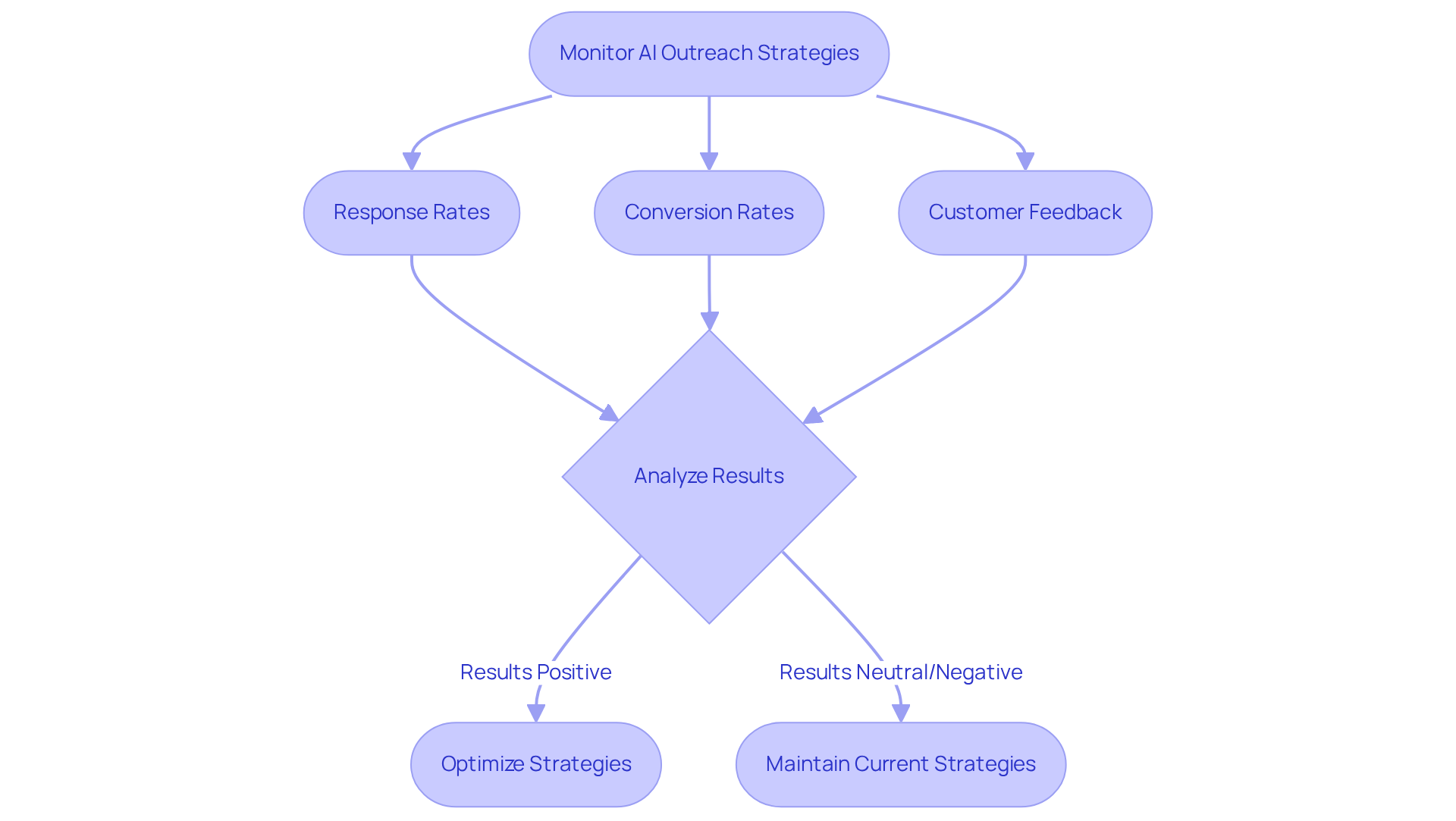
To enhance the effectiveness of AI outreach, financial groups must prioritize continuous monitoring and optimization of their strategies. This involves tracking key performance indicators (KPIs) such as:
- Response rates
- Conversion rates
- Customer feedback
By leveraging intelligent analytics tools, groups can gain valuable insights into which strategies yield the best outcomes and which require improvement.
The seamless implementation and personalization of AI agents enhance groups' ability to swiftly adjust their AI outreach strategies in response to market changes and evolving customer behaviors. Regularly reviewing these metrics ensures that outreach efforts remain impactful and relevant. Moreover, the real-time insights provided enable sales teams to cultivate a culture of ongoing enhancement, ultimately improving their overall performance and leading to better outcomes.
Integrating Intone's AI tools allows teams to streamline processes and concentrate on building relationships - an essential component for long-term success. By adopting these strategies, financial groups can enhance their AI outreach effectiveness while also positioning themselves for sustained growth in a competitive landscape.
Conclusion
Mastering AI outreach in the financial sector is essential for overcoming the unique challenges faced by sales teams. Understanding the regulatory landscape and the complexities of financial products allows institutions to craft outreach strategies that not only comply with standards but also build trust and transparency with potential clients.
Several best practices emerge as vital in this context:
- Leveraging AI tools enhances outreach efficiency.
- Personalizing communications fosters strong customer relationships.
- Continuous monitoring and optimization of strategies based on key performance indicators are crucial.
These insights highlight the necessity of adapting to the evolving market and customer behaviors, ensuring outreach efforts remain relevant and impactful.
In a competitive financial landscape, integrating AI tools presents a significant opportunity for sales teams. By embracing these strategies, financial institutions can enhance their outreach effectiveness, drive customer engagement, and ultimately achieve sustained success. The journey toward mastering AI outreach transcends technology; it’s about forging meaningful connections that resonate with clients and elevate their overall experience.
Frequently Asked Questions
What are the main outreach challenges faced by the financial sector?
The financial sector faces significant outreach challenges, including navigating regulatory restrictions, building trust and credibility with potential customers, and the complexity of financial products.
How do regulatory restrictions impact outreach in the financial sector?
Regulatory restrictions require sales teams to adhere to stringent compliance standards, which can lead to a cautious approach that consumers may perceive as a lack of transparency.
Why is clear communication important for sales teams in the financial sector?
Clear communication is essential for sales teams to effectively convey the value propositions of complex financial products, helping to build trust and enhance customer relationships.
How can financial institutions improve their outreach strategies?
Financial institutions can improve their outreach strategies by proactively adapting their communication methods to address regulatory scrutiny, which can foster greater trust and transparency with clients.
What is the benefit of understanding outreach challenges in the financial sector?
Understanding these challenges is crucial for developing AI outreach strategies that resonate with potential clients, ultimately improving transaction processes and strengthening market position.