
Introduction
The landscape of sales is rapidly evolving. Businesses are increasingly turning to innovative technologies to enhance their strategies, and at the forefront of this transformation is conversational AI. This technology offers advanced capabilities that traditional sales methods simply cannot match. As companies grapple with the limitations of face-to-face interactions and cold calling, one question emerges: can conversational AI truly bridge the gap and redefine customer engagement in a way that fosters both efficiency and personal connection?
Consider the statistics: organizations that implement conversational AI report significant improvements in customer satisfaction and engagement metrics. This shift not only streamlines processes but also creates a more personalized experience for customers. As we delve deeper into this topic, it becomes clear that embracing conversational AI is not just a trend; it’s a strategic move that can redefine how businesses connect with their clients.
Define Conversational AI and Its Mechanisms
Conversational AI represents a groundbreaking leap in technology, enabling machines to engage in human-like conversations through text or voice interfaces, including chatbots and virtual assistants. These advanced systems harness the power of natural language processing (NLP) and machine learning (ML) to effectively understand and respond to user inputs. At their core, conversational AI relies on sophisticated algorithms that analyze language patterns, context, and user intent, facilitating dynamic interactions that closely mimic human conversation.
Consider the AI voice assistants from leading companies, which excel in various sales roles such as lead qualification and client support. By accurately interpreting inquiries and delivering relevant responses in real-time, these systems not only enhance user engagement but also streamline transaction processes. This optimization allows businesses to refine their interactions and significantly boost overall efficiency.
Intone's AI vocal assistants stand out for their effectiveness in upselling tactics and re-engagement strategies, leading to remarkable performance improvements. Moreover, these agents provide 24/7 assistance, automating tier-1 inquiries and ensuring that no questions go unanswered. This capability can reduce operational costs by 30% or more, making it a compelling investment for businesses.
With features like real-time call monitoring and an analytics dashboard, organizations can track performance metrics and make informed, data-driven decisions swiftly. The global conversational AI companies market is projected to soar from $12.24 billion in 2024 to $61.69 billion by 2032, underscoring the growing significance of these technologies in contemporary business landscapes.
Integrating conversational AI with CRM systems further enhances operational efficiency, empowering teams to monitor critical metrics such as lead conversion rates and client satisfaction. These metrics are essential for evaluating the impact of AI integration, ensuring that businesses remain competitive and responsive in an ever-evolving market.

Explore Traditional Sales Methods and Their Limitations
Traditional sales methods predominantly rely on face-to-face interactions, cold calling, and scripted pitches. While these approaches can foster personal relationships, they often prove time-consuming and struggle to meet the fast-paced demands of today's market. Sales cycles can extend significantly, and scaling efforts becomes increasingly challenging, particularly when maintaining consistent engagement with potential customers.
Consider this: cold calling has seen success rates plummet from 4.82% to just 2.3% in recent years. This decline leads to high rejection rates and wasted resources, as many prospects remain unresponsive to unsolicited outreach. Furthermore, 40% of salespeople experience call reluctance, exacerbating the inefficiencies of this method.
In contrast, conversational AI companies, exemplified by Intone's customizable AI voice representatives, offer a compelling solution. By automating lead generation and follow-ups, businesses can streamline their processes. Features like the editor for representatives allow companies to easily upload scripts and training materials, customizing the AI assistants to meet their specific needs. This transformation not only enhances operational efficiency but also significantly improves the overall customer experience, enabling teams to engage more effectively.
Moreover, the intelligent analytics and immediate insights provided by the platform empower sales groups to monitor performance, compare representatives, and conduct A/B tests. This capability allows businesses to swiftly adjust to evolving market conditions and consumer expectations, ensuring they remain competitive. Embrace the future of sales with conversational AI companies and witness the difference they can make.

Analyze the Benefits of Conversational AI in Sales
Conversational AI offers significant advantages that can greatly enhance sales processes, particularly through customizable AI voice agents. Here’s how:
-
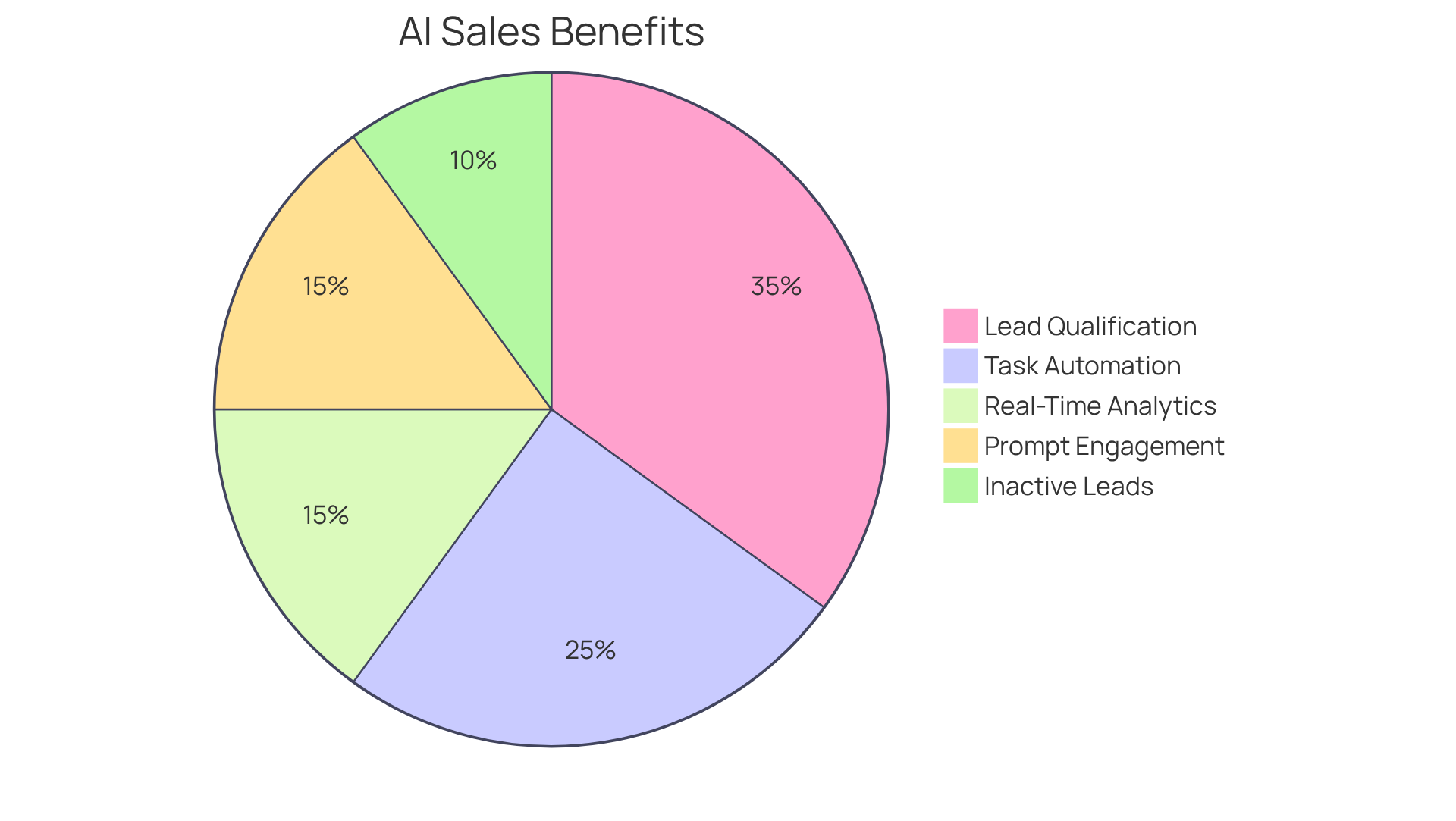
Improved Lead Qualification Accuracy: Intone's AI analyzes extensive datasets to identify high-intent prospects, outperforming traditional methods. Organizations leveraging conversational AI companies have reported a remarkable 30-40% improvement in lead scoring precision, which directly correlates with increased conversion rates.
-
Automation of Repetitive Tasks: AI-powered solutions streamline tasks such as sending payment reminders and following up with prospects. This automation allows teams to concentrate on high-value interactions, maximizing their efficiency.
-
Real-Time Analytics Integration: By integrating real-time analytics, businesses can swiftly adapt their strategies based on performance metrics, ensuring they stay competitive in a fast-paced market.
-
Prompt Engagement: The AI can respond to leads in under 60 seconds, ensuring prompt engagement that can potentially double qualification rates.
-
Engagement of Inactive Leads: Conversational AI companies can leverage this technology to reach out to inactive leads, generating 30-50 qualified appointments from just 10,000 old leads, showcasing its powerful impact on revenue processes.
To tailor the AI system to your specific business needs, simply upload your scripts, training materials, and call recordings. Intone will handle the rest, ensuring seamless deployment and customization of your AI marketing agents. You can also set up data sources, call transfer rules, and post-call reporting to further enhance your sales performance.
Evaluate Challenges of Conversational AI vs. Traditional Sales
Conversational AI presents remarkable advantages, yet it faces critical challenges that demand careful navigation. One primary concern is the potential deficiency in emotional intelligence during AI interactions. This shortcoming can lead to misunderstandings and hinder the ability to connect with clients on a personal level. Notably, 54% of consumers feel that AI agents lack context about them, underscoring the emotional intelligence issue in these interactions. This absence of emotional nuance can result in client dissatisfaction, as AI often struggles to interpret emotional cues effectively.
Moreover, the success of conversational AI is closely tied to data quality. Inaccurate or incomplete data can yield erroneous responses, further diminishing customer trust and satisfaction. Additionally, resistance from commercial teams poses a significant challenge. Many professionals express concern that AI technologies might threaten their job security. In fact, 23% of commerce professionals voice worries about privacy and data confidentiality when utilizing AI, which can foster reluctance to adopt AI solutions and impede their integration into existing processes.
In contrast, traditional approaches, while typically slower and less efficient, inherently allow for human empathy and relationship-building qualities that AI currently cannot replicate. Striking a balance between leveraging AI's effectiveness and preserving the human element is crucial for conversational AI companies that aim to enhance their marketing strategies. This is particularly relevant given that 78% of customers prefer the option to transition to a human representative when needed.

Review Case Studies: Conversational AI in Action
Several conversational AI companies have successfully integrated their technologies into sales processes, yielding impressive results. For instance, GCS reported significant improvements in conversion rates after implementing customizable AI voice agents that require no setup or tuning. GCS simply provided their scripts, and the company customized the AI to meet their specific business needs. This seamless deployment enabled GCS to automate lead qualification and follow-up processes, leading to quicker response times and increased client satisfaction.
Moreover, the intelligent analytics and real-time insights provided by the platform allowed GCS to monitor performance, compare representatives, and conduct A/B tests, further improving their sales efficiency. Another case study highlights a finance company that leveraged conversational AI to streamline payment reminders, leading to a 25% increase in on-time payments. This showcases the effectiveness of conversational AI companies in optimizing customer interactions.
Furthermore, Intone's 24/7 AI agents ensure continuous support, enhancing operational efficiency and driving revenue growth. The integration of conversational AI companies not only transforms sales processes but also positions organizations for sustained success in an increasingly competitive landscape.

Conclusion
Conversational AI marks a pivotal evolution in sales methodologies, providing businesses with a contemporary strategy to engage customers that traditional methods simply cannot match. By harnessing cutting-edge technologies such as natural language processing and machine learning, conversational AI not only boosts efficiency but also significantly enriches customer interactions, fundamentally transforming the sales landscape.
This article underscores how conversational AI surpasses traditional sales techniques by:
- Automating lead qualification
- Delivering real-time analytics
- Engaging customers without delay
These features effectively tackle the shortcomings of conventional approaches, including prolonged sales cycles and dismal cold-calling success rates. As a result, companies can streamline their operations and concentrate on high-value interactions. Moreover, case studies reveal the concrete benefits experienced by organizations that have embraced conversational AI, highlighting improved conversion rates and heightened customer satisfaction.
In an increasingly competitive marketplace, adopting conversational AI is no longer a mere option; it is essential. The capability to swiftly adapt to customer needs while maintaining operational efficiency can drive sustainable growth and provide a significant competitive advantage. Organizations must consider integrating conversational AI into their sales strategies to fully harness its potential and redefine their customer engagement practices for the future.
Frequently Asked Questions
What is Conversational AI?
Conversational AI refers to technology that enables machines to engage in human-like conversations through text or voice interfaces, such as chatbots and virtual assistants. It uses natural language processing (NLP) and machine learning (ML) to understand and respond to user inputs.
How does Conversational AI enhance business efficiency?
Conversational AI enhances efficiency by accurately interpreting user inquiries and delivering relevant responses in real-time, which streamlines transaction processes and improves user engagement. This optimization can lead to significant improvements in overall business performance.
What are the benefits of using AI vocal assistants like Intone's?
Intone's AI vocal assistants are effective in upselling and re-engagement strategies, providing 24/7 assistance for tier-1 inquiries, and reducing operational costs by 30% or more. They also feature real-time call monitoring and an analytics dashboard for tracking performance metrics.
What is the projected market growth for conversational AI companies?
The global conversational AI companies market is projected to grow from $12.24 billion in 2024 to $61.69 billion by 2032, indicating the increasing significance of these technologies in modern business.
How do traditional sales methods compare to Conversational AI?
Traditional sales methods rely on face-to-face interactions and cold calling, which can be time-consuming and less effective in today's fast-paced market. Conversational AI automates lead generation and follow-ups, improving operational efficiency and customer experience.
What challenges do traditional sales methods face?
Traditional sales methods struggle with long sales cycles, declining cold call success rates, and high rejection rates, which can lead to wasted resources and call reluctance among salespeople.
How does integrating Conversational AI with CRM systems benefit businesses?
Integrating Conversational AI with CRM systems enhances operational efficiency by allowing teams to monitor critical metrics like lead conversion rates and client satisfaction, ensuring businesses remain competitive and responsive to market changes.