

Introduction
Telemarketing has emerged as a pivotal strategy in the competitive realm of lead generation, directly connecting businesses with potential customers through targeted outreach. This article explores the multifaceted world of telemarketing, highlighting innovative strategies employed by leading websites to enhance effectiveness and drive conversion rates.
With the rise of advanced technologies and shifting consumer preferences, what are the real advantages and challenges businesses face when leveraging telemarketing for lead generation? Understanding these dynamics is crucial for any organization aiming to thrive in today’s market.
Define Telemarketing and Its Role in Lead Generation
Telemarketing stands as a pivotal direct marketing strategy, engaging potential and current clients through telephone outreach to promote products or services. Its primary goal in prospect generation is to initiate conversations that can convert potential clients into buyers.
Telemarketing can be categorized into two main types: inbound and . Inbound calls focus on addressing , providing immediate assistance and information. Conversely, represent proactive outreach efforts designed to spark interest and evaluate prospects. This distinction is crucial for understanding how within the broader context of .
In this landscape, phone marketing serves as a vital link between and sales teams. It ensures that prospects are not only nurtured but also effectively converted into loyal customers. By leveraging telemarketing, businesses can enhance their , driving growth and success in a competitive market.

Analyze Telemarketing Strategies Across Leading Websites
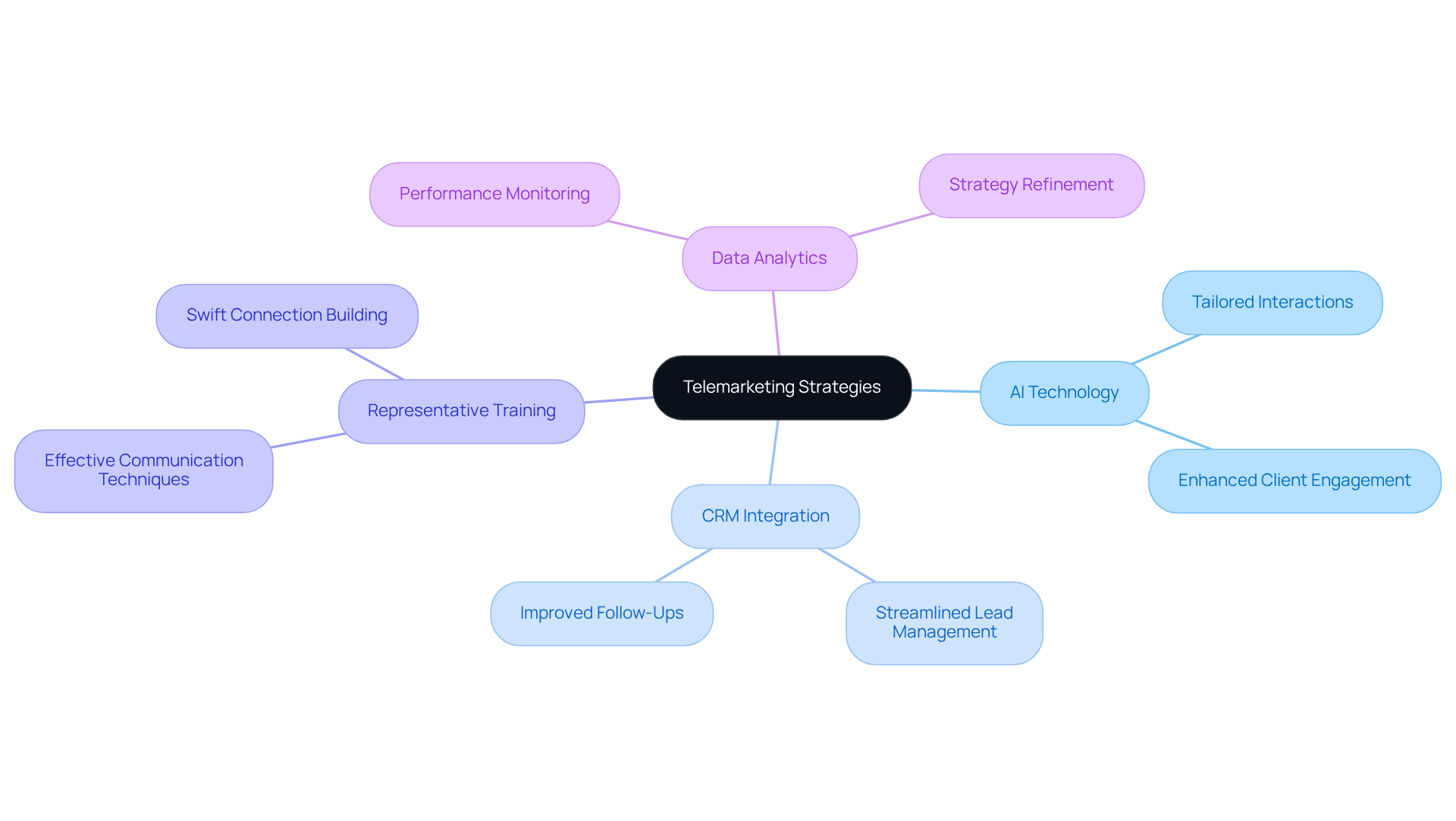
Leading telemarketing websites are pioneering by employing a variety of innovative strategies to maximize their effectiveness. For instance, many are harnessing advanced AI technologies to tailor interactions, ensuring that calls resonate with the specific needs of prospective clients. Websites such as Pearl Lemon Leads and Five9 exemplify this trend by that streamline and follow-ups, enhancing operational efficiency.
Moreover, successful marketing programs prioritize the education of their representatives in . This training empowers them to forge connections swiftly and address client concerns with proficiency. The strategic application of is another hallmark of leading marketing firms, allowing them to monitor performance and refine their strategies. This adaptability is crucial in responding to shifting market conditions and evolving client preferences.
In summary, the combination of AI technology, CRM integration, representative training, and not only enhances but also positions these firms as leaders in the telemarketing websites landscape. By adopting these strategies, businesses can significantly improve their outreach and client engagement efforts.
Evaluate Performance Metrics and Results of Telemarketing Services
are crucial for evaluating the effectiveness of marketing services. Key metrics such as:
- Call
play a significant role in this assessment. For instance, report between 5% and 10%, varying by industry and target audience. Moreover, metrics like:
offer valuable insights into and loyalty.
Organizations like Five9 and NICE CXone effectively utilize these metrics to continuously enhance their offerings, ensuring they meet the evolving demands of their clients. By examining these performance indicators, businesses can accurately assess the potential ROI of investing in . This strategic approach not only fosters growth but also strengthens , making it imperative for companies to prioritize these metrics in their marketing evaluations.

Compare Pros and Cons of Top Telemarketing Services
When evaluating marketing services, it’s essential to consider both the advantages and disadvantages that arise. Phone marketing stands out for its ability to foster direct interaction with potential customers, which can significantly boost and provide immediate feedback. Services like Intone harness the power of AI to enhance these interactions, delivering a personalized experience through seamless deployment and customization of . With , Intone empowers sales teams to track performance, compare agents, and optimize their strategies effectively. In fact, by 2026, cold calling success rates are projected to rise, averaging around 4.82%. This figure greatly surpasses the mere 0.80% conversion rate for B2B display ads, underscoring the effectiveness of well-executed .
However, it’s crucial to acknowledge the drawbacks as well. High rejection rates and can pose significant hurdles. The National Do-Not-Call Registry, which boasts over 258 million registered numbers, highlights the compliance issues that encounter, emphasizing the necessity for explicit consumer consent. Moreover, the effectiveness of phone marketing can vary considerably based on lead quality and agent training. As the industry shifts towards data-driven approaches and , companies must carefully weigh these factors to select a service that aligns with their sales objectives and enhances . Regular follow-ups and well-prepared talking points are vital for achieving favorable results in telemarketing, further emphasizing the importance of a strategic approach.

Conclusion
Telemarketing is essential for lead generation, enabling direct communication between businesses and potential clients. This method not only sparks valuable conversations but also drives the conversion of leads into loyal customers. By understanding the nuances of telemarketing - especially the difference between inbound and outbound calls - we can appreciate its critical role in the marketing landscape.
This article explores various facets of telemarketing, from cutting-edge strategies used by top websites to the key performance metrics that measure their success. Notable insights include:
- The integration of AI technology and CRM systems
- The necessity of thorough representative training
- The strategic use of data analytics
Together, these elements significantly enhance outreach efforts and client engagement, establishing telemarketing as a formidable tool for businesses looking to elevate their sales strategies.
In conclusion, the effectiveness of telemarketing services relies on a careful balance of benefits and challenges. The allure of high conversion rates and direct engagement is undeniable; however, organizations must also navigate compliance issues and ensure quality interactions. As the industry continues to evolve, adopting data-driven strategies and prioritizing customer relationships will be crucial for success in lead generation. By leveraging the insights provided, businesses can refine their telemarketing tactics and achieve meaningful results in their marketing endeavors.
Frequently Asked Questions
What is telemarketing?
Telemarketing is a direct marketing strategy that involves engaging potential and current clients through telephone outreach to promote products or services.
What is the primary goal of telemarketing in lead generation?
The primary goal of telemarketing in lead generation is to initiate conversations that can convert potential clients into buyers.
What are the two main types of telemarketing?
The two main types of telemarketing are inbound calls and outbound calls. Inbound calls focus on addressing customer inquiries, while outbound calls involve proactive outreach to spark interest and evaluate prospects.
How does telemarketing function within customer acquisition?
Telemarketing serves as a vital link between promotional activities and sales teams, ensuring that prospects are nurtured and effectively converted into loyal customers.
How can businesses benefit from leveraging telemarketing?
By leveraging telemarketing, businesses can enhance their customer acquisition strategies, driving growth and success in a competitive market.
List of Sources
- Evaluate Performance Metrics and Results of Telemarketing Services
- alliedonesource.com (https://alliedonesource.com/crucial-call-center-stats-for-year-end-impact-elevate-customer-satisfaction-and-performance)
- trellus.ai (https://trellus.ai/post/cold-calling-statistics)
- Is Cold Calling Still Effective in 2026? The Data Says Yes - Leads at Scale | Get Leads at Scale and Grow Your Sales (https://leadsatscale.com/insights/cold-calling-effectiveness-2026-data)
- Telemarketing Services Explained: 2026 B2B Best Practices (https://martal.ca/telemarketing-services-lb)
- Important Metrics Every Call Center Should Track in 2026 (https://callcenterstudio.com/blog/important-metrics-every-call-center-should-track-in-2026)
- Compare Pros and Cons of Top Telemarketing Services
- Is Telemarketing Still Effective? Stats, Trends & Real-World Results (https://callingagency.com/blog/is-telemarketing-still-effective)
- FTC Biennial Report Highlights Continued Telemarketing Enforcement and Consumer Complaints - Greenspoon Marder LLP (https://gmlaw.com/news/ftc-biennial-report-highlights-continued-telemarketing-enforcement-and-consumer-complaints-2)
- What Telemarketing Looks Like in 2026: Is It Still Relevant? - Paragon Sales Solutions (https://paragonsalessolutions.co.uk/telemarketing-in-2026)
- How Telemarketing Companies Will Drive Growth in 2026 (https://reexia.co.uk/how-telemarketing-companies-will-drive-growth-in-2026)
- Six reasons why telemarketing will drive sales growth in 2026 - TTMC (https://ttmc.co.uk/knowledge/infographics/six-reasons-why-telemarketing-is-essential-to-sales-growth-in-2026)