

Introduction
AI is revolutionizing the sales landscape, presenting organizations with unparalleled opportunities to enhance efficiency and drive financial success. By automating mundane tasks and delivering deep insights, AI empowers sales teams to concentrate on what truly matters: building relationships and closing deals. Yet, as businesses eagerly adopt these advanced technologies, a pressing question arises: how can organizations ensure they are leveraging AI effectively while sidestepping common pitfalls? This article delves into best practices for integrating AI into sales processes, showcasing proven strategies that can lead to sustainable growth and improved customer engagement.
Understand AI's Impact on Sales Processes
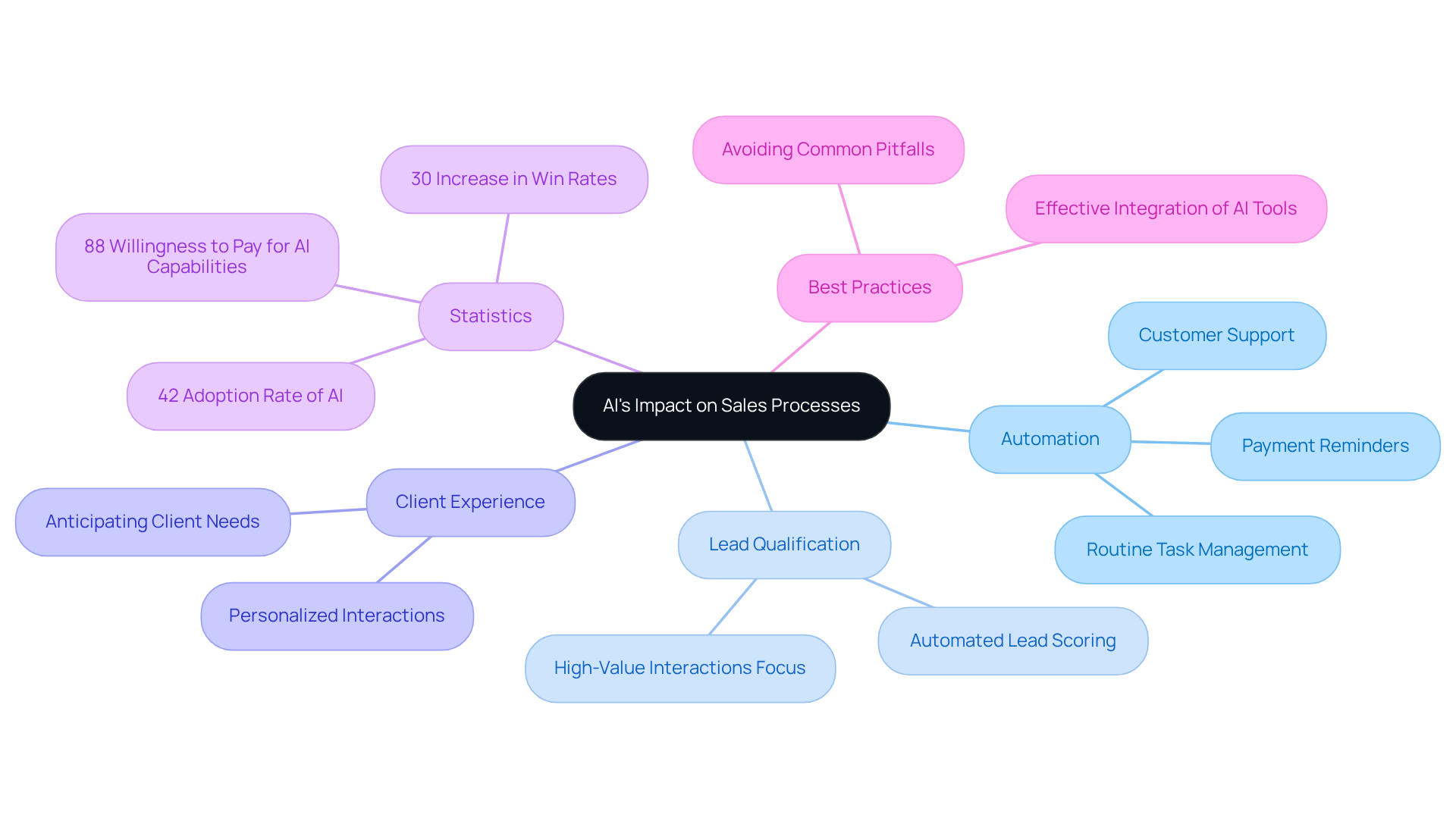
AI is fundamentally transforming commercial processes. By automating repetitive tasks, enhancing lead qualification, and delivering insights that were once out of reach, businesses are adopting best practices for using AI in sales, reshaping their operations. A recent Bain report reveals that AI can increase win rates by over 30%. This remarkable statistic empowers sales teams to focus on high-value interactions rather than getting bogged down by administrative duties.
This shift not only boosts productivity but also significantly enhances the client experience. AI tools analyze client data to personalize interactions and anticipate needs effectively. Organizations that adopt customizable AI-driven solutions, such as Intone's AI voice agents, are discovering a more natural and effective way to engage clients. This leads to higher conversion rates and increased satisfaction.
For example, Intone's AI voice agents automate essential tasks like payment reminders and customer support. This allows human agents to concentrate on more complex inquiries, thereby improving the overall transaction process. With features like and smart analytics, Intone empowers organizations to track performance, compare agents, and conduct A/B tests, ensuring continuous improvement.
Moreover, 42% of organizations are now utilizing AI for account and contact research and planning. This statistic underscores the widespread acceptance of AI resources in marketing. However, it is crucial for organizations to ensure accurate information and effective integration of AI tools into existing workflows by adhering to best practices for using AI in sales to avoid common pitfalls.
Implement Proven AI Strategies for Sales Success
To effectively implement AI in sales, organizations must prioritize several key strategies:
- Automate Lead Qualification: By utilizing AI algorithms to analyze client data, businesses can identify high-intent leads. This strategy significantly reduces the time sales teams spend on unqualified prospects, leading to a remarkable for companies that adopt AI-powered lead qualification.
- Personalize Customer Interactions: Leveraging Intone's AI voice agents allows organizations to assess past interactions and tailor communications based on individual customer preferences. This includes the ability to clone voices from top-performing agents, enhancing personalization and engagement. As a result, companies have seen a 26% increase in email open rates, which significantly boosts conversion rates.
- Integrate AI with Existing Systems: It is crucial to ensure that AI resources, such as Intone's customizable solutions, are compatible with current CRM systems. This integration streamlines workflows and facilitates data sharing, enabling a smooth transition while optimizing the use of both AI and existing tools, ultimately improving overall efficiency.
- Employ Real-Time Analytics: Implementing Intone's AI-driven analytics enables firms to track revenue performance and client interactions in real-time. This capability allows for prompt adjustments to marketing tactics, enhancing responsiveness and efficiency. Organizations utilizing real-time analytics have reported significant improvements in conversion rates and client satisfaction.
Organizations like GCS exemplify the successful application of these strategies, showcasing measurable improvements in revenue performance and customer engagement. By concentrating on these established AI techniques and following the best practices for using AI in sales, businesses can achieve financial success and maintain a competitive edge in the evolving market landscape.

Ensure High-Quality Data and Ethical AI Use
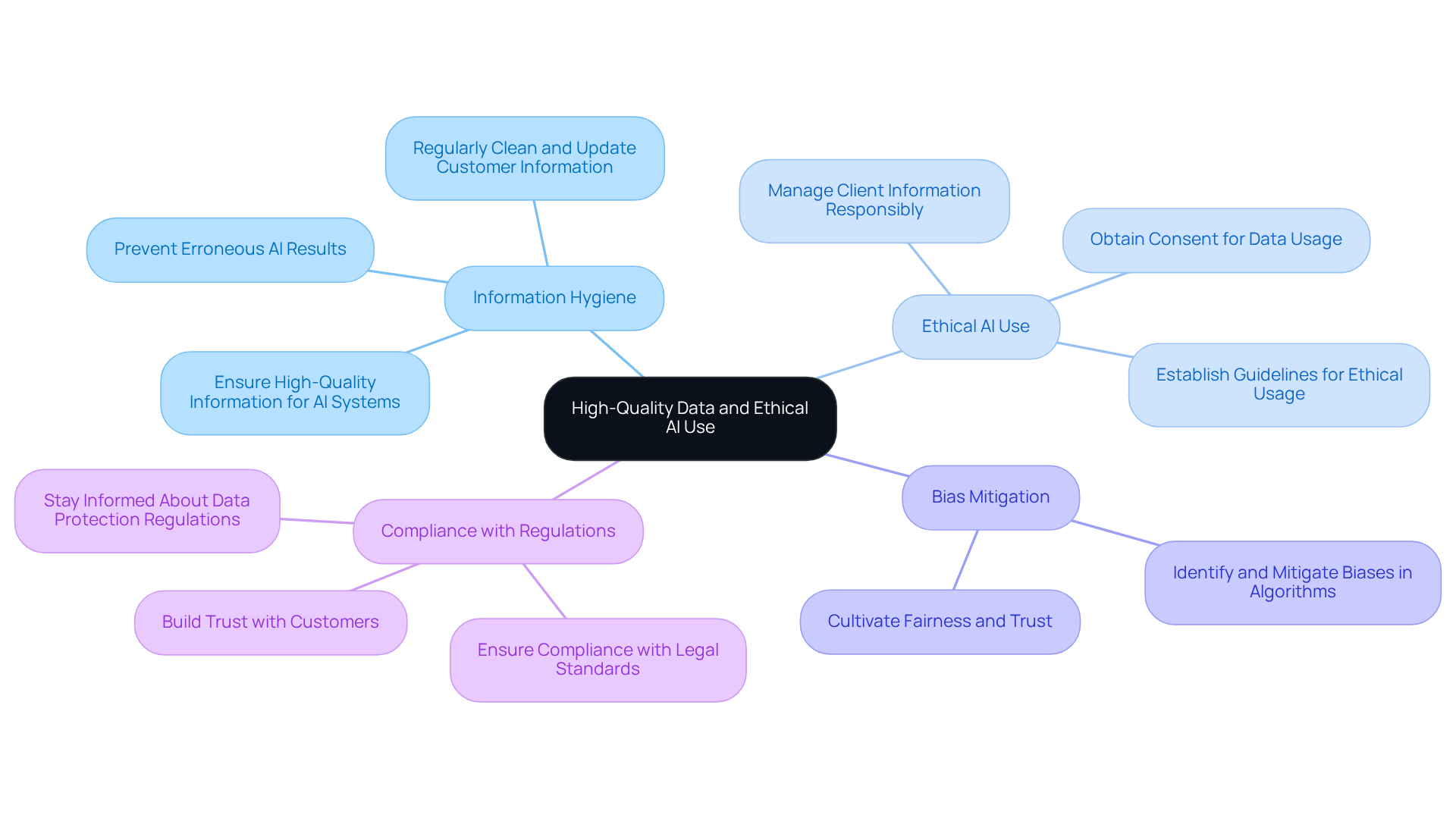
To enhance the effectiveness of AI in sales, organizations must prioritize , focusing on information quality and ethical practices. This includes:
- Information Hygiene: Regularly cleaning and updating customer information is essential for accuracy. AI systems rely on high-quality information; inadequate information can lead to misguided insights and ineffective strategies. In fact, 81% of experts in analytics and AI acknowledge the necessity for enhanced information quality to prevent erroneous AI results.
- Ethical AI Use: Establishing guidelines for ethical AI usage is crucial. Organizations should ensure that client information is managed responsibly and transparently. This includes obtaining consent for its usage and clearly communicating how AI is applied in client interactions.
- Bias Mitigation: Actively identifying and mitigating biases in AI algorithms is vital for maintaining fairness and trust in AI-driven processes. Organizations that emphasize bias reduction are more likely to cultivate a positive connection with their clients.
- Compliance with Regulations: Staying informed about data protection regulations, such as GDPR, is necessary to ensure that AI implementations comply with legal standards. Organizations that adhere to these regulations not only enhance their AI effectiveness but also build trust with their customers, leading to long-term success.
By focusing on these ethical practices, businesses can implement the best practices for using AI in sales to drive financial success while maintaining integrity and accountability.
Adapt and Optimize AI Practices for Ongoing Success
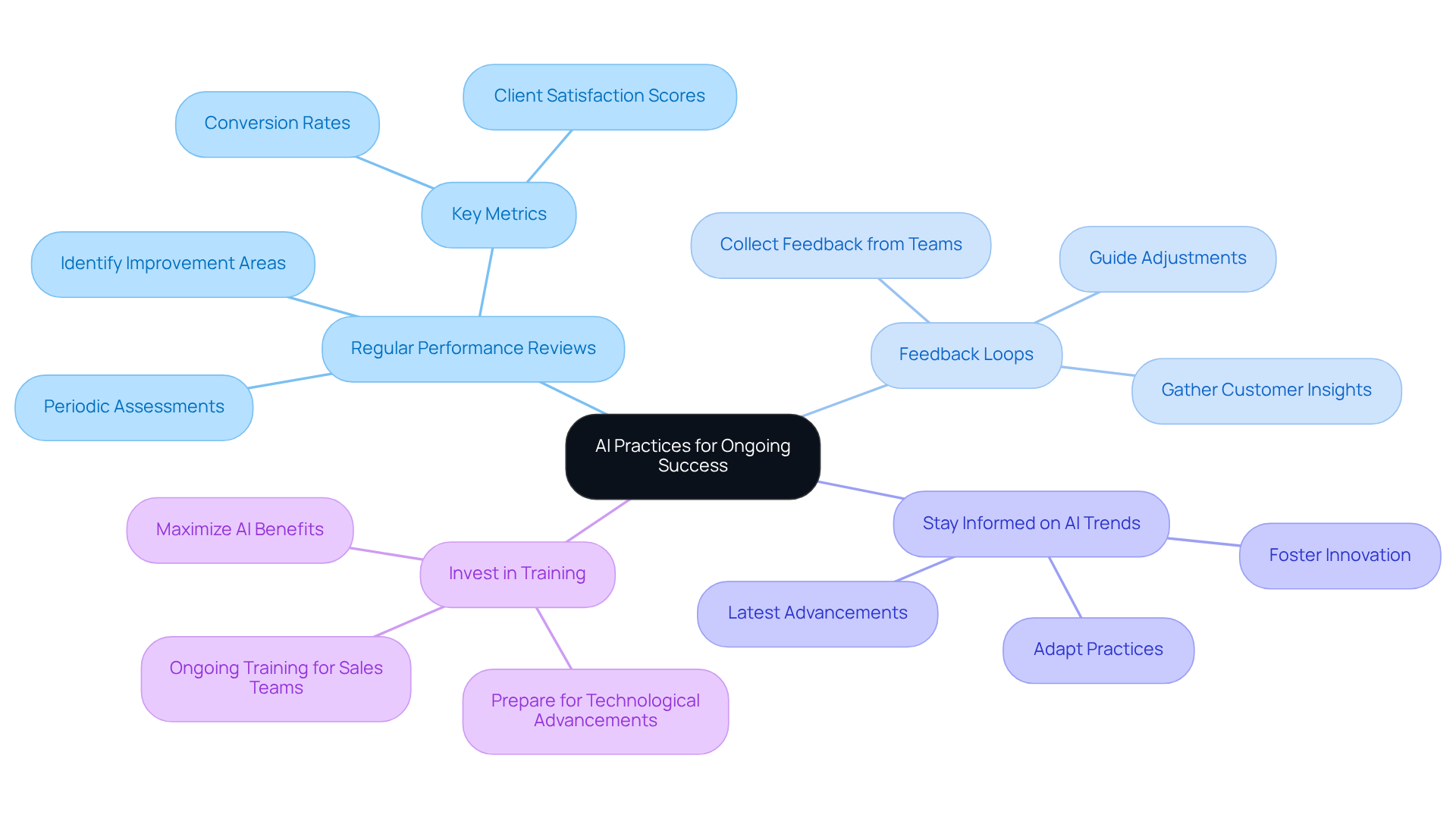
Organizations must embrace a culture of continuous improvement to ensure ongoing success by implementing best practices for using AI in sales. This commitment involves several key practices that can significantly enhance performance and drive growth.
- Regular Performance Reviews: Conduct periodic and strategies to evaluate their effectiveness. Metrics such as conversion rates and client satisfaction scores are essential for gauging success and identifying areas for enhancement. Regular reviews not only highlight strengths but also pinpoint opportunities for improvement, ensuring that AI initiatives remain aligned with business goals.
- Feedback Loops: Establish robust systems for collecting feedback from both commercial teams and customers regarding AI interactions. This feedback is invaluable for guiding necessary adjustments and enhancements, ensuring that AI resources evolve in alignment with user needs and market demands. By actively listening to stakeholders, organizations can refine their AI applications to better serve their objectives.
- Stay Informed on AI Trends: [Keeping abreast of the latest advancements in AI technology](https://ey.com/en_us/insights/ai/how-ai-is-reshaping-the-future-of-sales) and marketing strategies is crucial. This knowledge empowers organizations to adapt their practices, leveraging new capabilities to maintain a competitive edge in a rapidly changing landscape. Staying informed not only fosters innovation but also positions companies as leaders in their field.
- Invest in Training: Ongoing training for sales teams on effectively utilizing AI tools is vital. Equipping staff with the skills to maximize the benefits of AI ensures they can adapt to technological advancements and strategic shifts. A well-trained team is better prepared to harness AI's potential, driving improved outcomes and customer satisfaction.
By adopting the best practices for using AI in sales, organizations can enhance their current AI implementations and position themselves for sustainable growth and success in the future. Embrace continuous improvement and watch your sales performance soar.
Conclusion
AI is fundamentally reshaping the sales landscape, presenting organizations with a unique opportunity to significantly enhance operational efficiency and drive financial success. By embracing AI technologies, businesses can automate repetitive tasks, gain valuable insights, and focus on nurturing relationships with clients. This transformation streamlines processes and fosters a more personalized customer experience, ultimately leading to higher conversion rates and increased satisfaction.
To leverage AI effectively in sales, several key strategies stand out:
- Automating lead qualification
- Personalizing customer interactions
- Integrating AI with existing systems
- Employing real-time analytics
Moreover, maintaining high-quality data and adhering to ethical practices are essential to ensure that AI implementations are both effective and trustworthy. Organizations that adopt these best practices position themselves for sustainable growth and a competitive edge in an evolving market.
As the sales landscape continues to evolve, fostering a culture of continuous improvement is vital. Regular performance reviews, feedback loops, and ongoing training empower organizations to adapt their AI strategies and optimize practices for ongoing success. By prioritizing these best practices for utilizing AI in sales, businesses can enhance their current operations and pave the way for future innovations that will drive sales performance and customer engagement well into 2025 and beyond.
Frequently Asked Questions
How is AI transforming sales processes?
AI is transforming sales processes by automating repetitive tasks, enhancing lead qualification, and delivering insights that were previously difficult to access, allowing businesses to reshape their operations.
What impact does AI have on win rates in sales?
A recent Bain report indicates that AI can increase win rates by over 30%, enabling sales teams to focus on high-value interactions rather than administrative tasks.
How does AI improve client experience in sales?
AI tools analyze client data to personalize interactions and anticipate needs effectively, which enhances the overall client experience and satisfaction.
What are some examples of AI tools used in sales?
An example of an AI tool used in sales is Intone's AI voice agents, which automate tasks like payment reminders and customer support, allowing human agents to focus on more complex inquiries.
What features do Intone's AI voice agents offer?
Intone's AI voice agents provide features such as real-time monitoring, smart analytics, performance tracking, agent comparison, and A/B testing for continuous improvement.
What percentage of organizations are using AI for account and contact research?
42% of organizations are now utilizing AI for account and contact research and planning, indicating a growing acceptance of AI resources in marketing.
What should organizations consider when integrating AI tools into their sales processes?
Organizations should ensure accurate information and effective integration of AI tools into existing workflows by adhering to best practices for using AI in sales to avoid common pitfalls.