

Introduction
AI tools are revolutionizing the sales landscape, empowering teams to leverage data-driven insights and optimize their performance like never before. As businesses increasingly embrace these advanced technologies, grasping their unique features and capabilities is essential for maintaining a competitive edge.
But with a multitude of options available, how can organizations discern which AI sales tools truly yield the best results? This comparative analysis explores leading AI solutions, providing a roadmap to navigate the complexities of sales performance management and uncovering the keys to maximizing revenue potential.
Understanding AI Tools for Sales Performance Management
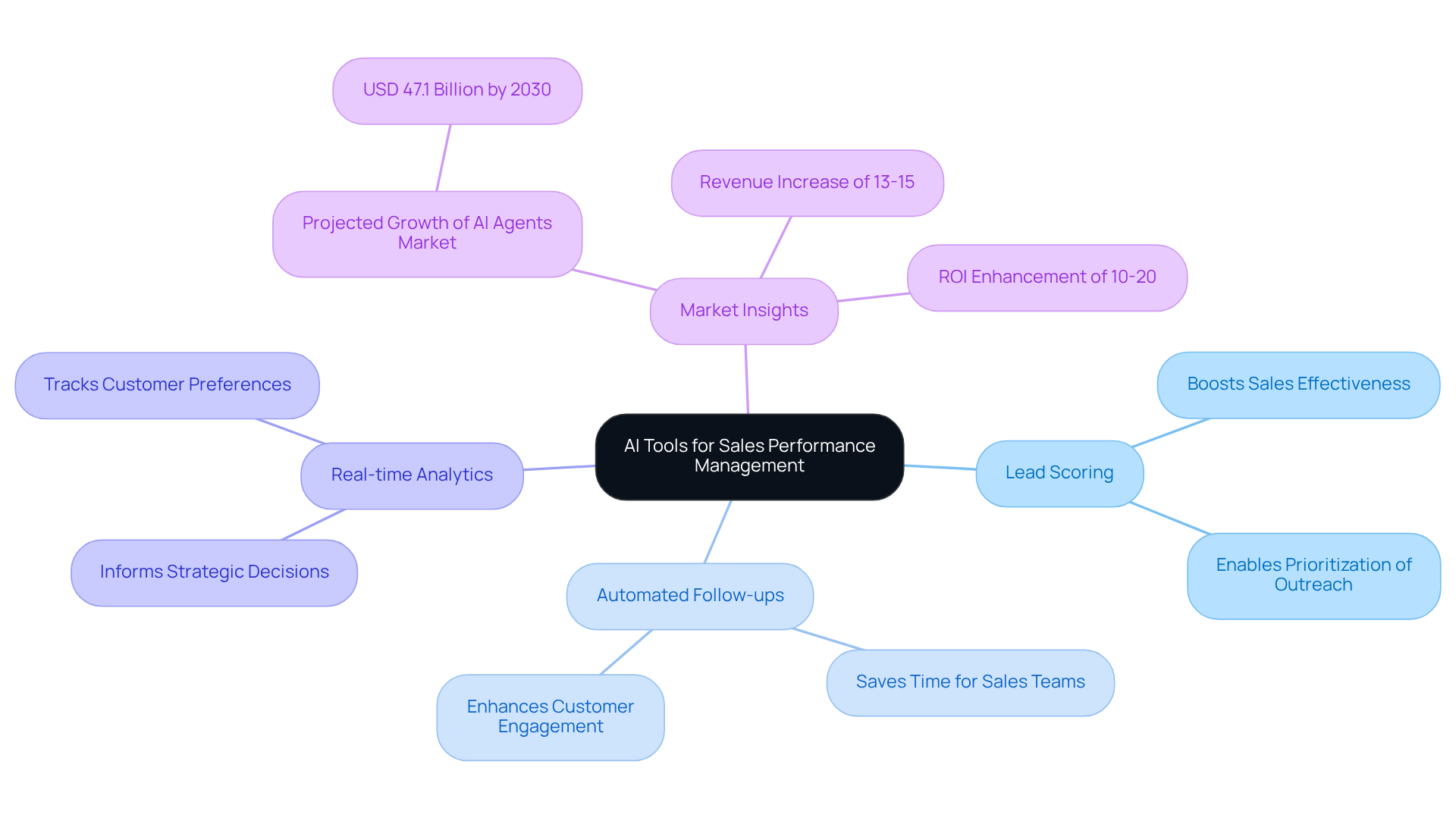
AI tools for managing sales performance are revolutionizing the sales landscape by automating and enhancing critical processes. By leveraging advanced machine learning algorithms, these tools analyze extensive datasets to predict customer behavior and optimize workflows. The human-like AI voice agents from the company exemplify this innovation, offering features like upselling techniques and customer re-engagement strategies that significantly boost sales effectiveness.
Key features include:
- Lead scoring
- Automated follow-ups
- Real-time analytics
These features empower teams to concentrate on high-value tasks. For instance, Intone's AI can evaluate past interactions to pinpoint high-intent prospects, enabling representatives to prioritize their outreach efficiently. Moreover, these AI tools for managing sales performance provide insights into customer preferences, facilitating personalized communication that is essential in today's competitive market.
Businesses that integrate AI tools for managing sales performance into their commerce strategies report a remarkable 13-15% increase in revenue and a 10-20% enhancement in ROI, underscoring the substantial impact of AI on process optimization and automation. Additionally, the AI agents market is projected to grow to USD 47.1 billion by 2030, highlighting the escalating importance of AI in commerce.
As Blue Bowen, a senior market research analyst, observes, AI empowers salespeople to construct comprehensive profiles for prospects, fostering deeper relationships and accelerating customer success. With the ability to monitor changes in key metrics, Intone's AI solutions ensure that sales personnel can respond swiftly and effectively to evolving customer needs.
Key Comparison Criteria for Evaluating AI Sales Tools
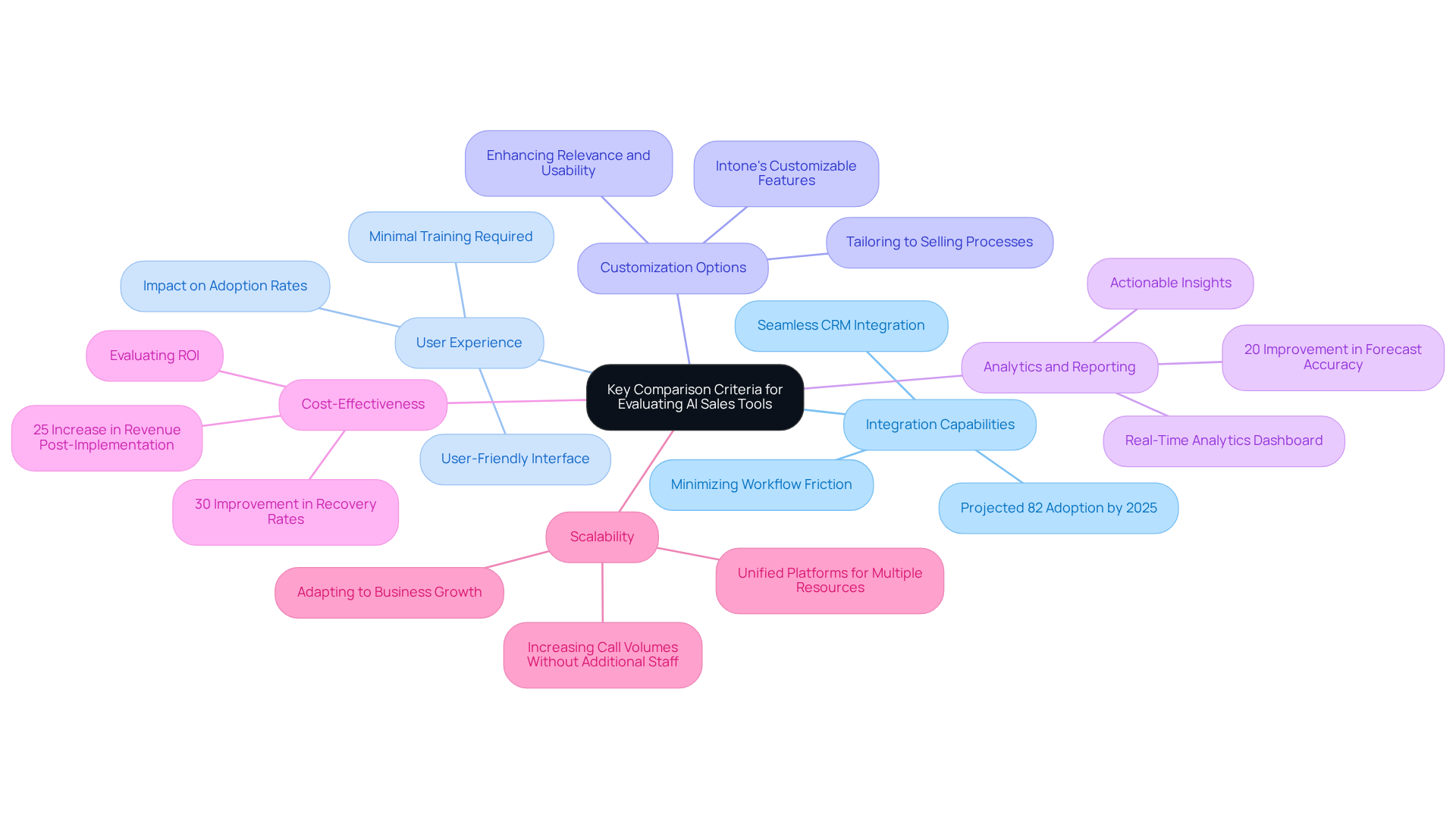
When evaluating AI sales tools, several key criteria should be considered:
-
Integration Capabilities: Seamless incorporation with existing CRM systems and other commercial technologies is essential for maintaining a smooth workflow. Tools that can easily integrate with existing systems minimize friction and improve data accuracy, which is crucial for efficient commercial operations. Notably, over 82% of revenue organizations worldwide are anticipated to utilize AI in some capacity by 2025, underscoring the necessity of integration in today’s environment. Intone’s AI voice automation integrates effortlessly, offering AI tools for managing sales performance along with real-time monitoring, performance tracking, and enhancement of business processes.
-
User Experience: A user-friendly interface significantly impacts adoption rates among sales personnel. Tools that require minimal training and offer intuitive navigation can boost productivity and encourage widespread use, ultimately leading to improved revenue outcomes. As Maria Akhter emphasizes, understanding specific bottlenecks when selecting AI resources is vital for enhancing user experience. Intone’s platform prioritizes user experience, allowing teams to leverage its features without extensive training.
-
Customization Options: The ability to tailor the tool to specific selling processes and strategies is essential for optimizing effectiveness. Customizable features empower teams to adapt the tool to their unique workflows, enhancing its relevance and usability. Intone provides customizable AI tools for managing sales performance that bolster brand trust and performance monitoring, enabling teams to tailor the technology to their specific needs.
-
Analytics and Reporting: Robust analytical features that deliver actionable insights into revenue performance are indispensable. Organizations utilizing predictive analytics have reported a 20% improvement in forecast accuracy, highlighting the effectiveness of analytics in AI marketing resources. Intone’s real-time analytics dashboard, equipped with AI tools for managing sales performance, allows managers to monitor performance, compare agents, conduct A/B tests, and gain actionable insights, resulting in higher conversions and operational efficiency.
-
Cost-Effectiveness: Evaluating the return on investment (ROI) is crucial to ensure that the benefits of the tool outweigh its costs. Organizations should consider both direct financial impacts and the potential for enhanced efficiency and revenue performance. For instance, companies experience a 25% increase in revenue following the implementation of AI tools for managing sales performance, illustrating the financial impact of these resources. Intone’s AI voice agents have been shown to improve recovery rates by 30% and achieve 1.5 times more conversions compared to human agents, making it a cost-effective solution.
-
Scalability: As businesses grow, their sales resources must scale appropriately without significant additional investment. Leading revenue teams are increasingly integrating multiple resources into unified platforms, ensuring that organizations can adapt to changing demands and continue to leverage their AI systems effectively. Intone’s solutions have demonstrated scalability, enabling businesses to significantly increase call volumes without requiring additional full-time staff.
Comparative Analysis of Leading AI Sales Tools
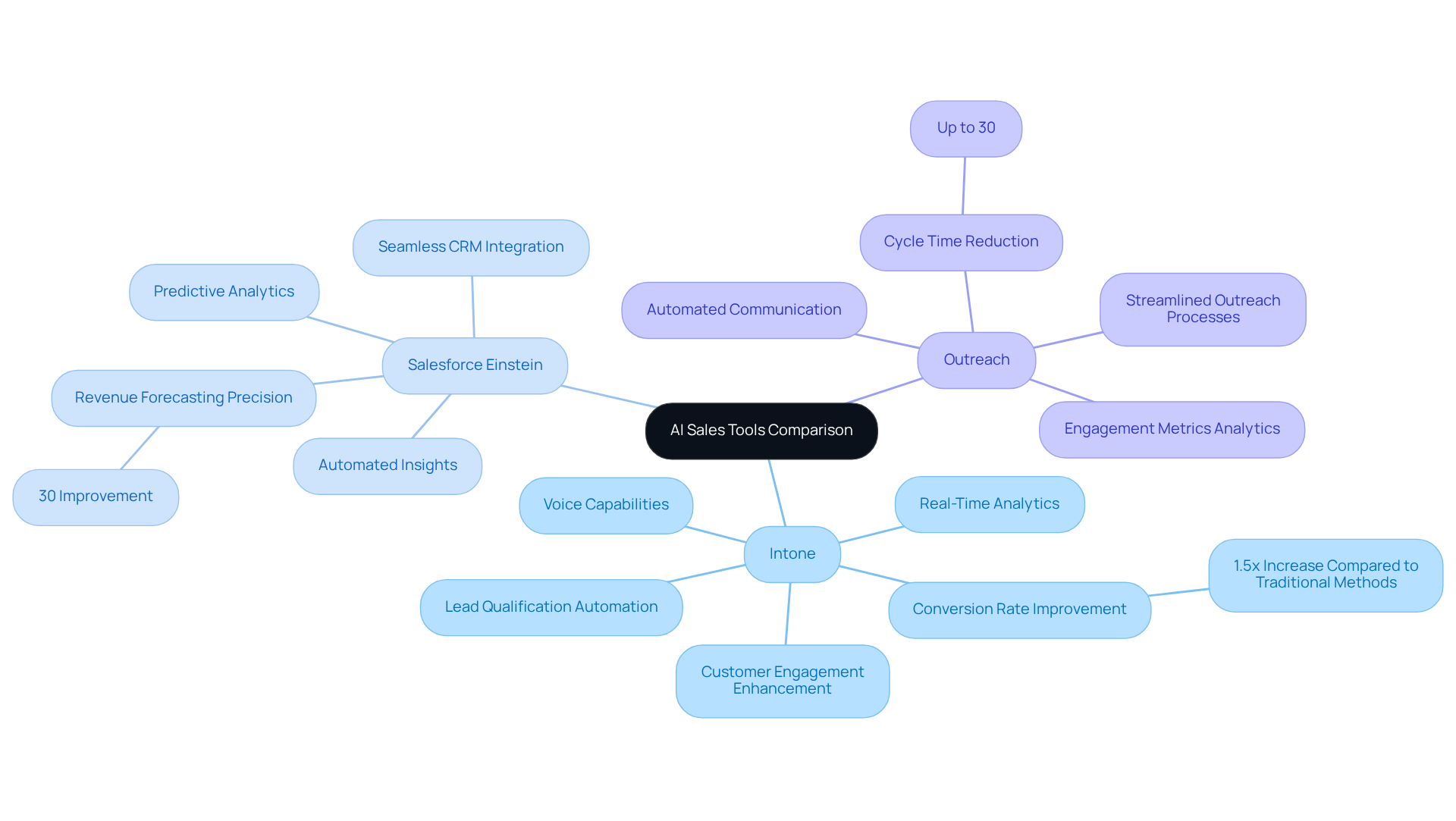
In this comparative analysis, we delve into three leading AI tools for managing sales performance, which are Salesforce Einstein, Outreach, and Intone.
-
Intone: Renowned for its customizable AI voice agents, Intone excels in automating lead qualification and follow-ups. This platform can instantly identify high-intent leads and provide real-time analytics, significantly enhancing customer engagement. Clients have reported a remarkable 1.5 times increase in conversion rates compared to traditional methods, underscoring the effectiveness of its voice-driven approach. For example, companies leveraging Intone's solutions have seen improved operational efficiency and customer satisfaction, particularly in sectors like finance and e-commerce.
-
Salesforce Einstein: Seamlessly integrating with Salesforce CRM, this tool offers predictive analytics and automated insights that enhance existing workflows. It is especially beneficial for organizations already embedded in the Salesforce ecosystem, requiring minimal adjustments while delivering robust data-driven insights. Notably, Salesforce Einstein can enhance revenue forecasting precision by as much as 30%, making it an invaluable resource for teams looking to refine their strategies.
-
Outreach: A powerful platform for business engagement, Outreach focuses on automating communication and follow-ups. Its strengths lie in streamlining outreach processes and providing detailed analytics on engagement metrics. Outreach has been shown to reduce cycle times by up to 30%, allowing teams to prioritize high-value interactions over administrative tasks.
Comparison Summary: Intone stands out for its voice capabilities and customization, Salesforce Einstein offers seamless integration for existing Salesforce users, and Outreach excels in automating communication workflows. Each tool presents distinct advantages tailored to various business needs, making AI tools for managing sales performance essential components in today's competitive market landscape.
Choosing the Right AI Tool for Your Sales Team
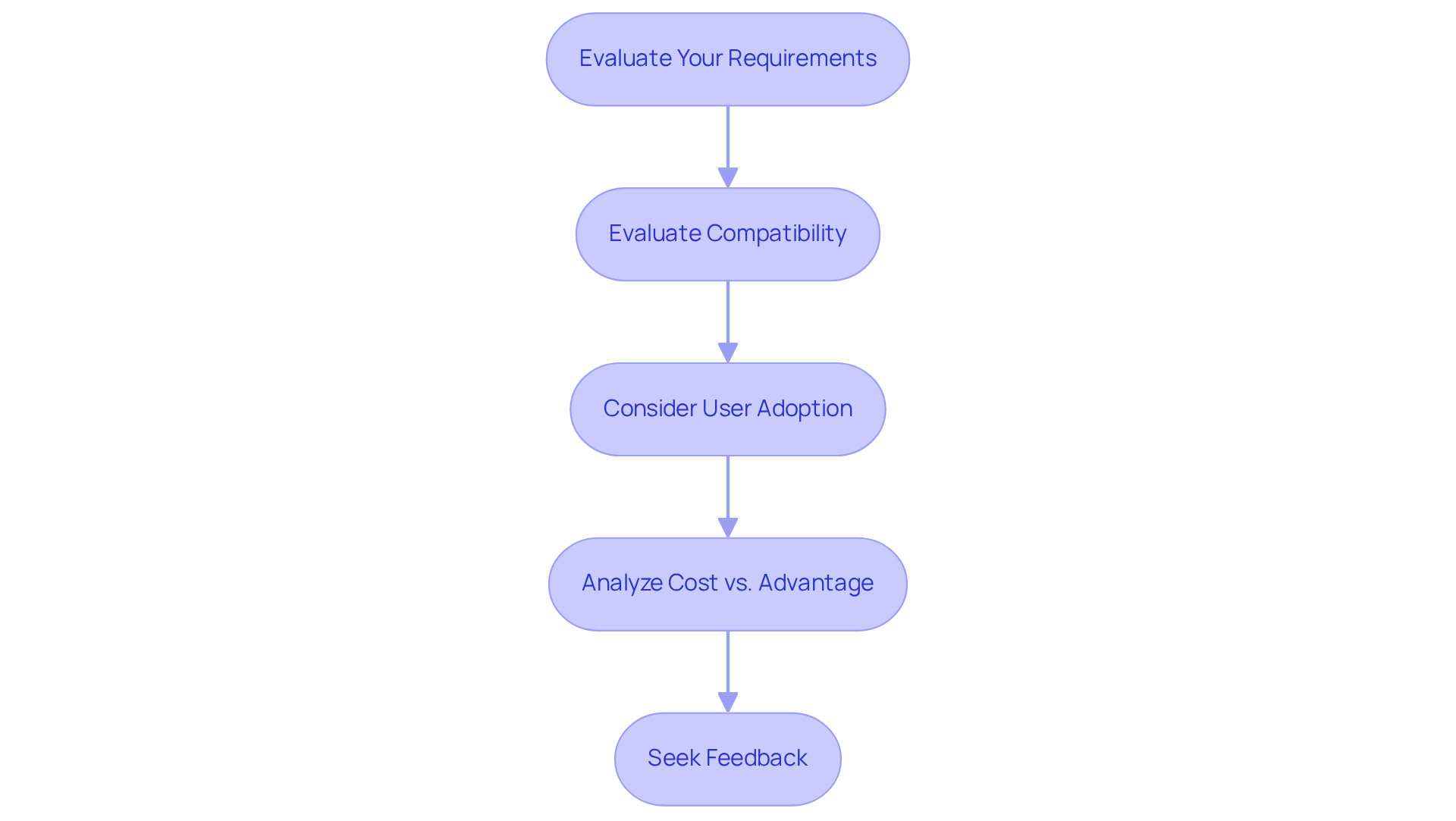
Selecting the right AI tool for your sales team demands a strategic approach, focusing on several key considerations that can drive success:
-
Evaluate Your Requirements: Begin by pinpointing the specific challenges your sales team encounters - be it lead qualification, customer interaction, or automating follow-ups. Recognizing these needs is essential; after all, nurtured leads can spend 47% more than their non-nurtured counterparts. This statistic underscores the critical importance of effective engagement strategies.
-
Evaluate Compatibility: It's crucial to ensure that the AI solution integrates seamlessly with your existing systems and workflows. Compatibility is key to avoiding disruptions. Organizations that utilize cloud-based CRM platforms have reported a remarkable 29% increase in sales and a 34% rise in sales productivity, highlighting the advantages of cohesive systems.
-
Consider User Adoption: Opt for a solution that is intuitive and user-friendly. High adoption rates are vital for maximizing effectiveness. In fact, 87% of salespeople believe that face-to-face connections are essential for success, indicating that resources should enhance, not complicate, interactions.
-
Analyze Cost vs. Advantage: Assess the costs of the tool against its potential benefits in terms of efficiency and conversion rates. For instance, businesses that implement lead nurturing strategies experience a staggering 451% increase in qualified leads, showcasing the substantial ROI that effective resources can provide.
-
Seek Feedback: Whenever possible, gather insights from current users or conduct trials to evaluate the system's performance in real-world scenarios. This step is crucial; 44% of sales representatives abandon their efforts after just one follow-up attempt, emphasizing the need for resources that support persistence and engagement.
By adhering to these steps, sales teams can select AI tools for managing sales performance that not only address their immediate challenges but also pave the way for long-term growth and success.
Conclusion
The integration of AI tools into sales performance management is not merely a trend; it represents a powerful approach that significantly enhances efficiency and effectiveness. By leveraging advanced technology, businesses can streamline their sales processes, elevate customer interactions, and ultimately drive higher revenue. A comparative analysis of leading AI tools reveals how these innovations cater to diverse business needs, ensuring that sales teams are well-equipped to excel in a competitive landscape.
Key insights from the article underscore the importance of features such as integration capabilities, user experience, customization options, and robust analytics. Tools like Intone, Salesforce Einstein, and Outreach each present unique advantages, illustrating that the right AI tool can profoundly impact a company's sales performance. Evaluating specific requirements and the potential ROI of these tools is crucial for making informed decisions that align with overarching business goals.
In conclusion, embracing AI tools for managing sales performance is essential for organizations seeking to optimize their sales strategies. As the market continues to evolve, staying ahead by leveraging these technologies will not only enhance operational efficiency but also cultivate deeper customer relationships. Businesses must actively explore and implement AI solutions that resonate with their unique challenges and objectives, paving the way for sustained growth and success in the future.
Frequently Asked Questions
What are AI tools for sales performance management?
AI tools for sales performance management are technologies that automate and enhance critical sales processes by leveraging advanced machine learning algorithms to analyze extensive datasets, predict customer behavior, and optimize workflows.
What key features do these AI tools offer?
Key features of AI tools for sales performance management include lead scoring, automated follow-ups, and real-time analytics.
How do AI tools improve sales effectiveness?
AI tools improve sales effectiveness by providing features like upselling techniques and customer re-engagement strategies, which help boost sales performance and enable teams to focus on high-value tasks.
How does lead scoring work in AI sales tools?
Lead scoring in AI sales tools evaluates past interactions to identify high-intent prospects, allowing sales representatives to prioritize their outreach efficiently.
What impact do AI tools have on revenue and ROI?
Businesses that integrate AI tools for managing sales performance report a remarkable 13-15% increase in revenue and a 10-20% enhancement in ROI, indicating a significant impact on process optimization and automation.
What is the projected growth of the AI agents market?
The AI agents market is projected to grow to USD 47.1 billion by 2030, reflecting the increasing importance of AI in commerce.
How do AI tools help in understanding customer preferences?
AI tools provide insights into customer preferences, facilitating personalized communication that is essential in today's competitive market.
What role does AI play in building relationships with prospects?
AI empowers salespeople to construct comprehensive profiles for prospects, fostering deeper relationships and accelerating customer success by enabling them to respond swiftly to evolving customer needs.