
Introduction
Cold calling in real estate can be daunting, yet it stands as one of the most effective methods to connect with potential clients. Mastering this skill not only opens doors to new opportunities but also bolsters professional credibility in a competitive market. With evolving legal regulations and the necessity for strategic planning, how can agents ensure their cold calling efforts yield positive results? This guide explores essential steps for executing effective cold calls in real estate, addressing both the challenges and opportunities that lie ahead.
Understand Legal Regulations for Cold Calling
Before making any cold contacts, it’s crucial to familiarize yourself with the governing telemarketing in your area. Understanding these laws not only protects your business but also . Here are the key points to consider:
- : First and foremost, ensure that you do not call numbers listed on the National . Regularly scrub your contact list against this registry to avoid hefty penalties.
- : Remember, different states may have additional regulations regarding telemarketing. It’s essential to research your state’s specific laws to ensure full compliance.
- : Cold outreach should only be conducted during allowable hours, typically between 8 AM and 9 PM local time. Respecting these timeframes is vital for maintaining a positive image.
- : Be prepared to identify yourself and your company at the beginning of the conversation, as mandated by law. Transparency builds trust and credibility.
By adhering to these regulations, you not only maintain a but also avoid potential legal repercussions. Take these steps seriously to ensure your telemarketing efforts are both effective and compliant.

Prepare Your Cold Calling Strategy
To create an effective , follow these steps:
- Define Your Target Audience: Clearly identify the demographics and characteristics of your ideal clients. This focused approach allows you to tailor your message, significantly increasing the likelihood of engagement. Research shows that 57% of C-level and VP purchasers prefer phone communication, underscoring the .
- Develop a Script: Craft a versatile script that highlights key points for your conversations. Include an engaging introduction, compelling value propositions, and open-ended questions to foster dialogue. Effective cold contacts often involve extended monologues, averaging 53 seconds, which facilitates greater engagement with potential clients. With Intone's , you can create scripts that sound natural and adhere to your exact messaging, enhancing the overall interaction.
- Gather Resources: Compile relevant market data, property listings, and insights that can provide value during your calls. Utilizing intent data helps identify potential clients actively researching , making your outreach timely and relevant. Remember, understanding without intent data is inefficient, leading to wasted time and effort in reaching uninterested prospects. Intone's analytics dashboard allows you to , ensuring your outreach aligns with your goals.
- Practice: Role-play your conversations with a colleague or mentor to refine your delivery and build confidence. As Jonathan Costet from Gong suggests, can enhance the quality of your conversations. Avoid common mistakes, such as calling without preparation, which can lead to irrelevant discussions and low conversion rates. With Intone's real-time feedback capabilities, you can continuously improve your approach based on performance insights.
- Establish a Monitoring System: Utilize a CRM or spreadsheet to record your communications, results, and follow-up actions. Consistent follow-up is essential, as many deals are won after multiple touchpoints. In 2026, the typical phone approach lasts 82 seconds, so being efficient and strategic in your method is crucial. can help you scale your outreach efforts, allowing for while maintaining the quality of interactions.
By preparing thoroughly and leveraging Intone's AI technology, which offers simplicity in setup and dedicated engineering support, you will feel more assured and competent during your conversations. This preparation ultimately leads to enhanced conversion rates and stronger relationships with potential clients.

Set Realistic Daily Cold Calling Goals
To boost your productivity, it is essential to establish that teach you . Here’s how to set them effectively:
- Evaluate Your Capacity: Assess how many contacts you can realistically make in a day, considering your schedule and other responsibilities. This foundational step ensures your goals are attainable.
- : Rather than vague objectives like 'make more contacts,' aim for concrete numbers, such as 'make 20 connections per day.' Specificity drives focus and accountability.
- Include : Don’t forget to allocate time for with leads you’ve previously contacted. These interactions often yield better results and can significantly .
- : Maintain a daily log to document the number of contacts made, appointments set, and any feedback received. This practice not only helps you stay organized but also allows for adjustments to your goals as needed.
- : Recognize and celebrate when you meet your goals. This acknowledgment keeps you motivated and encourages continued effort.
By establishing and monitoring achievable objectives, you can maintain a consistent pace and significantly effectiveness, particularly when you learn .

Identify the Best Times to Call
Understanding how to is pivotal for the success of your cold outreach. To optimize your efforts, consider these strategies:
- Research Peak Hours: Studies reveal that late mornings (10 AM - 12 PM) and late afternoons (4 PM - 5 PM) are prime times for outreach. During these intervals, potential clients are more likely to be available and receptive. In fact, appropriately timed phone interactions can achieve connection rates up to 46% higher than poorly timed attempts.
- Avoid Lunchtime: Steer clear of (12 PM - 1 PM). Many individuals are away from their phones, resulting in lower engagement rates. While some sectors may see success during this time, it’s generally wise to respect individual schedules.
- Test Different Days: Experiment with various days of the week. Mid-week days, especially Wednesdays and Thursdays, often yield better results compared to Mondays and Fridays, which typically experience a dip in engagement as professionals transition into or out of the workweek. Notably, Mondays and Fridays usually have the lowest response rates, particularly on Friday afternoons.
- : When reaching out to prospects across different time zones, be mindful of local times. Making calls during appropriate hours can significantly .
- Monitor Your Results: Keep track of your to identify patterns in success. In 2024, the typical outreach success rate was around 4.82%. Adjust your schedule based on when you achieve the best results, allowing for continuous improvement in your ing strategy.
By strategically timing your communications, you can greatly enhance your chances of connecting with potential clients and understanding how to in real estate for driving successful outcomes.

Demonstrate Your Value Immediately
To capture your prospect's attention from the outset, follow these essential steps:
- : Start with a concise introduction that includes your name, company, and a compelling reason for your communication. For instance, "Hi, this is John Doe from Intone. I noticed your property at 123 Main St. and wanted to share some insights on the current market trends that could benefit you."
- Highlight Benefits: Quickly outline how your services can solve a problem or meet a need. Focus on benefits rather than features. As a sales expert notes, "Great openers do two things at once: ."
- Use Questions: Engage the potential client by asking that encourage them to share their needs or concerns. This demonstrates your genuine interest in their situation. Remember, .
- : Keep your introduction brief to maintain the potential client's attention. Aim for a 30-second pitch that clearly conveys your value; longer monologues can lead to disengagement. Statistics reveal that , underscoring the importance of persistence.
- : Rehearse your opening statement to ensure it sounds natural and confident. Sales trainers emphasize that the initial five seconds of a conversation are vital for capturing the buyer's attention, so your delivery should be polished and impactful.
By showcasing your worth promptly, you can capture the potential client's interest and set the stage for a fruitful discussion. This approach not only enhances engagement but also aligns with the evolving expectations of buyers who prefer personalized, relevant interactions.

Create Memorable Interactions
To foster memorable interactions during your cold calls, consider these techniques:
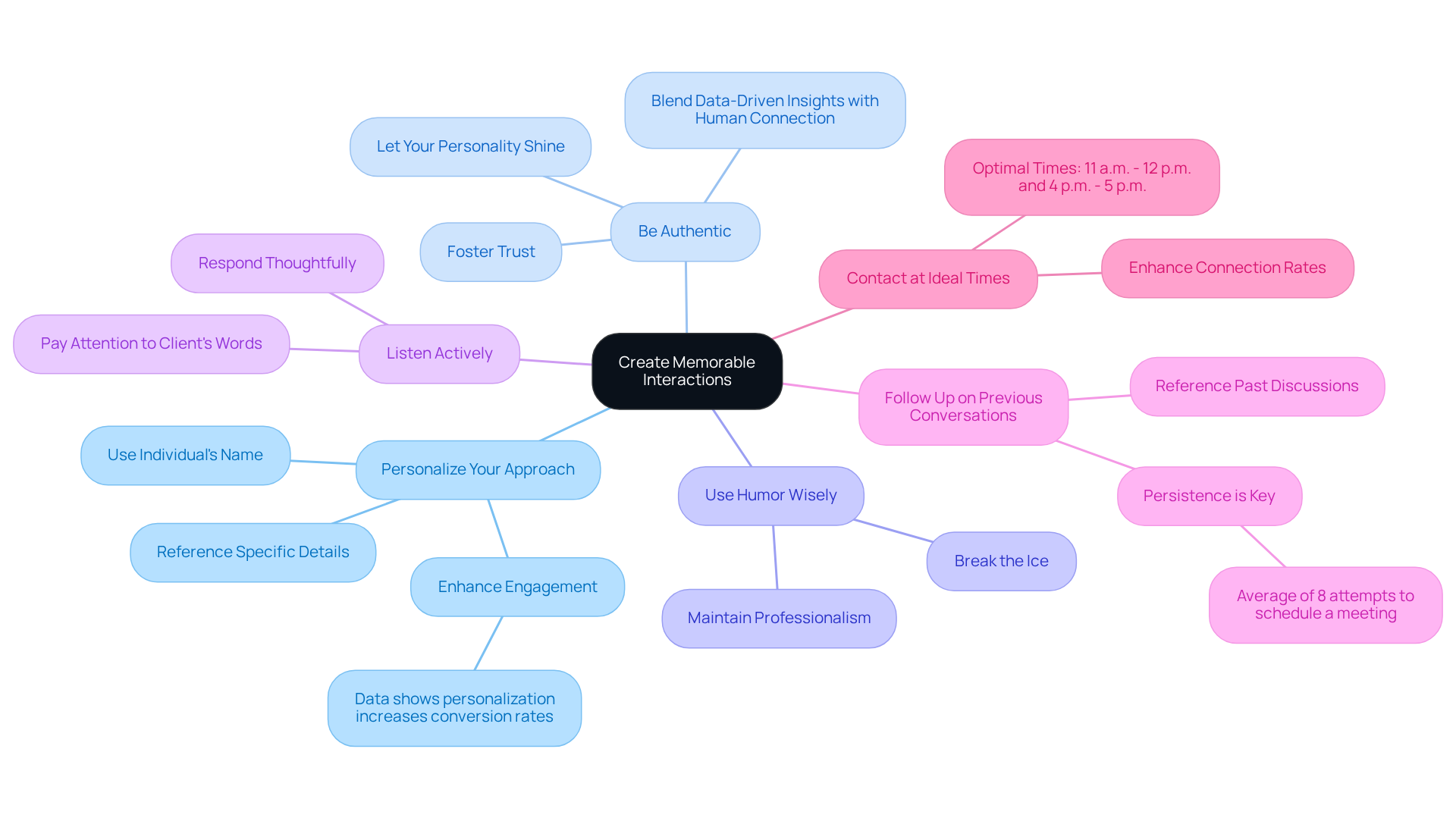
- Personalize Your Approach: Using the individual's name and referencing specific details about their property or situation demonstrates that you’ve done your homework. Personalization significantly increases engagement; tailored outreach resonates more with potential clients. Recent data shows that , making it a vital strategy in your outreach.
- : Let your personality shine through. Authenticity fosters trust and makes the dialogue feel real, which is essential for creating rapport with potential clients. As one communication expert noted, "Ultimately, the future belongs to sales professionals who seamlessly blend data-driven insights, targeted personalization, and genuine human connection into their strategies for ."
- : A light-hearted joke or comment can and make the call more enjoyable. However, ensure it’s appropriate for the context to maintain professionalism.
- Listen Actively: Pay close attention to what the potential client says and respond thoughtfully. This shows that you value their input and are engaged in the conversation, enhancing the overall interaction.
- : If you’ve spoken to the potential client before, reference past discussions to show continuity and care. It requires an average of , so persistence in follow-ups is essential for success.
- Contact at Ideal Times: Studies suggest that the optimal moments to reach out to potential clients are between 11 a.m. and 12 p.m. and between 4:00 p.m. and 5:00 p.m. Coordinating your outreach with these periods can greatly enhance your connection rates.
By creating memorable interactions, you can leave a lasting impression that encourages prospects to engage further, ultimately improving your cold calling success rates.
Outline Next Steps for Prospects
At the conclusion of your conversation, outlining is crucial. Here’s how to do it effectively:
- Summarize Key Points: Recap the main points discussed to reinforce the value of your conversation. This not only clarifies understanding but also emphasizes the .
- Propose : Suggest concrete next steps, such as , sending additional information, or arranging a meeting. For instance, you might say, "Would you be available for a follow-up call next week to discuss this further?"
- Confirm Contact Information: Ensure you have the correct contact details for future communication. This step is vital for maintaining the connection.
- Set a Timeline: to create accountability. For example, you could state, "I’ll send you an email with the details by tomorrow."
- : Thank the potential client for their time and . A simple expression of appreciation can leave a lasting impression.
By clearly outlining next steps, you provide clarity and direction, making it easier for prospects to engage with you in the future.

Conclusion
Mastering the art of cold calling in real estate is not just beneficial; it’s essential for thriving in a competitive market. Understanding legal regulations, preparing a strategic approach, and effectively engaging prospects are the cornerstones of successful outreach. When real estate professionals combine compliance with targeted strategies and genuine interactions, they not only foster trust but also lay the groundwork for fruitful client relationships.
Key insights from this guide highlight the critical nature of thorough preparation. The following are vital steps:
- Defining your target audience
- Developing a compelling script
- Setting realistic daily goals
Moreover, recognizing optimal calling times and creating memorable interactions can significantly boost connection rates. By implementing these strategies, real estate agents can refine their cold calling techniques and enhance their chances of converting leads into clients.
Ultimately, the success of cold calling in real estate hinges on a blend of preparation, personalization, and persistence. Embracing these principles empowers agents to connect with potential clients and build lasting relationships that drive their business forward. As the landscape of real estate continues to evolve, staying informed and adaptable will be crucial in mastering effective cold calling techniques.
Frequently Asked Questions
What legal regulations should I be aware of before making cold calls?
It's crucial to understand the legal regulations governing telemarketing, including the Do Not Call Registry, state-specific laws, time restrictions for calls, and disclosure requirements.
What is the Do Not Call Registry and how does it affect cold calling?
The Do Not Call Registry is a list of phone numbers that telemarketers are prohibited from calling. You must regularly scrub your contact list against this registry to avoid penalties.
Are there specific state laws that I need to consider for cold calling?
Yes, different states may have additional regulations regarding telemarketing. It's essential to research your state’s specific laws to ensure compliance.
What are the allowable hours for conducting cold outreach?
Cold outreach should typically be conducted between 8 AM and 9 PM local time to maintain a positive image and comply with regulations.
What are the disclosure requirements when making cold calls?
You are required by law to identify yourself and your company at the beginning of the conversation, which helps build trust and credibility.
How can I define my target audience for cold calling?
Clearly identify the demographics and characteristics of your ideal clients to tailor your message, significantly increasing the likelihood of engagement.
What should I include in my cold calling script?
Your script should include an engaging introduction, compelling value propositions, and open-ended questions to foster dialogue.
Why is it important to gather resources before making cold calls?
Compiling relevant market data, property listings, and insights provides value during calls and helps identify potential clients who are actively researching real estate solutions.
How can I practice my cold calling skills effectively?
Role-playing conversations with a colleague or mentor can help refine your delivery and build confidence. Listening more than you speak can enhance the quality of your conversations.
What system should I use to monitor my cold calling efforts?
Utilize a CRM or spreadsheet to record communications, results, and follow-up actions, as consistent follow-up is essential for closing deals.
How can Intone's AI technology assist in cold calling?
Intone's AI voice agents can help create natural-sounding scripts, scale outreach efforts, and provide real-time feedback to improve your approach based on performance insights.
List of Sources
- Understand Legal Regulations for Cold Calling
- ebq.com (https://ebq.com/cold-calling-statistics)
- The FTC 2025 Do Not Call Registry Data Book Summarized - CompliancePoint (https://compliancepoint.com/marketing-compliance/the-ftc-2025-do-not-call-registry-data-book-summarized)
- What the Do-Not-Call Rule Can Teach Regulators | The Regulatory Review (https://theregreview.org/2023/02/07/mcdonald-what-the-do-not-call-rule-can-teach-regulators)
- activeprospect.com (https://activeprospect.com/blog/do-not-call-rules)
- Case Studies - CLIClaw (https://cliclaw.com/resources/case-studies)
- Prepare Your Cold Calling Strategy
- Key Cold Calling Statistics: Insights for Sales Success | Gong (https://gong.io/blog/cold-call-stats)
- Cold Calling Strategies in 2026 to Reach Right Buyers (https://pangeaglobalservices.com/how-cold-calling-in-2026-reaches-the-right-buyers)
- The State of Cold Calling in 2026 | Over 200K Calls Analysed (https://cognism.com/reports/cold-calling-report-2026)
- cognism.com (https://cognism.com/blog/cold-calling-statistics)
- Cold Calling in 2026: Scripts, Strategies & What Actually Works (https://comza.org/blog/cold-calling-2026-scripts-strategies)
- Set Realistic Daily Cold Calling Goals
- What Cold Calling Techniques Work in 2026? | Apollo (https://apollo.io/insights/cold-calling-techniques)
- highspot.com (https://highspot.com/blog/cold-calling)
- ebq.com (https://ebq.com/cold-calling-statistics)
- The State of Cold Calling in 2026 | Over 200K Calls Analysed (https://cognism.com/reports/cold-calling-report-2026)
- cognism.com (https://cognism.com/blog/cold-calling-statistics)
- Identify the Best Times to Call
- hyperbound.ai (https://hyperbound.ai/blog/best-time-to-cold-call)
- salesgenie.com (https://salesgenie.com/blog/cold-calling-statistics-for-sales-representatives)
- Cold Calling Statistics: Driving Success in 2026 - Lead Forensics (https://leadforensics.com/blog/cold-call/cold-calling-statistics)
- ebq.com (https://ebq.com/cold-calling-statistics)
- Demonstrate Your Value Immediately
- ebq.com (https://ebq.com/cold-calling-statistics)
- highspot.com (https://highspot.com/blog/cold-calling)
- cognism.com (https://cognism.com/blog/cold-calling-success-rates)
- Key Cold Calling Statistics: Insights for Sales Success | Gong (https://gong.io/blog/cold-call-stats)
- Opening Statements for Successful Sales Calls (https://linkedin.com/top-content/sales/sales-call-scripts/opening-statements-for-successful-sales-calls)
- Create Memorable Interactions
- salesgenie.com (https://salesgenie.com/blog/cold-calling-statistics-for-sales-representatives)
- highspot.com (https://highspot.com/blog/cold-calling)
- cognism.com (https://cognism.com/blog/cold-calling-statistics)
- What Cold Calling Techniques Work in 2026? | Apollo (https://apollo.io/insights/cold-calling-techniques)
- Outline Next Steps for Prospects
- Inspiring Sales Teams: 84 Motivational Sales Quotes (https://cognism.com/blog/5-sales-quotes-to-set-your-reps-alight)
- Sales Leadership Quotes (https://showpad.com/best-sales-leadership-quotes)
- 31 Must-Know Sales Follow-Up Statistics for 2024 Success - Peak Sales Recruiting (https://peaksalesrecruiting.com/blog/sales-follow-up-statistics)
- linkedin.com (https://linkedin.com/posts/jamesbarkerexec_most-of-the-salespeople-i-know-are-either-activity-7417174239021015040-XZMS)
- vonage.com (https://vonage.com/resources/articles/20-sales-quotes-mean-team)