

Introduction
Automated Sales Development Representatives (SDRs) are transforming the finance sector, providing a robust solution to streamline sales processes and enhance customer engagement. By automating repetitive tasks, these AI-driven tools empower finance professionals to concentrate on cultivating meaningful relationships and closing deals. Yet, the integration of automated SDRs prompts essential questions:
- How can finance teams effectively harness this technology to maximize efficiency and drive revenue?
This article delves into best practices for utilizing automated SDRs in finance sales, offering insights into optimizing performance and achieving measurable success.
Understand the Role of Automated SDRs in Sales Strategy
Automated SDRs play a pivotal role in reshaping marketing strategies within the finance sector. By automating repetitive tasks such as lead qualification, follow-ups, and initial outreach, these AI-driven systems empower human teams to concentrate on the intricate interactions that truly require a personal touch.
The AI sales representatives provided by the company ensure seamless implementation and personalization. This allows finance experts to tailor the representatives to their unique requirements without facing configuration difficulties. These automated SDRs utilize advanced machine learning algorithms to analyze extensive datasets, pinpoint high-intent leads, prioritize outreach, and significantly boost overall efficiency in revenue generation.
Consider the case of GCS, a finance firm that adopted customizable AI voice solutions. They witnessed an impressive 30% increase in qualified leads, thanks to improved targeting and follow-up processes. With intelligent analytics and real-time insights, the company's solutions , enhancing productivity and conversion rates. This underscores the importance for finance professionals to strategically integrate automated SDR into their operational processes.

Integrate AI Voice Agents for Enhanced Customer Engagement
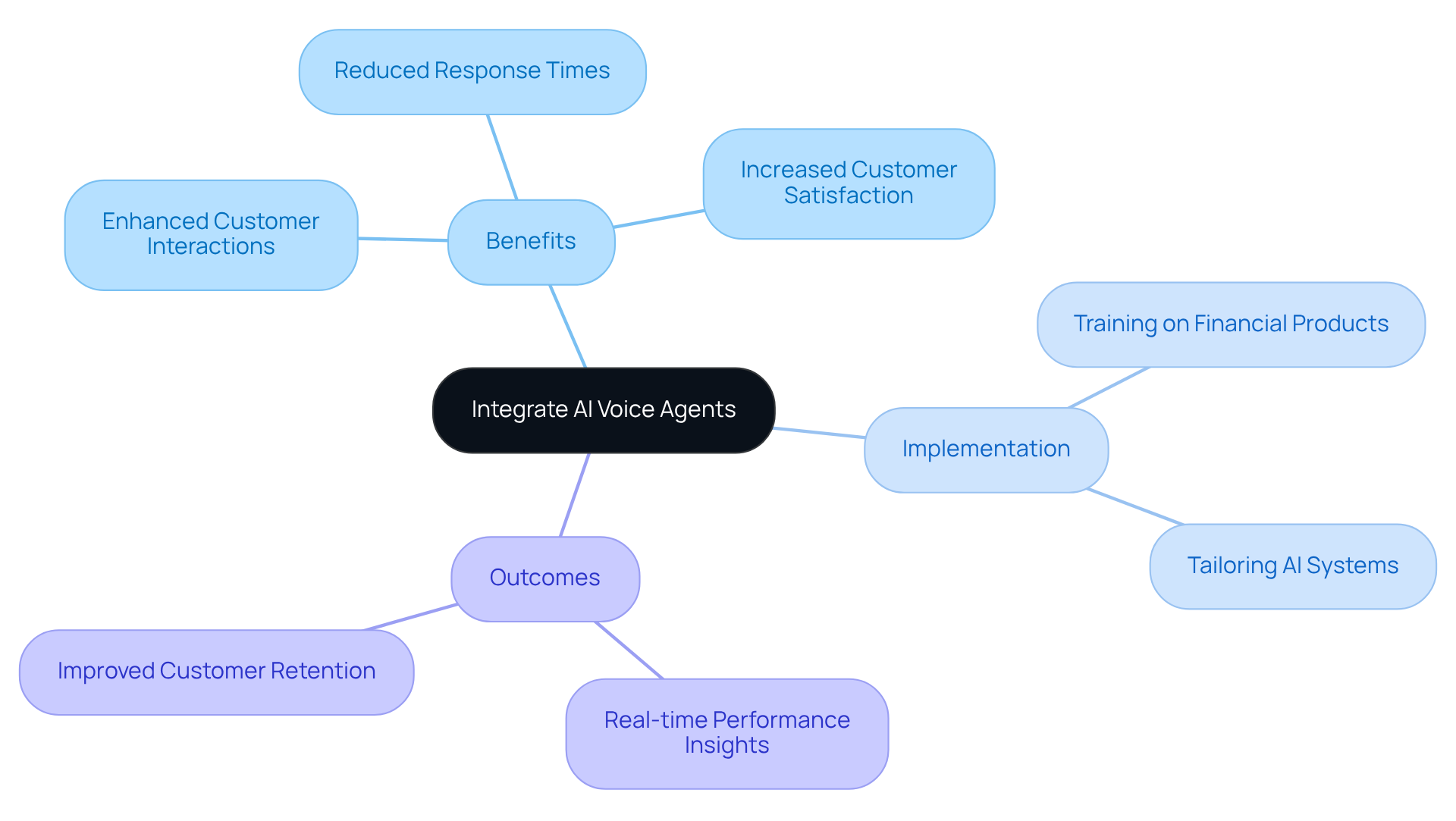
Incorporating AI voice solutions into your sales strategy can dramatically enhance customer interactions. Imagine providing prompt, tailored replies to inquiries, ensuring that every customer feels valued and understood. These AI representatives excel at managing a wide range of tasks, from addressing frequently asked questions to guiding customers through complex financial products.
Consider this: a finance firm that implemented AI voice assistants for customer support experienced a remarkable 40% reduction in response times, coupled with a significant boost in customer satisfaction ratings. By leveraging advanced natural language processing, these AI voice representatives engage customers in a conversational manner, creating interactions that feel genuinely human.
To maximize the effectiveness of these representatives, businesses must ensure they receive on relevant financial products and customer scenarios. This preparation enables them to deliver accurate and valuable information. Furthermore, the adaptable nature of these solutions allows companies to tailor the AI systems to their specific needs. The accompanying analytics dashboard provides real-time insights into performance, which is crucial for enhancing customer interactions and driving revenue efficiency.
In summary, integrating AI voice solutions into your sales strategy not only streamlines customer interactions but also fosters a more satisfying experience for clients. Embrace this technology to stay ahead in the competitive landscape.
Establish Clear Goals and KPIs for Automation Success
To enhance the effectiveness of automated SDRs, particularly those offered by the company, it’s crucial to set clear objectives and key performance indicators (KPIs) for . Start by defining success metrics tailored for your sales group, such as:
- Lead conversion rates
- Customer engagement levels
- Response times
For instance, a financial institution might aim to boost lead conversion rates by 25% within six months of implementing customizable AI representatives.
Regular monitoring and adjustment of KPIs based on performance data are essential. Tracking leading indicators alongside lagging indicators is vital for assessing AI performance. By utilizing Intone's smart analytics and dashboards that consolidate real-time data, teams can stay informed and agile, allowing for swift strategy adjustments as needed.
Aligning automation goals with broader business objectives ensures that finance teams can achieve significant results. Current benchmarks reveal that revenue teams utilizing automated SDR experience conversion increases of 20-30%. Moreover, companies leveraging marketing automation report a revenue boost of over 10% within 6-9 months. This underscores the importance of establishing and effectively monitoring these KPIs.

Monitor and Optimize SDR Performance with Real-Time Analytics
Tracking automated SDR performance through is not just beneficial; it’s essential for enhancing business procedures and ensuring the efficiency of automated systems. By leveraging advanced data analysis tools, finance teams can effectively monitor critical metrics such as call volumes, lead conversion rates, and customer feedback. For instance, a finance firm that adopted [real-time data analysis](https://intone.io/post/maximize-sales-success-with-the-right-inbound-agency-strategies) saw an impressive 20% increase in lead conversion rates after pinpointing and addressing bottlenecks in their sales process.
The platform's performance dashboard provides immediate insights, empowering teams to make data-informed adjustments to their strategies. This could mean refining lead scoring standards or enhancing SDR training initiatives. Furthermore, the customizable nature of Intone's AI solutions enables organizations to deploy automated SDR messages and built-in integrations, significantly boosting engagement strategies.
Moreover, utilizing predictive insights allows organizations to anticipate customer needs, ultimately driving higher conversion rates and improving overall customer satisfaction. As Geoffrey Moore aptly stated, "Without big data analysis, companies are blind and deaf, wandering out onto the Web like deer on a freeway." This underscores the critical role of data analysis in the finance sector, where informed decision-making is paramount.
Investing in analytics is not merely a cost; it’s a strategic necessity. The price of ignorance regarding business performance far outweighs the investment in analytics, reinforcing the importance of integrating these insights into sales strategies.

Conclusion
Automated Sales Development Representatives (SDRs) are transforming the finance sector, streamlining sales strategies and enhancing overall efficiency. By automating routine tasks, these AI-driven systems empower finance professionals to concentrate on building relationships and engaging in meaningful interactions with clients. The integration of automated SDRs not only improves lead qualification and follow-up processes but also significantly boosts revenue generation, establishing them as essential tools in modern finance sales.
Key insights from the article underscore the importance of integrating AI voice solutions for improved customer engagement. Establishing clear goals and KPIs for measuring success, along with utilizing real-time analytics for performance optimization, are crucial steps. The case studies presented demonstrate tangible results, such as increased lead conversion rates and enhanced customer satisfaction, showcasing how these practices can transform sales outcomes. By setting specific objectives and leveraging advanced analytics, finance teams can ensure that their automated SDR strategies align with broader business goals, ultimately leading to substantial revenue growth.
Embracing automated SDRs and AI voice agents is not just a trend; it is a strategic necessity for finance professionals aiming to thrive in a competitive landscape. Companies that invest in these technologies will enhance their operational efficiency and create more personalized and engaging customer experiences. As the finance industry continues to evolve, adopting these best practices will be crucial for maintaining a competitive edge and driving long-term success.
Frequently Asked Questions
What is the role of automated SDRs in sales strategy?
Automated SDRs play a crucial role in reshaping marketing strategies in the finance sector by automating repetitive tasks such as lead qualification, follow-ups, and initial outreach, allowing human teams to focus on more complex interactions.
How do automated SDRs benefit human sales teams?
They empower human sales teams to concentrate on intricate interactions that require a personal touch, thereby enhancing overall productivity and efficiency.
What technology do automated SDRs use to improve sales processes?
Automated SDRs utilize advanced machine learning algorithms to analyze large datasets, identify high-intent leads, prioritize outreach, and boost revenue generation efficiency.
Can automated SDRs be customized for specific needs?
Yes, the AI sales representatives can be tailored to meet unique requirements without facing configuration difficulties, allowing finance experts to implement them seamlessly.
What results did GCS achieve by using automated SDRs?
GCS experienced a 30% increase in qualified leads due to improved targeting and follow-up processes after adopting customizable AI voice solutions.
How do automated SDRs enhance productivity and conversion rates?
They provide intelligent analytics and real-time insights that optimize workflows, which in turn enhances productivity and conversion rates for finance professionals.
Why is it important for finance professionals to integrate automated SDRs into their operations?
Integrating automated SDRs strategically into operational processes is crucial for optimizing efficiency, improving lead qualification, and ultimately increasing revenue generation.