
Introduction
In a world where every conversation counts, effective telecalling emerges as a critical skill that can make or break sales success. By adopting best practices in telecalling speech, professionals can enhance their communication skills, leading to improved client engagement and higher conversion rates.
Many telecallers struggle to effectively engage clients and convert leads due to a lack of structured techniques. This article delves into essential techniques that not only elevate telecalling effectiveness but also drive meaningful connections with clients.
Mastering these techniques is not just beneficial; it’s essential for telecallers who aim to thrive in a competitive landscape.
Establish a Structured Call Framework
Without a structured communication framework, telemarketing efforts often fall flat, leading to missed opportunities and unproductive conversations. This framework outlines the key components of the conversation, ensuring clarity and focus. Here’s how to implement it:
- Introduction: Begin with a warm greeting, introducing yourself and your company. This sets a positive tone and helps build rapport with the recipient.
- Purpose Statement: Clearly articulate the reason for your communication early in the conversation. This allows the recipient to understand the context and significance of the discussion, which is crucial for engagement.
- Key Discussion Points: Prepare a list of topics to cover, focusing on the recipient's needs and concerns. Addressing specific issues such as product benefits, pricing, or tailored solutions can significantly enhance the relevance of the conversation. With Intone's AI voice agents, you can automate responses to frequently asked questions and provide real-time updates, enhancing the efficiency of your discussions. Additionally, leveraging smart analytics can help you understand customer interactions better, allowing for more informed and effective conversations.
- Closing: Conclude by summarizing the key points discussed and outlining the next steps. This clarity not only reinforces the discussion's purpose but also encourages essential follow-up activities that sustain momentum in the transaction process.
Implementing this structured approach not only ensures that telecallers maintain professionalism but also improves their telecalling speech in English, leading to higher conversion rates. Research shows that structured discussions can enhance meeting rates by as much as 12%, emphasizing the significance of preparation and clarity in client calls. By utilizing frameworks that AI voice agents can follow, businesses can achieve consistent and effective communication, ultimately driving better sales outcomes. Moreover, users can upload their scripts to tailor the AI agents effectively, ensuring that the interactions are customized to meet particular client needs.

Utilize Hyper-Personalization Techniques
In a competitive market, failing to personalize client interactions can jeopardize both loyalty and revenue. To effectively harness hyper-personalization, consider these key strategies:
- Research Before the Call: Gather information about the client, such as their previous interactions, preferences, and pain points. This allows you to tailor your pitch effectively.
- Use Their Name: Personalizing the conversation by using the individual's name can create a more engaging and friendly atmosphere.
- Tailor Your Message: Adjust your sales pitch based on the individual's specific needs and interests. For example, if they have shown interest in a particular product, focus on its benefits relevant to them.
- Follow Up with Relevant Content: After the call, send personalized follow-up emails that include information or resources related to the discussion. This reinforces the connection and shows that you value their time.
Research shows that businesses embracing hyper-personalization can achieve revenue increases of 10-15%, with some companies seeing gains as high as 25%, according to McKinsey. Furthermore, 62% of consumers indicate they won’t stay loyal following an un-personalized interaction, emphasizing the significance of personalization in sustaining client loyalty. By adopting hyper-personalization, businesses can significantly enhance client loyalty and drive revenue growth.

Master Objection Handling Strategies
Objections can stall the sales process, creating barriers to closing deals, but mastering objection handling can turn these challenges into opportunities for success. Here are key strategies to excel in this area:
- Listen Actively: When a client raises an objection, it’s crucial to listen attentively without interruption. This shows respect and allows for a deeper understanding of their concerns. Active listening can significantly enhance the likelihood of converting objections into opportunities.
- Acknowledge the Objection: Validating the client's feelings is vital. Acknowledging their concerns with phrases like, "I understand why you might feel that way," fosters trust and opens the door for further dialogue. As noted in the industry, "Objections aren’t friction. They’re feedback," emphasizing the importance of viewing objections as opportunities for engagement.
- Ask Clarifying Questions: Engage the client by posing questions that delve into the root of their objections. This approach not only reveals underlying issues but also demonstrates to the client that their viewpoint is appreciated. For instance, asking, "What part feels riskiest about moving forward?" can yield insightful responses.
- Offer Solutions: After comprehending the objection, present customized solutions or alternatives that directly address the client’s concerns. Utilizing data or testimonials can bolster your response, making it more persuasive. For example, when budget objections arise, discussing how your solution enhances ROI can shift the conversation positively. Research indicates that handling status quo objections correctly can increase deal win rates by 40%, highlighting the effectiveness of addressing concerns directly.
- Follow Up: Once the objection has been addressed, it’s important to check in with the customer to see if they have any further questions or concerns. This follow-up not only reinforces your commitment to their satisfaction but also keeps the lines of communication open. Furthermore, consider establishing an 'Objection Library' to record typical objections and replies, which can prepare your team for upcoming discussions and enhance overall efficiency.
By implementing these strategies, telecallers enhance their sales conversion rates and build lasting relationships with clients through effective telecalling speech in English, paving the way for future success.

Implement Effective Follow-Up Protocols
Many leads fall through the cracks due to inadequate follow-up strategies, especially when enhanced by Intone's AI voice agents. Here’s how to implement effective follow-up protocols:
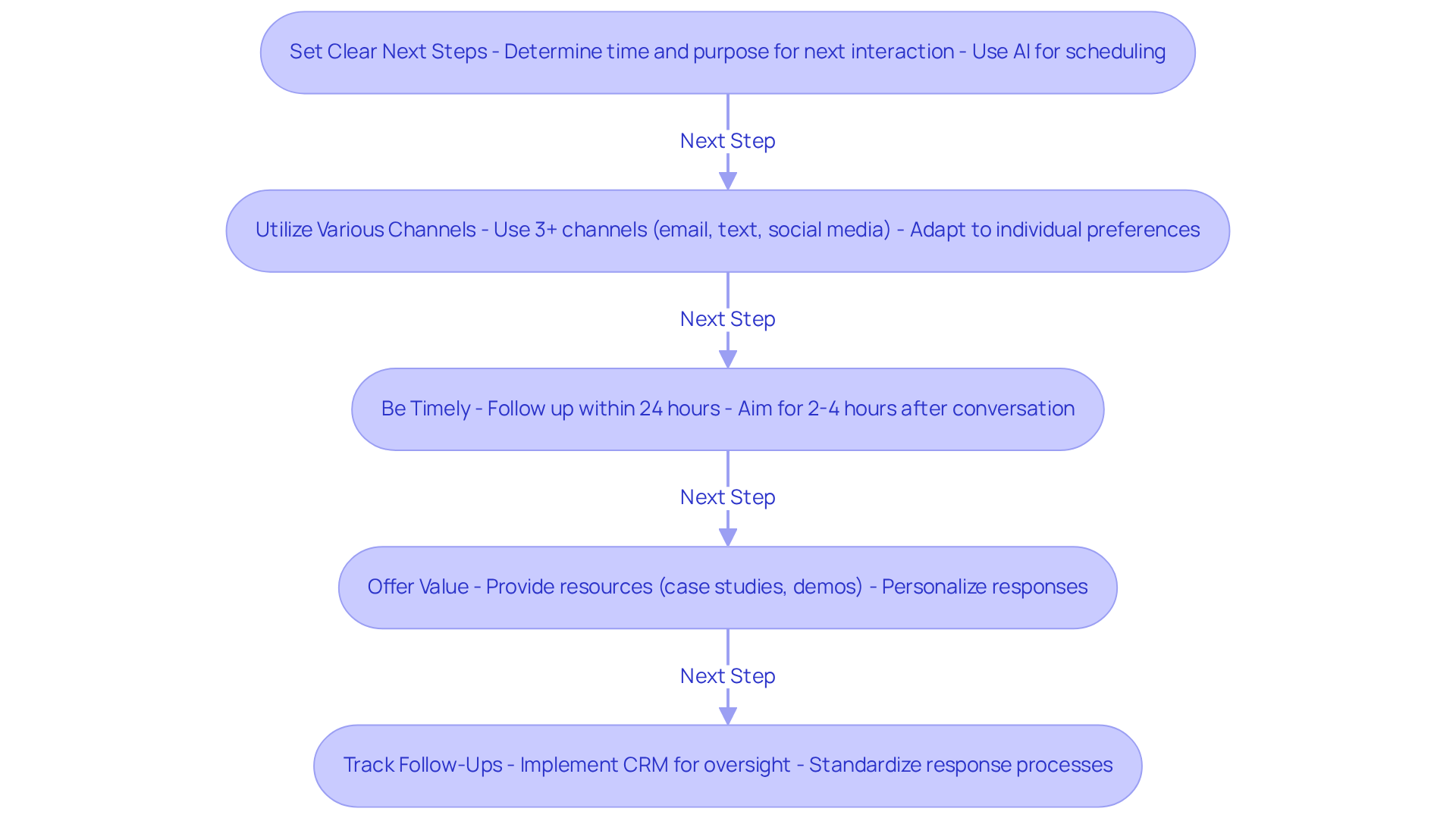
- Set Clear Next Steps: Conclude each conversation by determining a specific time and purpose for the subsequent interaction. This fosters accountability and ensures both parties are aligned on expectations. Intone's AI agents can assist in arranging these subsequent interactions automatically, ensuring no lead is overlooked.
- Utilize Various Channels: Did you know that using three or more channels for follow-ups can boost response rates by a staggering 287% compared to sticking to just one? Broaden your follow-up techniques beyond telephone communication. Incorporate emails, texts, or social media, adapting your approach to the individual's preferences for optimal engagement. Intone's customizable solutions allow you to set up these multi-channel interactions seamlessly.
- Be Timely: Promptly follow up after the initial conversation. A swift response demonstrates respect for the customer’s time and eagerness to assist, significantly impacting conversion rates. Follow-ups should take place within 24 hours of a sales discussion, preferably within 2 to 4 hours. With Intone's intelligent analytics, you can monitor and enhance the timing of your responses.
- Offer Value: Enhance your subsequent communication with extra resources that may assist the client, such as case studies, product demonstrations, or responses to any inquiries raised during the call. Avoid sending generic messages, as they can result in low engagement rates; instead, personalize your responses to enhance effectiveness. Intone's AI agents can help customize these messages based on customer interactions.
- Track Follow-Ups: Implement a CRM system to oversee follow-through activities, ensuring no lead is neglected. Sales teams with a standardized response process see 78% higher conversion rates than those lacking one. Intone's AI solutions can integrate with your CRM to provide real-time analytics and reporting, enhancing organization and accountability within the sales group.
By implementing these subsequent protocols and utilizing Intone's AI capabilities, telecallers can significantly enhance their effectiveness and improve their chances of closing transactions by mastering telecalling speech in English. With 80% of sales requiring at least five follow-up contacts, the importance of a robust follow-up strategy cannot be overstated.
Conclusion
Effective telecalling speech in English is not just beneficial; it's essential for driving successful sales outcomes. Establishing a structured call framework helps businesses keep conversations focused and productive. This focus leads to higher conversion rates. A structured approach boosts professionalism and makes communication clearer, which is crucial for engaging potential clients.
The article highlights several best practices, including:
- The importance of hyper-personalization
- Mastering objection handling
- Implementing effective follow-up protocols
Personalizing interactions can significantly enhance client loyalty and drive revenue growth, while adeptly handling objections transforms potential barriers into opportunities. Furthermore, robust follow-up strategies ensure that leads are nurtured and converted, reinforcing the importance of timely and relevant communication.
In today's competitive landscape, businesses that adopt these best practices can significantly differentiate themselves from their competitors. It is vital to invest in training and tools that enhance telecalling communication skills, ultimately leading to improved client relationships and increased sales success. By prioritizing structured frameworks, personalization, and effective follow-up, organizations can create a telecalling strategy that not only meets but exceeds client expectations, paving the way for long-term success. Investing in these strategies will not only enhance your telecalling effectiveness but also secure your position as a leader in your industry.
Frequently Asked Questions
Why is a structured call framework important in telemarketing?
A structured call framework is important because it prevents missed opportunities and unproductive conversations by ensuring clarity and focus during telemarketing efforts.
What are the key components of a structured call framework?
The key components include an introduction, a purpose statement, key discussion points, and a closing summary.
How should the introduction of a telemarketing call be structured?
The introduction should include a warm greeting and an introduction of yourself and your company to set a positive tone and build rapport.
What is the purpose statement in a telemarketing call?
The purpose statement clearly articulates the reason for the communication early in the conversation, helping the recipient understand the context and significance of the discussion.
What should be included in the key discussion points of a telemarketing call?
Key discussion points should focus on the recipient's needs and concerns, addressing specific issues such as product benefits, pricing, or tailored solutions.
How can AI voice agents enhance telemarketing conversations?
AI voice agents can automate responses to frequently asked questions, provide real-time updates, and utilize smart analytics to improve understanding of customer interactions.
What is the recommended approach for closing a telemarketing call?
The call should be concluded by summarizing the key points discussed and outlining the next steps to reinforce the discussion's purpose and encourage follow-up activities.
What impact does a structured approach have on telecalling effectiveness?
A structured approach can improve telecalling speech, maintain professionalism, and increase conversion rates, with research indicating a potential enhancement of meeting rates by up to 12%.
How can businesses customize AI voice agents for their telemarketing needs?
Businesses can upload their scripts to tailor the AI agents effectively, ensuring that interactions are customized to meet specific client needs.
List of Sources
- Establish a Structured Call Framework
- Sales Call Planning: How to Prepare for Effective Sales Calls (https://saleshood.com/blog/sales-call-planning-tips)
- Sales Call Structure Best Practices for 2026 (https://prospeo.io/s/sales-call-structure-best-practices)
- 10 Actionable Cold Calling Best Practices for SDRs in 2026 | Blog | MarketBetter (https://marketbetter.ai/blog/cold-calling-best-practices)
- 7 Key Tips to Structure A Successful Sales Call (https://clari.com/blog/sales-call-structure-tips)
- How to Structure a Sales Call (https://linkedin.com/top-content/sales/sales-discovery-tips/how-to-structure-a-sales-call)
- Utilize Hyper-Personalization Techniques
- How hyper-personalization CX strategy is rewriting rulebook in 2026 (https://brainvire.com/blog/hyper-personalization-cx-strategy)
- 12 Hyper Personalization Statistics That Demonstrate Value | Monetate (https://monetate.com/resource/12-hyper-personalization-statistics-that-demonstrate-value)
- Hyper-Personalization: How AI Delivers Real-Time Experiences (https://aidigital.com/blog/hyper-personalization)
- Are your personalization efforts overwhelming customers? (https://customerexperiencedive.com/news/are-your-personalization-efforts-overwhelming-customers/805365)
- Hyper-Personalisation Is Winning Customers in 2026 % (https://mmc.co.im/2026/02/03/hyper-personalisation-is-winning-customers-in-2026)
- Master Objection Handling Strategies
- Objections Increased Our Win Rate by 30% — Here's How (https://gtmnow.com/self-limiting-beliefs)
- Objection Handling in 2026: Sales Tactics That Turn Pushback Into Progress (https://go.sandler.com/absolute/insights/blog/categories/prospecting-and-qualifying/objection-handling-in-2026-turn-pushback-into-pi)
- Objection Handling for 2026: Steps, Tips and Script (https://cognism.com/blog/objection-handling)
- How Does Handling Objections in Sales Work? Techniques, Tips | Apollo (https://apollo.io/insights/handling-objections-in-sales)
- The Ultimate Sales Objection Handling Guide: Close More Deals in 2026 (https://sybill.ai/blogs/objection-handling-guide)
- Implement Effective Follow-Up Protocols
- Why Sales Follow-Ups Are Critical to Closing Deals (https://keyoutreach.com/post/the-importance-of-follow-up-in-sales)
- Sales Follow-Up Strategy: How Many Times Should You Follow Up? (Data-Backed Guide 2026) (https://autointerviewai.com/blog/sales-follow-up-strategy-how-many-times-2026)
- Follow-Up Calls Critical Step in B2B Sales Conversions - Business to Business Lead Generation (https://ttstechnique.com/follow-up-calls-critical-step-in-b2b-sales-conversions)
- Sales Follow-Up Statistics and Actionable Strategies for 2026 (https://martal.ca/sales-follow-up-statistics-lb)
- TextTuner – Sales Decision Intelligence für B2B-Vertrieb (https://texttuner.app/blog/sales-follow-up-best-practices-2026)