

Introduction
In the fast-paced world of SaaS, innovation and efficiency are paramount, making the role of a Sales Development Representative (SDR) increasingly vital. These professionals serve as the first point of contact for potential clients, acting as architects of a robust sales pipeline that drives revenue growth. Yet, as they face the challenges of high rejection rates and the relentless pressure of outreach, one question arises: what truly defines the success of a SaaS SDR? Moreover, how does their evolving role shape the future of sales in this competitive landscape? Understanding these dynamics is essential for anyone looking to thrive in the SaaS arena.
Define the SaaS SDR Role and Its Core Responsibilities
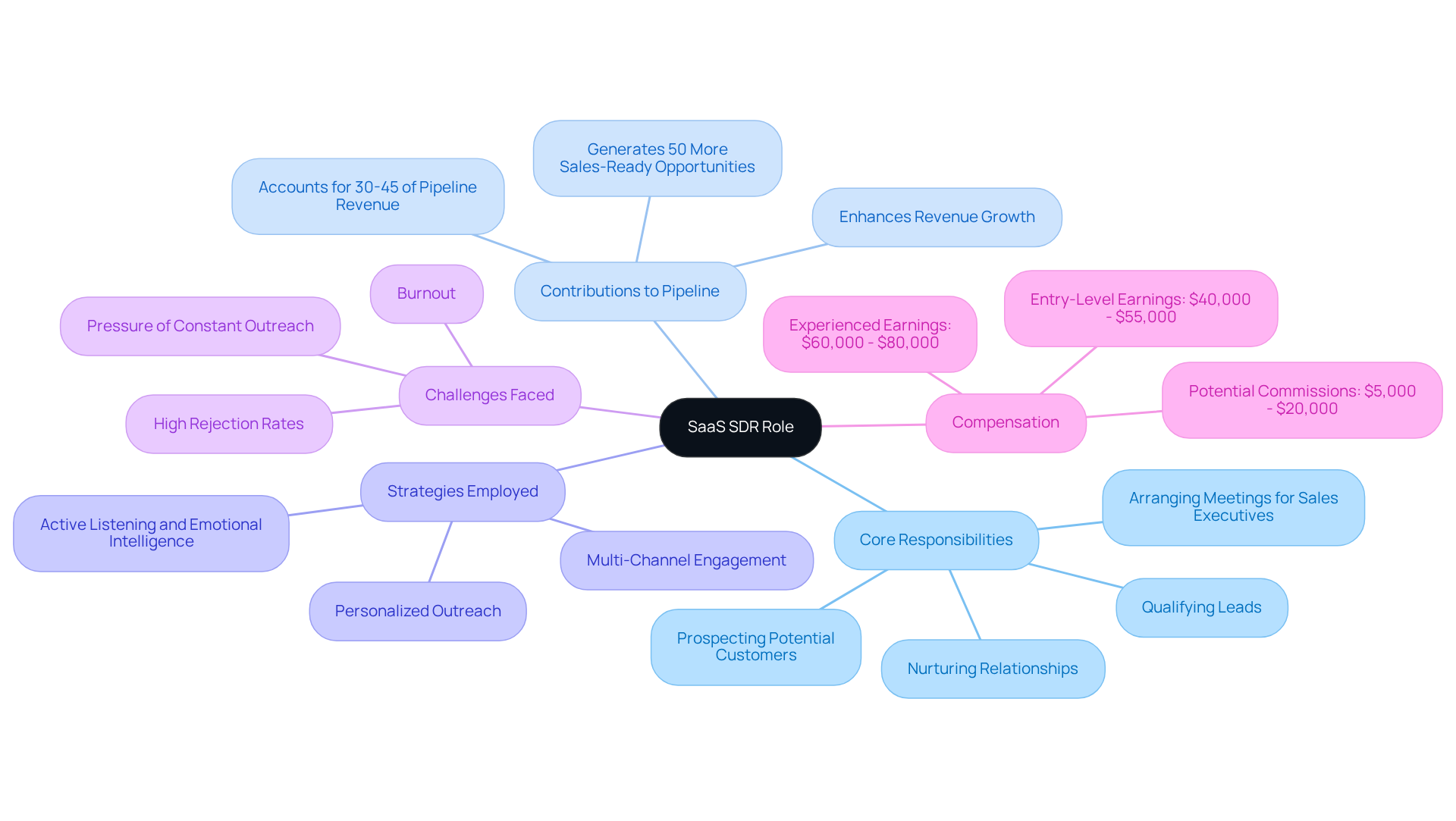
In the SaaS sector, the role of a SaaS SDR is pivotal for generating and qualifying prospects, ultimately leading to a robust sales pipeline. SDRs are tasked with prospecting potential customers through various channels, such as cold calling, email outreach, and social media engagement. They identify high-intent prospects, nurture relationships, and arrange meetings for sales executives. This position is essential as it marks the initial interaction between the company and potential clients, allowing the sales team to concentrate on closing deals rather than generating leads.
Effectively managing the top of the sales funnel, SDRs significantly contribute to revenue growth. Studies show that they can account for up to 40% of pipeline growth in B2B sales organizations. Successful SDRs employ strategies like personalized outreach and multi-channel engagement, which have proven to enhance prospect generation rates. Industry specialists note that companies excelling at prospect nurturing produce 50% more sales-ready opportunities at a 33% reduced cost.
Kayela Young emphasizes that SaaS SDRs play a crucial role in outbound prospecting and opportunity qualification, significantly contributing to pipeline growth in B2B revenue organizations. However, it’s important to acknowledge the challenges SDRs face, including high rejection rates and the pressure of constant outreach, which can lead to burnout.
Moreover, the typical income of Sales Development Representatives ranges from $40,000 to $80,000 annually, providing context for finance managers regarding the compensation associated with this role.
Contextualize the SDR Role Within SaaS Sales Structures
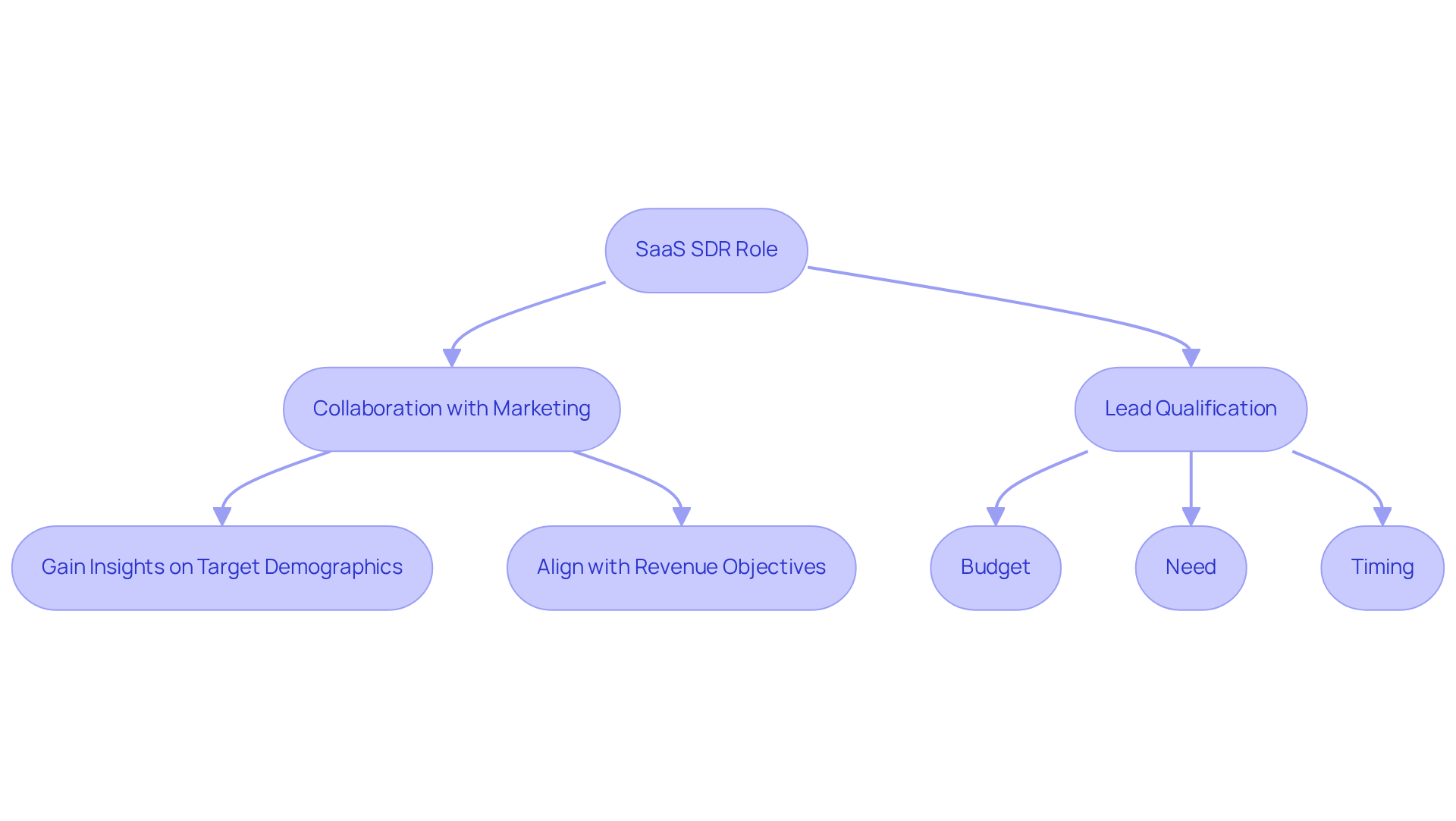
In a well-organized SaaS revenue environment, the SaaS SDR plays a crucial role at the forefront of the selling process, acting as a vital link between marketing and revenue teams. SDRs collaborate closely with marketing to gain insights into target demographics and prospect generation strategies, ensuring alignment with the company's overarching revenue objectives.
Once leads are generated, SDRs meticulously qualify these prospects based on essential criteria such as:
- Budget
- Need
- Timing
This qualification process is vital; it allows Account Executives (AEs) to focus on closing deals rather than spending time on initial outreach. By integrating SaaS SDR into the campaign process from the outset, organizations can significantly enhance the productivity of their sales teams.
This leads to a more efficient sales process and ultimately boosts conversion rates. In fact, companies that effectively utilize SaaS SDRs report higher sales performance and improved revenue growth. Embracing this strategic approach not only streamlines operations but also positions the organization for sustained success in a competitive market.
Identify Essential Skills and Traits of Successful SDRs
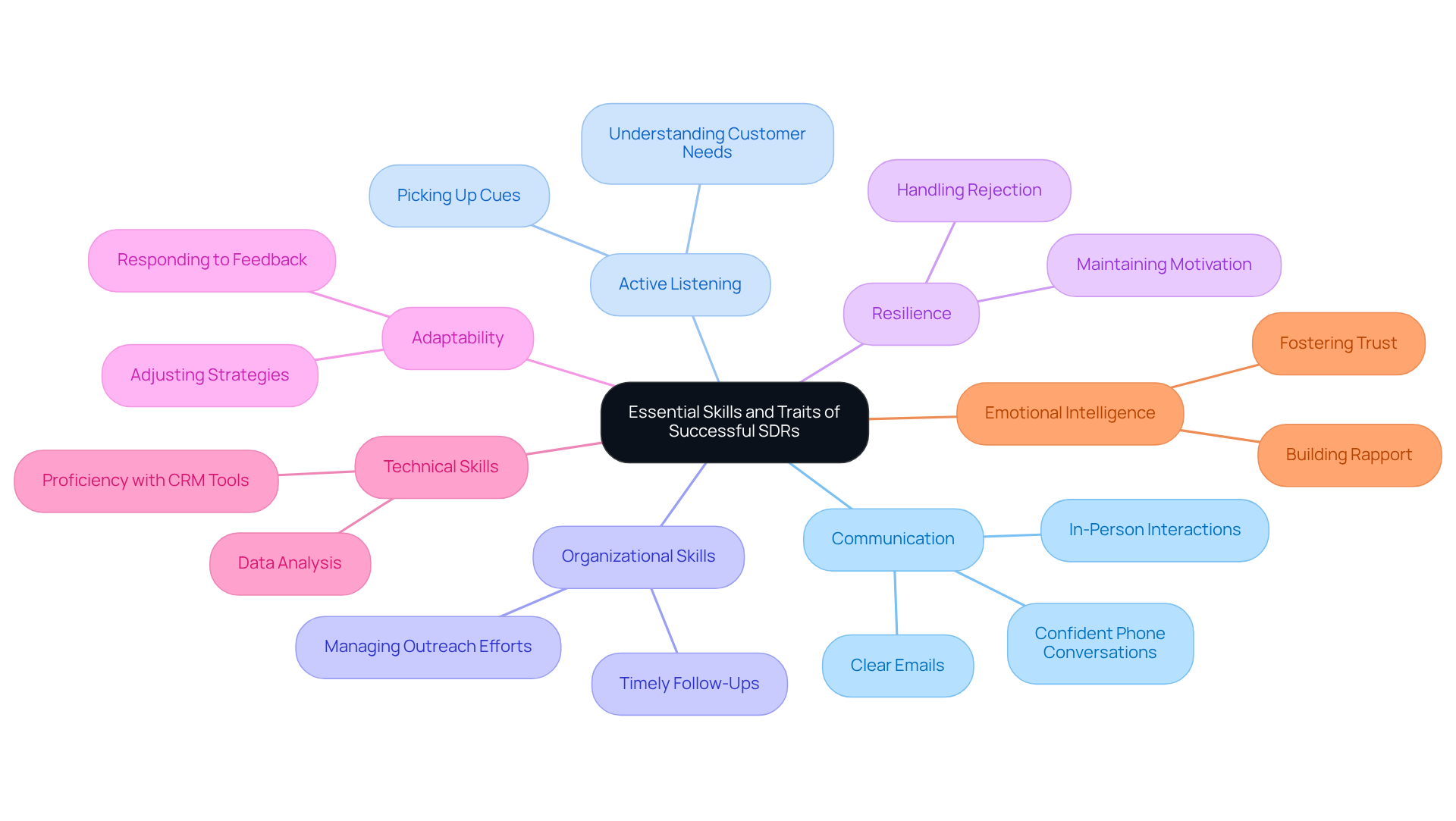
Successful Sales Development Representatives (SDRs) embody a unique blend of skills and characteristics that empower them to excel in their roles. At the forefront is effective communication, a cornerstone skill that enables SaaS SDRs to engage prospects meaningfully and articulate the value of their SaaS products. Coupled with this is active listening, which is vital for grasping customer needs and tailoring messaging accordingly. Strong organizational abilities further enhance their effectiveness, allowing SDRs to manage outreach efforts efficiently, ensuring that follow-ups and interactions are timely and relevant.
Resilience and adaptability are essential traits for SaaS SDRs, as these professionals frequently encounter rejection and must swiftly adjust their strategies to maintain momentum. Proficiency with CRM tools and data analysis significantly boosts their ability to monitor outreach initiatives and evaluate success. This is particularly crucial in a competitive landscape where over 40% of representatives cite prospecting as the most challenging aspect of their work.
Moreover, the most effective SaaS SDRs seamlessly blend technical skills with emotional intelligence, fostering rapport and trust with potential clients. This combination not only enhances their efficiency but also positions them as invaluable resources in driving revenue success. As industry experts highlight, the ability to connect with prospects on a personal level profoundly influences sales outcomes, making communication skills a critical focus for any aspiring SDR.
Trace the Evolution and Development of the SDR Role
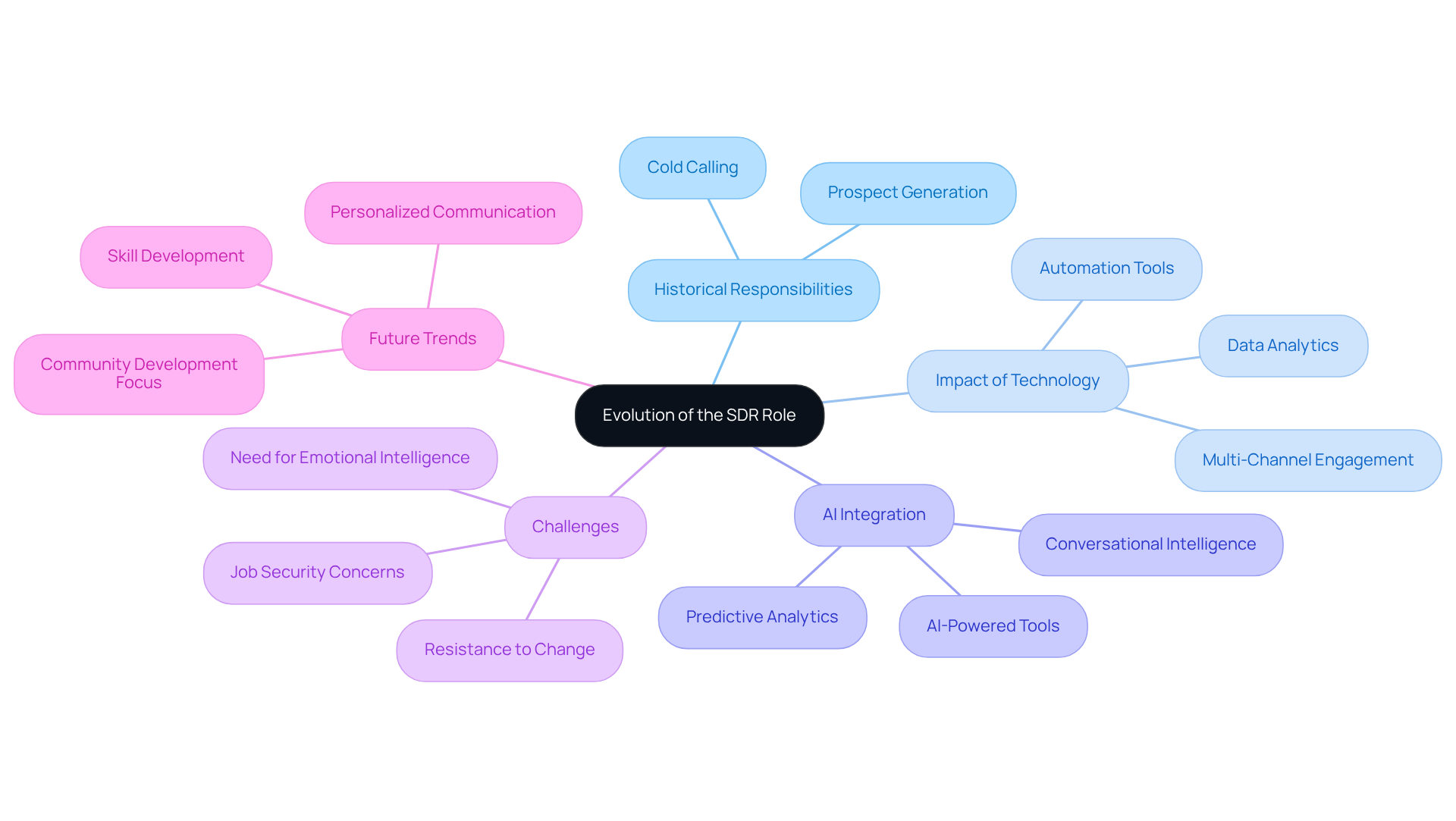
The role of the Sales Development Representative (SDR) has undergone a significant transformation over the years. Initially, SDRs were primarily tasked with cold calling and prospect generation, often without strategic involvement. However, as the SaaS industry has rapidly expanded, the expectations for SaaS SDR have evolved dramatically. Today, they are not just responsible for generating leads; they are also expected to leverage data analytics and market research to identify high-potential prospects and tailor their outreach strategies accordingly.
The rise of digital marketing and automation tools has further revolutionized the SDR function. Representatives can now engage with prospects through various channels, including email, social media, and phone calls. This multi-channel approach fosters a more personalized communication style, which is crucial in today’s competitive landscape. As marketing strategies shift towards a more customer-centric model, understanding the buyer's journey has become essential for SDR success. This evolution underscores the increasing importance of strategic thinking and adaptability in the SaaS SDR role as they navigate the complexities of modern market environments.
Moreover, the integration of AI technologies, such as those provided by Intone, is set to significantly reshape the SDR landscape. Intone's AI representatives can be easily implemented and customized, allowing sales development representatives to focus on high-value activities while the AI handles routine interactions. With features like the 'Agent editor' for script customization and the 'Telephony setup' for seamless call management, Intone offers comprehensive support. Additionally, the availability of 24/7 AI agents ensures that customer interactions can occur at any time, enhancing engagement.
With smart analytics and real-time insights, sales development representatives can monitor performance, compare agents, and conduct A/B tests to refine their strategies. This capability is particularly advantageous in sectors like fintech, where customer engagement is paramount.
The success story of GCS, which scaled its results using Intone's customizable AI voice agents, exemplifies how leveraging AI in a SaaS SDR framework can boost sales efficiency and customer engagement. As Dan Shaffer from SEO.com aptly states, "AI is changing the game for marketers at the moment. If you aren’t adopting AI in your day-to-day processes, the risk of falling behind your competitors becomes greater and greater."
However, transitioning to AI-driven processes is not without its challenges. Many sales development representatives may resist new technologies due to concerns about job security or unfamiliarity with the tools. Furthermore, emotional intelligence remains a critical skill for SDRs, enabling them to understand customer needs and build meaningful relationships-something AI cannot replicate. This comprehensive view of the SDR role's evolution highlights the ongoing changes in sales development, emphasizing the necessity for continuous adaptation and learning.
Conclusion
The significance of the SaaS Sales Development Representative (SDR) role is paramount, acting as a vital link in the sales process that drives both prospect engagement and revenue growth. By concentrating on lead generation and qualification, SDRs empower sales teams to focus on closing deals, thereby enhancing the efficiency of the entire sales pipeline.
Key responsibilities of SDRs include:
- Prospecting
- Nurturing relationships
- Collaborating with marketing teams to align strategies with revenue goals
This evolution reflects the increasing complexity of the SaaS landscape, where adaptability and strategic thinking are essential. Moreover, effective communication, resilience, and emotional intelligence are underscored as critical skills for success in this dynamic environment.
In a rapidly changing market, embracing the SDR role is crucial for organizations aiming to thrive. The integration of technology, including AI, can streamline processes and enhance engagement, yet the human element remains irreplaceable. By investing in the development of SDRs and acknowledging their importance within the sales structure, companies can significantly boost their performance and position themselves for long-term success.
Frequently Asked Questions
What is the role of a SaaS SDR?
The role of a SaaS SDR (Sales Development Representative) is crucial for generating and qualifying prospects to build a strong sales pipeline. They engage potential customers through cold calling, email outreach, and social media, identify high-intent prospects, nurture relationships, and arrange meetings for sales executives.
How do SDRs contribute to revenue growth?
SDRs manage the top of the sales funnel and significantly contribute to revenue growth, accounting for up to 40% of pipeline growth in B2B sales organizations. Their efforts in prospecting and nurturing relationships help generate more sales-ready opportunities.
What strategies do successful SDRs use?
Successful SDRs employ strategies such as personalized outreach and multi-channel engagement, which have been shown to enhance prospect generation rates.
What are the challenges faced by SaaS SDRs?
SaaS SDRs face challenges including high rejection rates and the pressure of constant outreach, which can lead to burnout.
What is the typical income range for Sales Development Representatives?
The typical income of Sales Development Representatives ranges from $40,000 to $80,000 annually.