

Introduction
Mastering the art of Google search operators can revolutionize how individuals conduct phone calling data research. These powerful tools streamline the search process and significantly enhance the accuracy of the information retrieved. For anyone looking to elevate their online research skills, they are truly invaluable.
However, despite their immense potential, many users encounter common pitfalls and limitations that can lead to frustrating results. How can one effectively harness these operators to uncover precise and relevant phone contact information? This question is crucial for anyone aiming to optimize their research efforts.
Understand Basic Google Search Operators
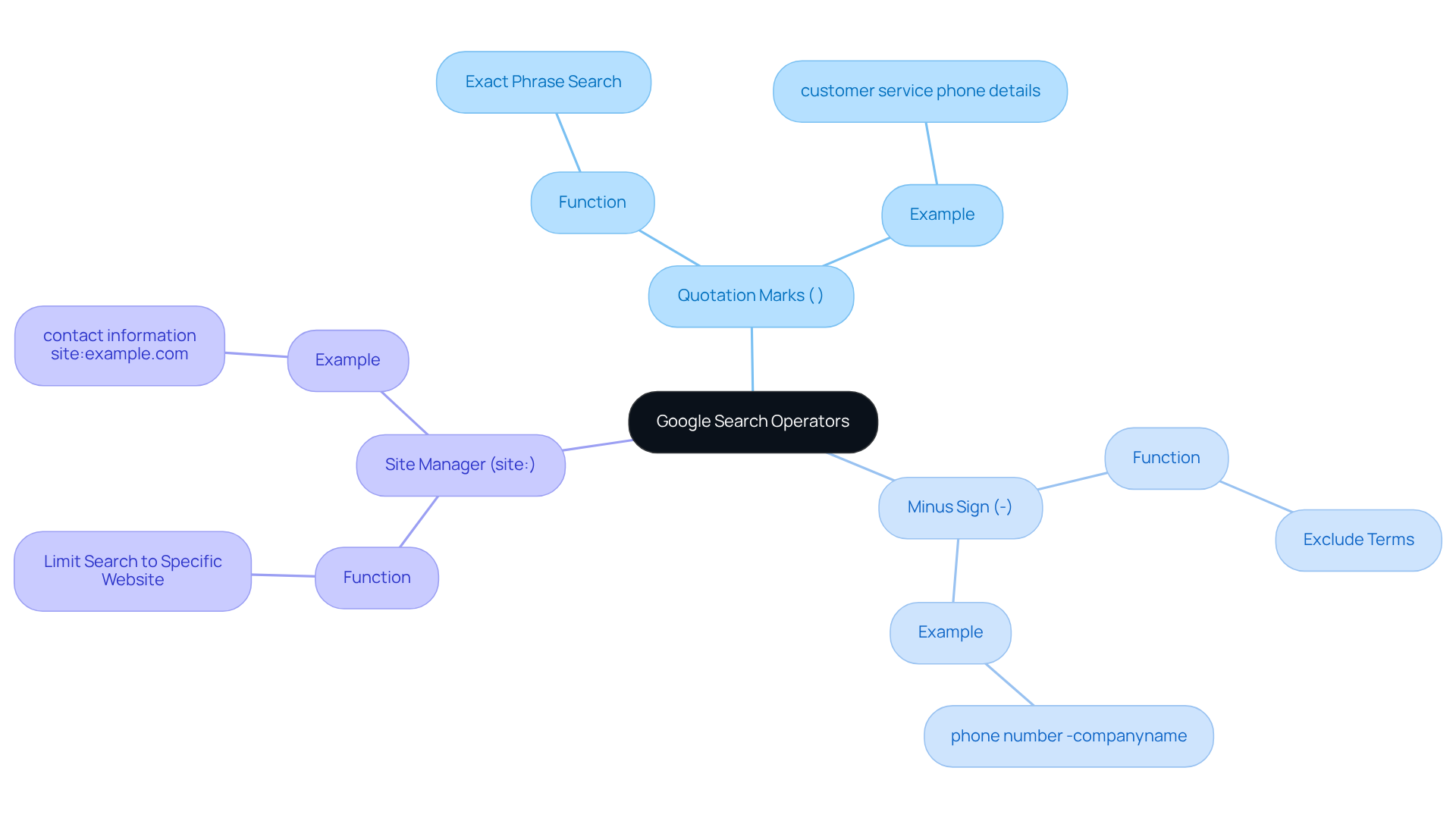
are specialized instructions that significantly enhance the accuracy of your inquiries. Understanding these commands is crucial for anyone looking to . Here are some fundamental operators to help you get started:
- Quotation Marks (" "): Enclosing a phrase in quotes allows you to . For example, searching for '' will yield results that contain that exact phrase, making it easier to find specific .
- Minus Sign (-): This operator is useful for excluding certain terms from your inquiry. If you're seeking s but wish to omit a particular company, you could look for " -companyname". This helps and focus on the information you truly need.
- Site Manager (site:): This command limits your inquiry to a specific website. For instance, entering " site:example.com" will yield findings exclusively from that domain, enabling you to discover pertinent details without sifting through irrelevant content.
These fundamental functions are essential for refining results efficiently, especially when searching for specific or . In fact, studies show that approximately 75% of consumers in the U.S., France, Germany, and the U.K. use Google to find local business information. This statistic underscores the importance of mastering these tools for effective research. Digital marketing specialists emphasize that utilizing quotation marks can significantly enhance search results, making it an essential skill for anyone aiming to improve their online research abilities. Practical examples demonstrate that companies employing these tools have experienced substantial improvements in accuracy, ultimately leading to enhanced and satisfaction.
Utilize Intermediate and Advanced Operators for Enhanced Searches
Once you're comfortable with basic operators, it's time to delve into intermediate and that can elevate your :
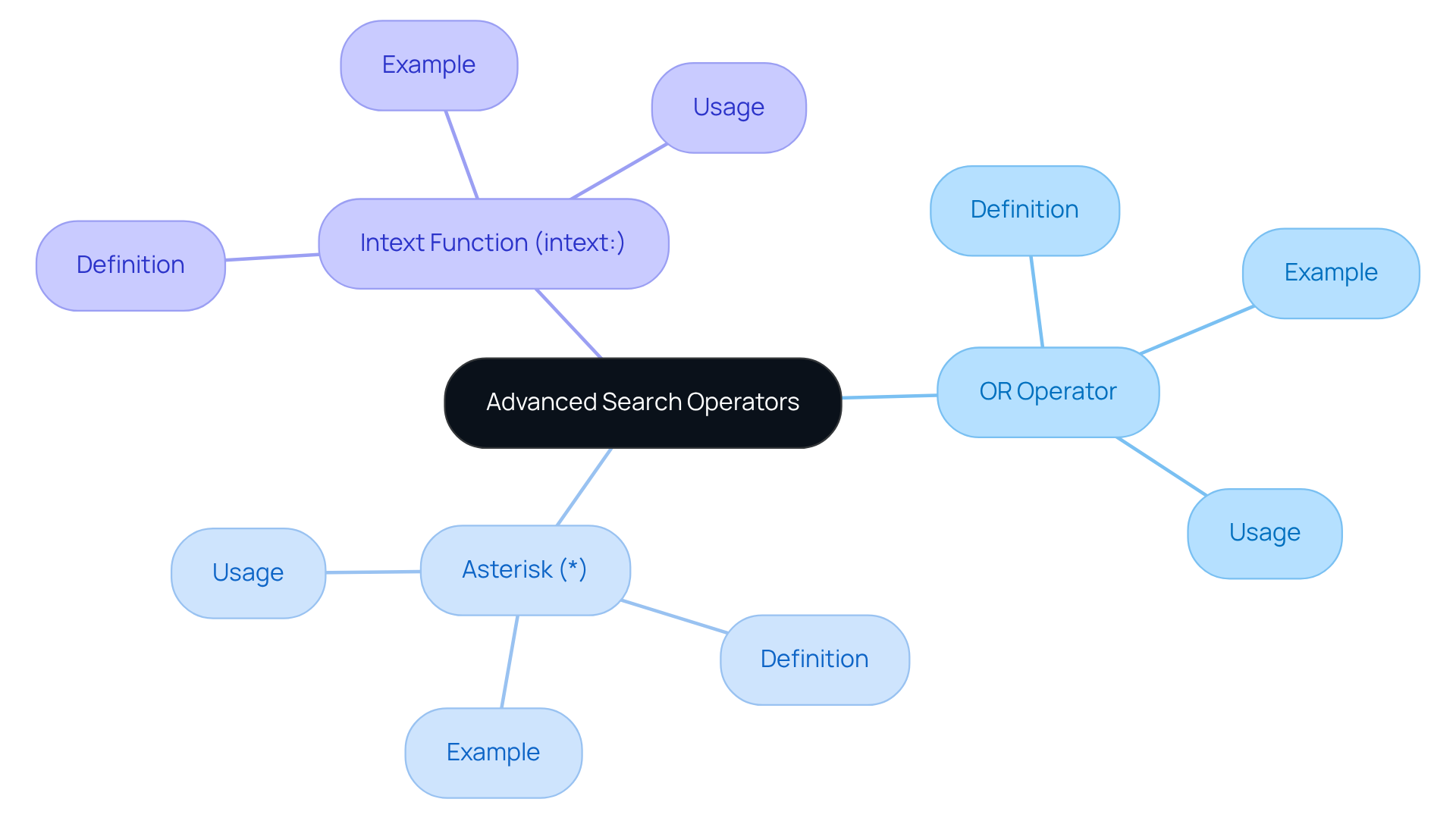
- OR Operator: This powerful operator enables you to search for multiple terms simultaneously. For instance, using ' OR support' will yield results that include either term, broadening your search scope.
- Asterisk (*): This wildcard symbol serves as a placeholder for unknown terms. For example, searching for 'phone contact for * ' can produce a variety of relevant results, enhancing your inquiry.
- Intext Function (intext:): This function specifically targets particular words within the content of a webpage. For example, entering "" will return pages that contain the phrase 'phone number' in the body text, ensuring you find exactly what you need.
Utilizing these tools can significantly of your inquiries. By mastering these advanced search techniques, you simplify the process of locating the exact you require.
Apply Google Search Operators to Phone Calling Data Research
To effectively apply Google search operators in your , consider these powerful strategies:
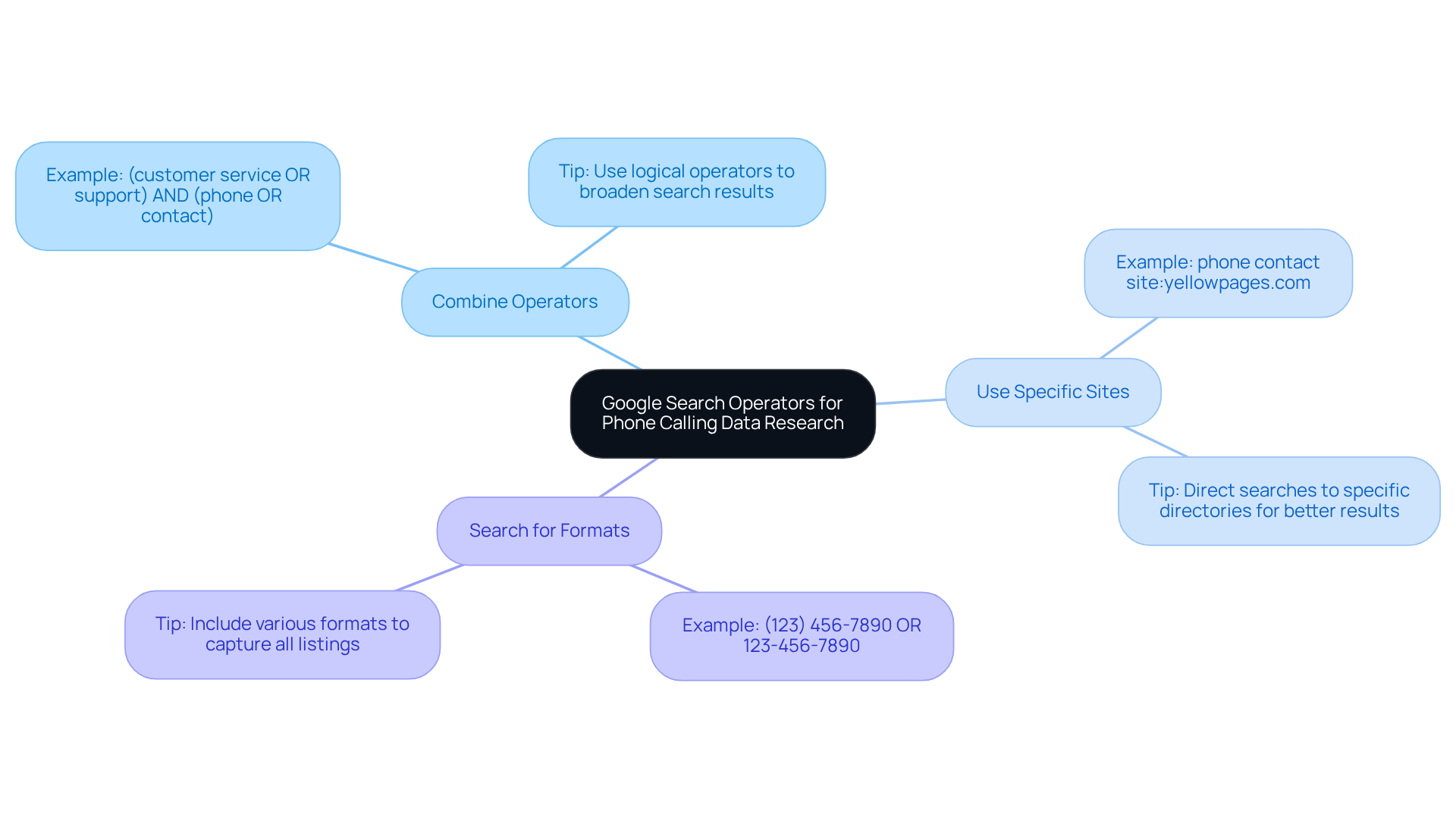
- : Enhance your search by using a combination of operators. For example, '( OR support) AND (phone OR contact)' can yield comprehensive results that cover all bases.
- Use Specific Sites: If you have a particular site in mind that lists telephone contacts, leverage the site operator. For instance, '' directs your search precisely where you need it.
- : Phone contacts can appear in various formats. Searching for "(123) 456-7890 OR 123-456-7890" can help you uncover different listings that might otherwise be overlooked.
By strategically utilizing these tools, you can significantly and precision, leading to improved outcomes in your .
Avoid Common Mistakes and Understand Limitations
When it comes to conducting using , it's essential to be aware of several and inherent limitations that can hinder your efforts:
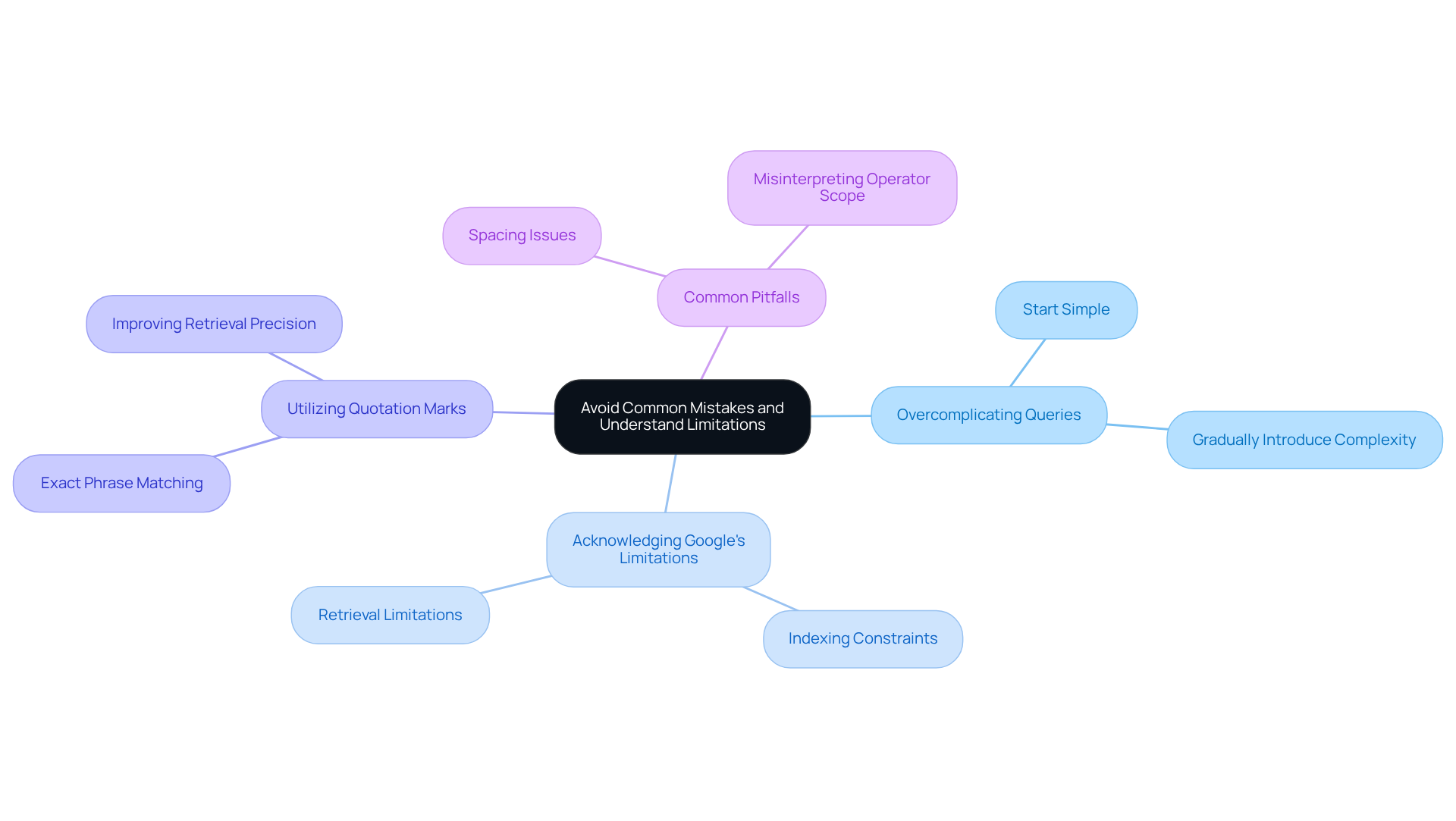
- Overcomplicating Queries: Many users tend to combine multiple operators, leading to convoluted and unclear results. Instead, start with simple queries and gradually introduce complexity as needed. This approach not only clarifies your search but also enhances the effectiveness of your inquiries.
- Acknowledging : It's important to recognize that Google has inherent indexing and retrieval constraints. Consequently, some pages may not appear in your query results, even if they contain the information you're seeking. With over 8.5 billion inquiries processed daily, can significantly impact your research outcomes.
- Utilizing Quotation Marks: Neglecting to use quotation marks for exact phrases can result in unrelated results. To improve retrieval precision, always enclose specific phrases in quotes. This simple practice can dramatically enhance the relevance of your search results.
- : Additional frequent errors include spacing issues and misinterpreting the scope of functions, which can lead to unexpected outcomes. By being mindful of these common mistakes and limitations, you can significantly boost your inquiry efficiency and ensure that you retrieve the most relevant .
Incorporating insights from digital marketing experts, such as the WhitePress® team, underscores the importance of understanding the scope of . Their expertise can further refine your approach. Additionally, consider examples of businesses that have successfully navigated these limitations, illustrating practical applications of these principles. By applying these strategies, you can enhance your research capabilities and achieve more effective results.
Conclusion
Mastering Google search operators is not just beneficial; it’s essential for anyone serious about conducting effective phone calling data research. By leveraging these specialized tools, users can significantly enhance their search accuracy, making it easier to locate specific contact information. The ability to refine searches through basic, intermediate, and advanced operators streamlines the research process and ensures that the most relevant data is retrieved.
Key strategies outlined throughout this article include:
- Using quotation marks for exact phrases
- Employing the OR operator for broader searches
- Combining multiple operators to yield comprehensive results
Additionally, being aware of common pitfalls - like overcomplicating queries and overlooking Google’s limitations - will help users navigate the intricacies of online research more effectively.
Ultimately, the true power of Google search operators lies in their capacity to transform how phone calling data is researched. By applying these techniques, individuals and businesses can enhance their research capabilities, leading to improved communication and customer engagement. Embracing these best practices not only fosters efficiency but also empowers users to fully utilize the vast resources available online.
Frequently Asked Questions
What are Google search operators?
Google search operators are specialized commands that enhance the accuracy of online inquiries, helping users improve their research skills.
How do quotation marks (" ") work in Google searches?
Enclosing a phrase in quotation marks allows you to search for that exact sequence of words, making it easier to find specific information.
What is the purpose of the minus sign (-) in Google searches?
The minus sign is used to exclude certain terms from your search. For example, you can search for "phone number -companyname" to find phone numbers while omitting results related to a specific company.
What does the site: operator do in Google searches?
The site: operator limits your search to a specific website. For example, "contact information site:example.com" will return results only from that domain.
Why are these search operators important?
These operators are essential for refining search results efficiently, especially when looking for specific information like contact details. They help users focus on relevant content without unnecessary distractions.
How commonly do consumers use Google for local business information?
Approximately 75% of consumers in the U.S., France, Germany, and the U.K. use Google to find local business information, highlighting the importance of mastering these search tools.
What benefits can companies experience by using these search operators?
Companies that utilize these search tools can see substantial improvements in search accuracy, leading to enhanced customer interaction and satisfaction.
List of Sources
- Understand Basic Google Search Operators
- The Ultimate Guide to Google Search Operators - Boomcycle Digital Marketing (https://boomcycle.com/blog/the-ultimate-guide-to-google-search-operators)
- Google Search Operators: 40 Commands to Know (Improve Research, Competitive Analysis, and SEO) (https://kinsta.com/blog/google-search-operators)
- Google Search Operators: The Complete List (44 Advanced Operators) (https://ahrefs.com/blog/google-advanced-search-operators)
- semrush.com (https://semrush.com/blog/google-search-statistics)
- 19 advanced Google search operators you need to know (and some we’ve said goodbye to) (https://searchengineland.com/advanced-google-search-operators-388355)
- Utilize Intermediate and Advanced Operators for Enhanced Searches
- Stop using Siri, Alexa & Google Assistant to search for customer service numbers (https://wfmynews2.com/article/news/local/2-wants-to-know/stop-using-siri-alexa-google-assistant-to-search-for-customer-service-numbers-better-business-bureau-warning-voice-search-scammers-make-fake-numbers/83-421fe89b-5fe1-4323-bf92-595492338ffc)
- How scammers are using ‘Google AI Overviews’ to fool you (https://hindustantimes.com/technology/how-scammers-are-using-google-ai-overviews-to-fool-you-101755576976537.html)
- semrush.com (https://semrush.com/blog/google-search-statistics)
- The 2026 Google Statistics Report: Search, Ads & Users (https://sociallyin.com/google-statistics)
- Apply Google Search Operators to Phone Calling Data Research
- The Ultimate Guide to Google Search Operators - Boomcycle Digital Marketing (https://boomcycle.com/blog/the-ultimate-guide-to-google-search-operators)
- Top 110 Call Center Quotes To Motivate You and Your Agents - CloudTalk (https://cloudtalk.io/blog/top-110-call-center-quotes)
- semrush.com (https://semrush.com/blog/google-search-statistics)
- keywordseverywhere.com (https://keywordseverywhere.com/blog/google-search-stats)
- close.com (https://close.com/blog/sales-success-quotes)
- Avoid Common Mistakes and Understand Limitations
- The Ultimate Guide to Google Search Operators - Boomcycle Digital Marketing (https://boomcycle.com/blog/the-ultimate-guide-to-google-search-operators)
- Google Search Operators: 40 Commands to Know (Improve Research, Competitive Analysis, and SEO) (https://kinsta.com/blog/google-search-operators)
- Google Search Operators: Master Advanced Search Techniques (https://whitepress.com/en/knowledge-base/6102/google-search-operators)
- Life after Cloud Print deprecation: how Google solved printing with PaperCut (https://papercut.com/blog/workplace/case_studies/how-google-solved-cloud-printing-with-papercut)