
Introduction
In today's healthcare landscape, the increasing reliance on digital communication makes it essential for every interaction to comply with the Health Insurance Portability and Accountability Act (HIPAA). As healthcare providers navigate the complexities of safeguarding Protected Health Information (PHI), a pressing question emerges: Are traditional phone calls still a viable option for secure communication? This article explores the nuances of HIPAA compliance in phone calls versus alternative methods, revealing how organizations can uphold patient trust while adhering to stringent privacy regulations. Can phone conversations truly withstand the rigors of compliance, or are there more secure avenues worth considering?
Understanding HIPAA Compliance in Communication
HIPAA, or the Health Insurance Portability and Accountability Act, sets forth national standards crucial for the protection of health information. It mandates that any exchange involving Protected Health Information (PHI) must comply with stringent privacy and security regulations. This requirement extends to all communication methods, including phone calls, emails, or texts, ensuring that data remains shielded from unauthorized access and asking whether phone calls are HIPAA compliant.
Understanding these regulations is vital for healthcare providers aiming to uphold standards and protect patient confidentiality. Organizations must also implement refresher training whenever there are significant changes to HIPAA policies and procedures. Furthermore, assessing vendor and partner agreements is essential to ensure compliance with substance use disorder (SUD)-specific consent limitations.
With the looming for updating Notices of Privacy Practices (NPPs), healthcare providers must reassess their data-handling workflows. Real-world examples illustrate that practices employing robust training and updated policies have effectively navigated regulatory challenges, thereby enhancing trust and safeguarding sensitive information.
By prioritizing adherence to health information privacy regulations, healthcare providers can maintain patient confidentiality and avoid severe penalties. Notably, Montefiore Medical Center faced the highest fine of $4,750,000 in 2024, contributing to a staggering total of over $9.9 million in fines that year. Continuous security awareness training is imperative due to evolving cyber threats, underscoring the need for a comprehensive compliance strategy.

Evaluating Phone Calls for HIPAA Compliance
To determine if phone calls are , they must adhere to the Privacy Rule and utilize technology that meets Security Rule standards. To achieve this, healthcare providers must verify the caller's identity, ensure conversations occur in secure environments, and limit shared information to the minimum necessary. Additionally, recording consent for any phone interactions involving Protected Health Information (PHI) is crucial. Non-compliance can lead to severe penalties, highlighting the need for organizations to implement stringent protocols.
For instance, many healthcare entities have successfully established HIPAA-compliant phone procedures by employing automated verification systems and ensuring that all interactions are logged and monitored. Intone's AI voice agents play a pivotal role in this process, efficiently managing appointment inquiries and providing essential support. This not only keeps communications compliant but also enhances engagement with patients.
Routine evaluations and ongoing employee education on health privacy regulations further bolster adherence, fostering a culture of security and trust in client interactions. Moreover, a Business Associate Agreement (BAA) is essential with any vendor managing PHI, forming a critical component of regulatory compliance.
Given that 90% of healthcare providers rely on telephone calls for patient interactions, it is essential to determine if these phone calls are HIPAA compliant to ensure strict adherence to regulations. Organizations must prioritize compliance to safeguard patient information and maintain trust.

Comparing Alternative Communication Methods for HIPAA Compliance
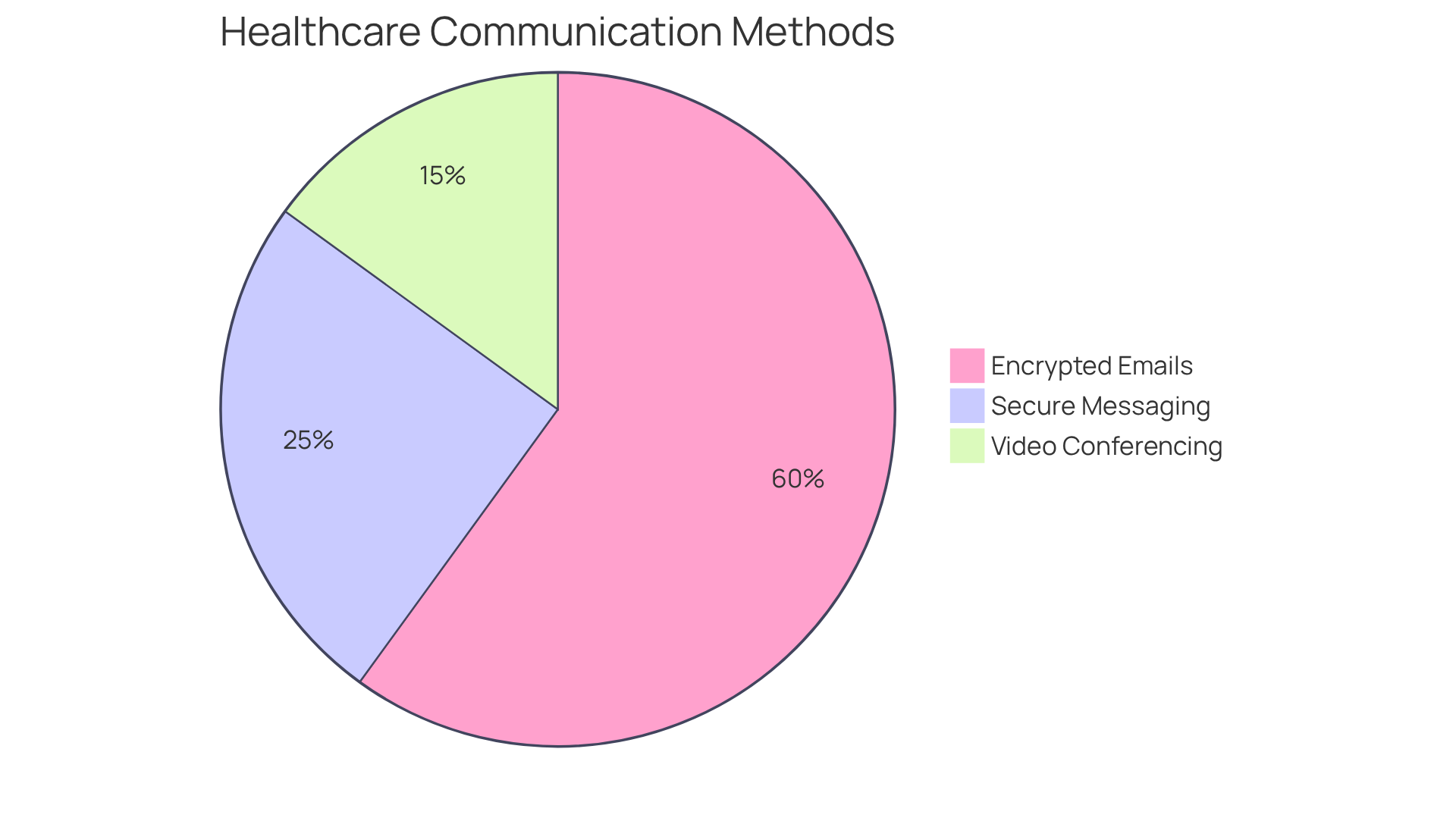
Healthcare providers have a range of interaction methods at their disposal, including secure messaging applications, encrypted emails, and video conferencing platforms, each governed by specific regulatory requirements under HIPAA. Secure messaging apps are engineered to encrypt messages and enforce access controls, ensuring that only authorized personnel can access protected health information (PHI). For instance, platforms like Updox and LeapXpert not only encrypt communications but also maintain audit trails and compliance records, making them ideal for healthcare environments. As LeapXpert emphasizes, "Our platform maintains a complete record of all conversations between individuals and healthcare practices, ensuring recordkeeping standards are met."
Similarly, encrypted emails must guarantee that sensitive information is accessible solely to authorized users. This often necessitates additional security measures, such as encryption protocols and Business Associate Agreements (BAAs), to comply with HIPAA standards. The adoption of encrypted emails has surged, with 60% of healthcare organizations now utilizing encrypted services for data transmission, reflecting a strong commitment to safeguarding PHI.
Video conferencing tools also play a pivotal role in healthcare interactions, provided they offer and prevent inadvertent sharing of PHI. As telehealth continues to expand, it is essential to ensure that phone calls are HIPAA compliant to maintain the trust and confidentiality of individuals.
By analyzing these interaction methods, healthcare providers can identify the most efficient and compliant approaches for engaging with individuals while protecting their sensitive information. The choice of interaction method should align with organizational processes and regulatory priorities, ultimately enhancing care for individuals and operational effectiveness.
Side-by-Side Comparison of Communication Methods
Communication Method | HIPAA Compliance | Pros | Cons | ---------------------------|--------------------------|----------------------------------------------|------------------------------------------------| Phone Calls | Yes, with safeguards | Direct communication fosters a personal touch, enhancing patient relationships. | Risk of unauthorized access if not managed properly can compromise patient confidentiality. | Secure Messaging Apps | Yes, if encrypted | Quick, efficient, and secure, these apps streamline communication in a fast-paced environment. | Requires patient adoption and training, which can be a barrier to implementation. | Encrypted Emails | Yes, if properly configured | Documented communication is easy to track, providing a reliable record of interactions. | May not be as immediate as phone calls, potentially delaying urgent communications. | Video Conferencing | Yes, with secure platforms | Visual interaction enhances consultations, making them more effective and engaging. | Technical issues can disrupt communication, leading to frustration for both parties. | [AI Voice Agents](https://intone.io/features/sales-agent) | Yes, with dedicated support | Fast-track deployment allows for immediate integration, ensuring accurate and compliant conversations. | Initial setup may require training for staff, which can be time-consuming. |
This comparison illustrates that while phone calls maintain compliance, secure messaging, video conferencing, and AI voice agents provide enhanced efficiency and security. These methods are not just alternatives; they represent a shift towards more effective healthcare communication, urging professionals to consider their implementation.

Conclusion
Maintaining HIPAA compliance in communication is not just essential; it’s a cornerstone for healthcare providers aiming to protect patient information and uphold trust. While phone calls can be compliant under specific conditions - like verifying caller identity and ensuring secure environments - they also carry inherent risks. Organizations must navigate these challenges by implementing stringent protocols and exploring alternative communication methods that offer enhanced security and efficiency.
Understanding various communication methods is crucial. Secure messaging apps, encrypted emails, and video conferencing each present unique advantages and compliance requirements. By comparing these methods, healthcare providers can identify the most effective strategies for engaging with patients while safeguarding sensitive information. Ongoing training and strict adherence to HIPAA regulations are vital for fostering a culture of compliance and security.
Ultimately, the choice of communication method should reflect a steadfast commitment to patient confidentiality and operational effectiveness. As the landscape of healthcare communication evolves, embracing compliant technologies and practices will not only enhance patient interactions but also mitigate risks associated with non-compliance. Prioritizing HIPAA compliance transcends regulatory obligation; it is fundamental to delivering quality care and maintaining the trust of those served.
Frequently Asked Questions
What is HIPAA and why is it important?
HIPAA, or the Health Insurance Portability and Accountability Act, sets national standards for the protection of health information, mandating that any exchange involving Protected Health Information (PHI) complies with strict privacy and security regulations.
What communication methods are covered under HIPAA compliance?
HIPAA compliance extends to all communication methods, including phone calls, emails, and texts, ensuring that data remains protected from unauthorized access.
Why is it important for healthcare providers to understand HIPAA regulations?
Understanding HIPAA regulations is vital for healthcare providers to uphold standards and protect patient confidentiality, thereby avoiding severe penalties.
What actions should organizations take regarding HIPAA compliance training?
Organizations must implement refresher training whenever there are significant changes to HIPAA policies and procedures to ensure ongoing compliance.
What is the significance of assessing vendor and partner agreements in relation to HIPAA?
Assessing vendor and partner agreements is essential to ensure compliance with substance use disorder (SUD)-specific consent limitations, which are part of HIPAA regulations.
What is the deadline for updating Notices of Privacy Practices (NPPs)?
The deadline for updating Notices of Privacy Practices (NPPs) is February 16, 2026, prompting healthcare providers to reassess their data-handling workflows.
How can healthcare practices effectively navigate regulatory challenges related to HIPAA?
Practices that employ robust training and updated policies have effectively navigated regulatory challenges, enhancing trust and safeguarding sensitive information.
What are the consequences of failing to comply with HIPAA regulations?
Failing to comply with HIPAA regulations can lead to severe penalties, with Montefiore Medical Center facing a fine of $4,750,000 in 2024, contributing to over $9.9 million in fines that year.
Why is continuous security awareness training important for healthcare providers?
Continuous security awareness training is imperative due to evolving cyber threats, underscoring the need for a comprehensive compliance strategy to protect health information.